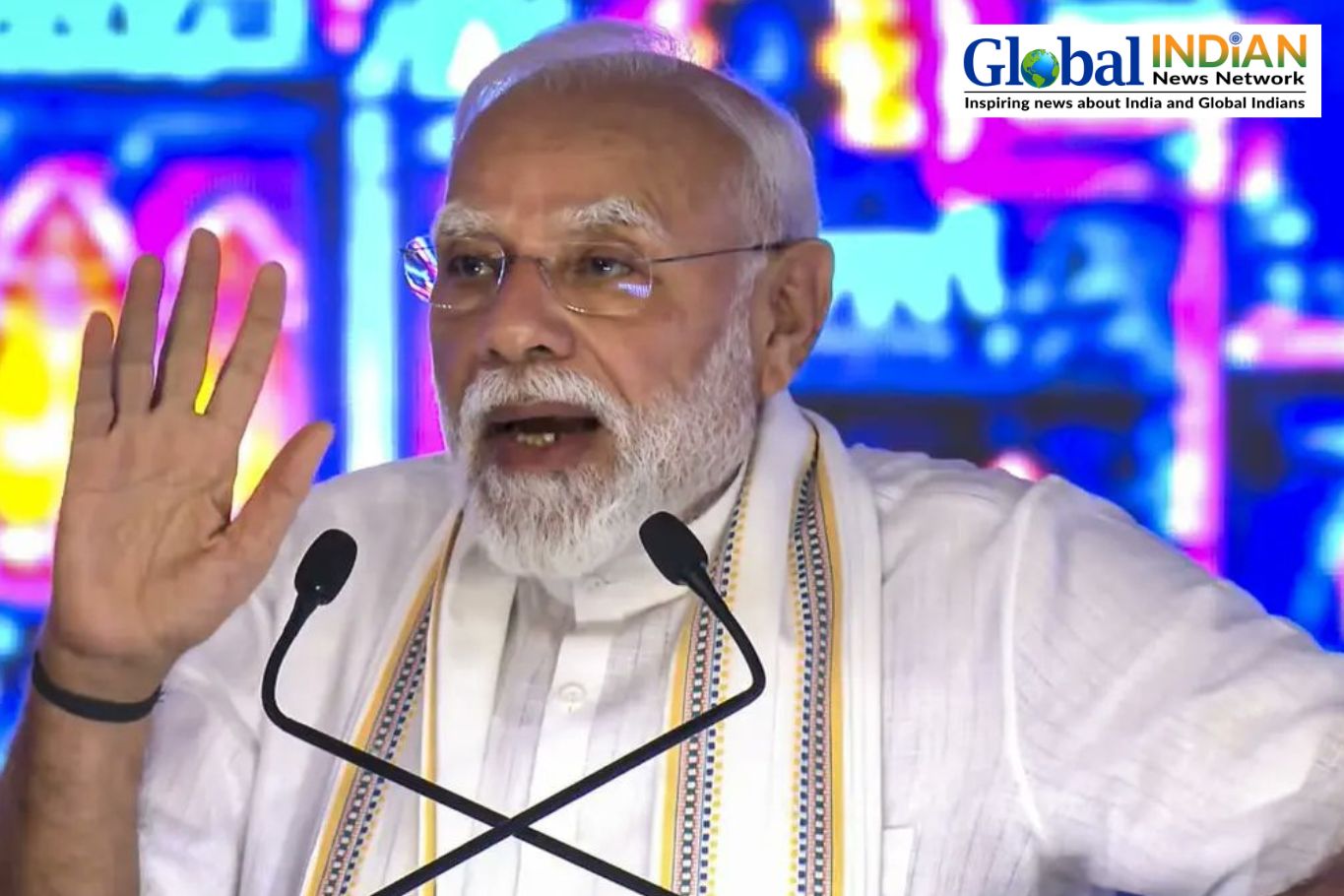
 Prime Minister Narendra Modi on Monday presented India’s long-term vision for the Shanghai Cooperation Organisation (SCO), outlining three guiding principles: Security, Connectivity, and Opportunity. Speaking at the 25th meeting of the Council of Heads of State in Tianjin, he underlined India’s consistent and constructive role in shaping the future of the grouping since becoming a full member in 2017.
Modi said security and stability remain the foundation for development, warning that terrorism and separatism continue to pose grave threats. Referring to the tragic Pahalgam attack, which claimed dozens of lives, he reminded member nations that India has faced the scourge of terrorism for four decades. “Such violence is not just a threat to one nation but to all humanity,” he said, thanking countries that expressed solidarity.
On connectivity, Modi highlighted India’s investments in projects like the Chabahar Port and the International North-South Transport Corridor, aimed at boosting trade and trust with Afghanistan and Central Asia. Strong connectivity, he said, fosters both economic growth and closer ties among nations.
Explaining the third pillar, Opportunity, Modi reflected on India’s SCO presidency in 2022–2023, which injected fresh ideas such as youth empowerment, startups, digital inclusion, and cooperation in traditional medicine and Buddhist heritage. He proposed creating a Civilisational Dialogue Forum to showcase the cultural richness of member nations through literature, arts, and traditions.
Modi’s remarks reinforced India’s role as a proactive member of the SCO, committed to shaping a cooperative, multipolar future. Earlier, he was seen sharing light moments with Russian President Vladimir Putin and Chinese President Xi Jinping before the plenary session.
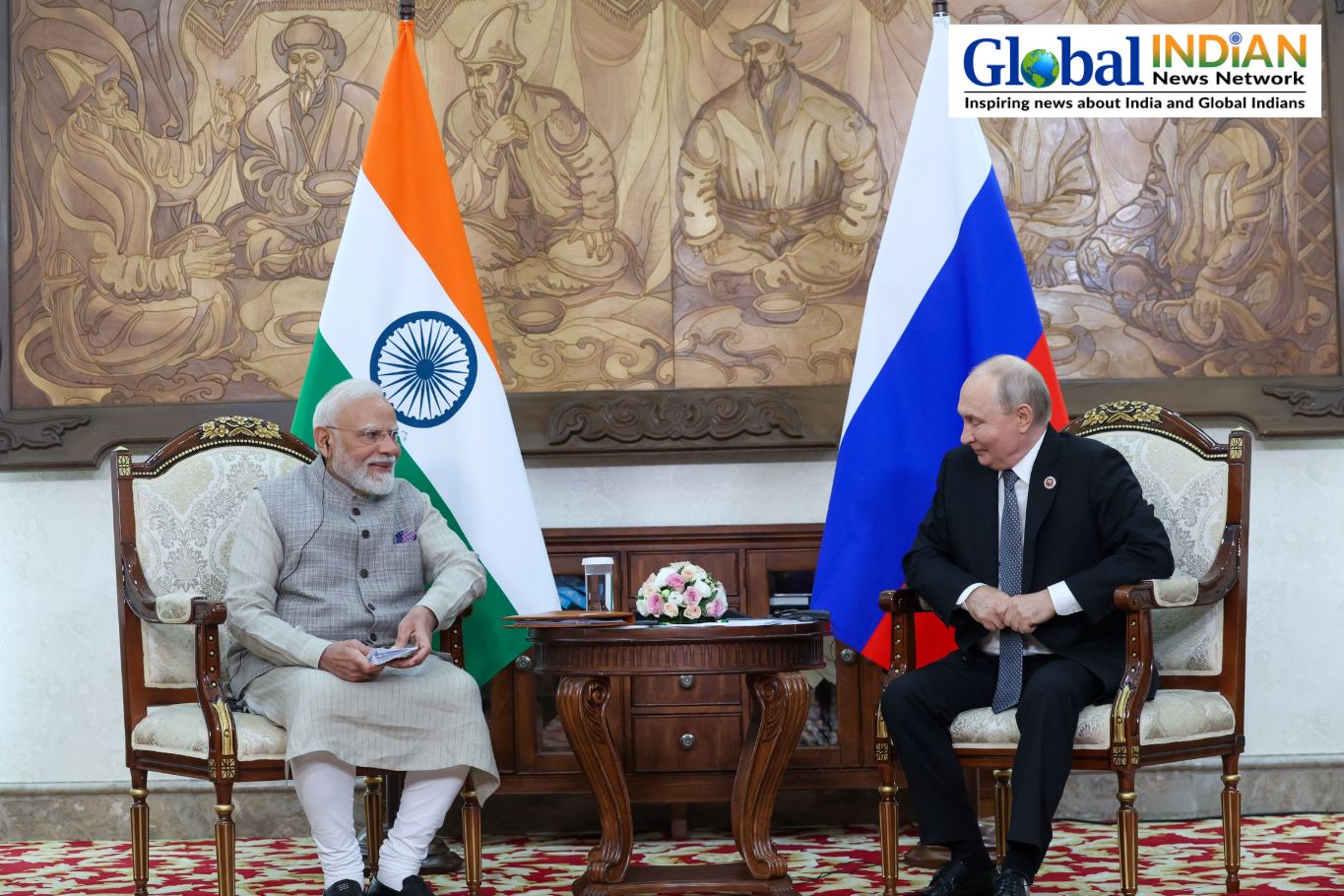
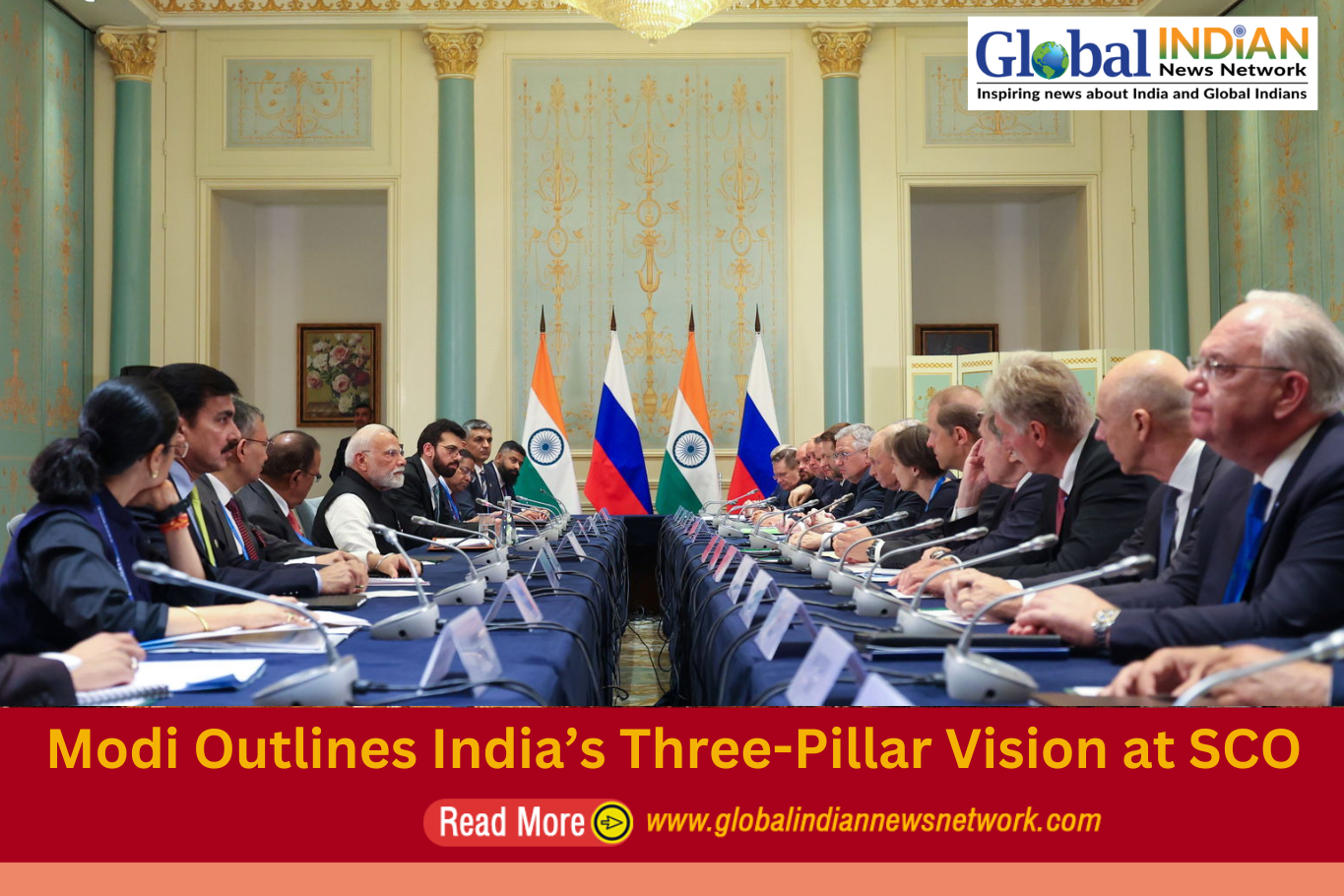
Later in the day, Modi was scheduled to hold a bilateral meeting with Putin, following Sunday’s talks with Xi. In that meeting, both leaders reaffirmed their countries are “partners, not rivals,” stressing that differences should not escalate into disputes. They emphasized stable ties based on mutual respect and sensitivity, essential for a multipolar Asia in the 21st century.
The SCO this year gathers leaders from 10 member states, including Russia, China, Iran, Pakistan, and Central Asian countries, along with several observers and dialogue partners. Under India’s past chairmanship, the group’s agenda expanded into new areas, reaffirming New Delhi’s role as a driver of cooperation within the bloc.