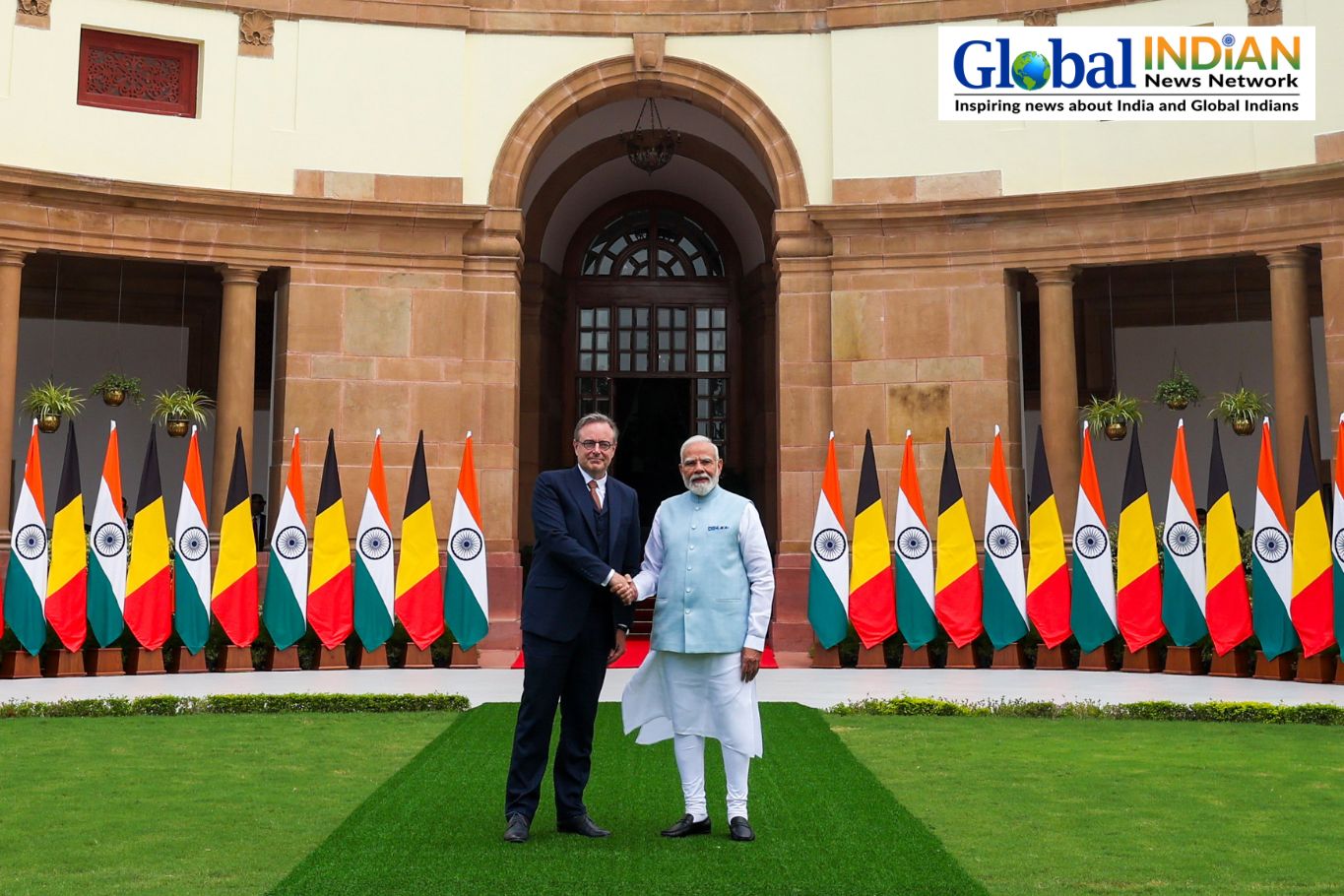
Prime Minister Narendra Modi is set to visit Japan from August 29–30, 2025, marking his eighth trip to the country. During this visit, he will meet Japanese Prime Minister Shigeru Ishiba to hold the 15th India-Japan Annual Summit.
“The summit will provide a platform to conduct a comprehensive review of bilateral relations, assess progress across multiple domains, and exchange perspectives on regional and global issues,” said Foreign Secretary Vikram Misri. He added that the leaders will also launch initiatives to enhance resilience in the partnership and seize emerging opportunities.
The summit will focus on reviewing the Special Strategic and Global Partnership between India and Japan, covering defense and security, trade and economic cooperation, technology and innovation, and people-to-people exchanges. Both leaders are expected to discuss regional and global developments of importance.
As part of the visit, Modi and Ishiba will travel to Sendai, a hub for semiconductor production, on Japan’s bullet train network. The two leaders will explore Japanese participation in India’s future high-speed rail projects beyond the Mumbai-Ahmedabad corridor. Japan had already committed to E5 series bullet trains for Mumbai-Ahmedabad and simultaneously launched the new E10 series trains in both countries. The E10 trains maintain a top speed of 320 km/h, feature earthquake-resistant derailment prevention, and are designed for future driverless operations.
The Mumbai-Ahmedabad High-Speed Rail project, with an estimated cost of $13.5 billion, will receive approximately $10.4 billion in funding from the Japan International Cooperation Agency (JICA), covering 81% of the total. The remainder will be financed by India’s Ministry of Railways and the state governments of Maharashtra and Gujarat.
Additionally, the leaders are set to update the 2008 Joint Declaration on Security Cooperation and launch an economic security initiative emphasizing semiconductors, critical minerals, AI, telecommunications, and clean energy.
Misri highlighted that India and Japan share strategic values, mutual trust, and a commitment to democratic principles, making them two of Asia’s leading democracies and among the world’s top five economies. He noted that the annual summit represents the highest-level dialogue mechanism between the two nations.