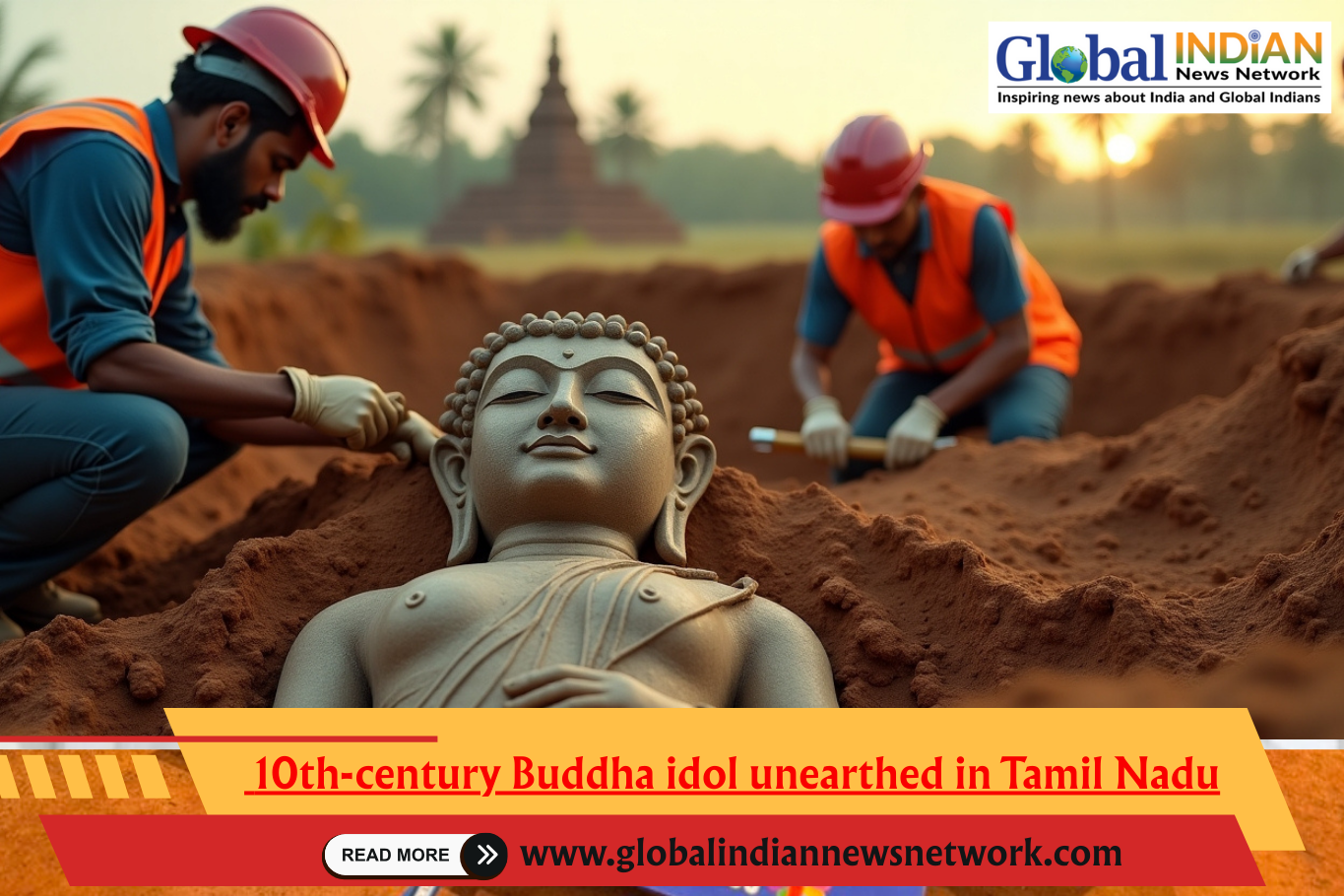
 Archaeologists in Tamil Nadu have unearthed a striking 10th-century Buddha idol without its head, discovered along the banks of an irrigation tank in Avudaiyarkovil, Pudukkottai district. The find, made on Tuesday by the Pudukkottai Archaeological Research Forum during a routine survey, is a significant addition to the growing body of evidence highlighting the region’s Buddhist past.
- Manikandan, the Forum’s founder and a researcher with the Department of Ancient Science at Tamil University, Thanjavur, noted that the excavation is part of a larger project documenting Pudukkottai’s historic monuments under the guidance of Forum President Karu. Rajendran. The idol was located near the Periya Kanmai irrigation tank on a mound along the Perumadai canal.
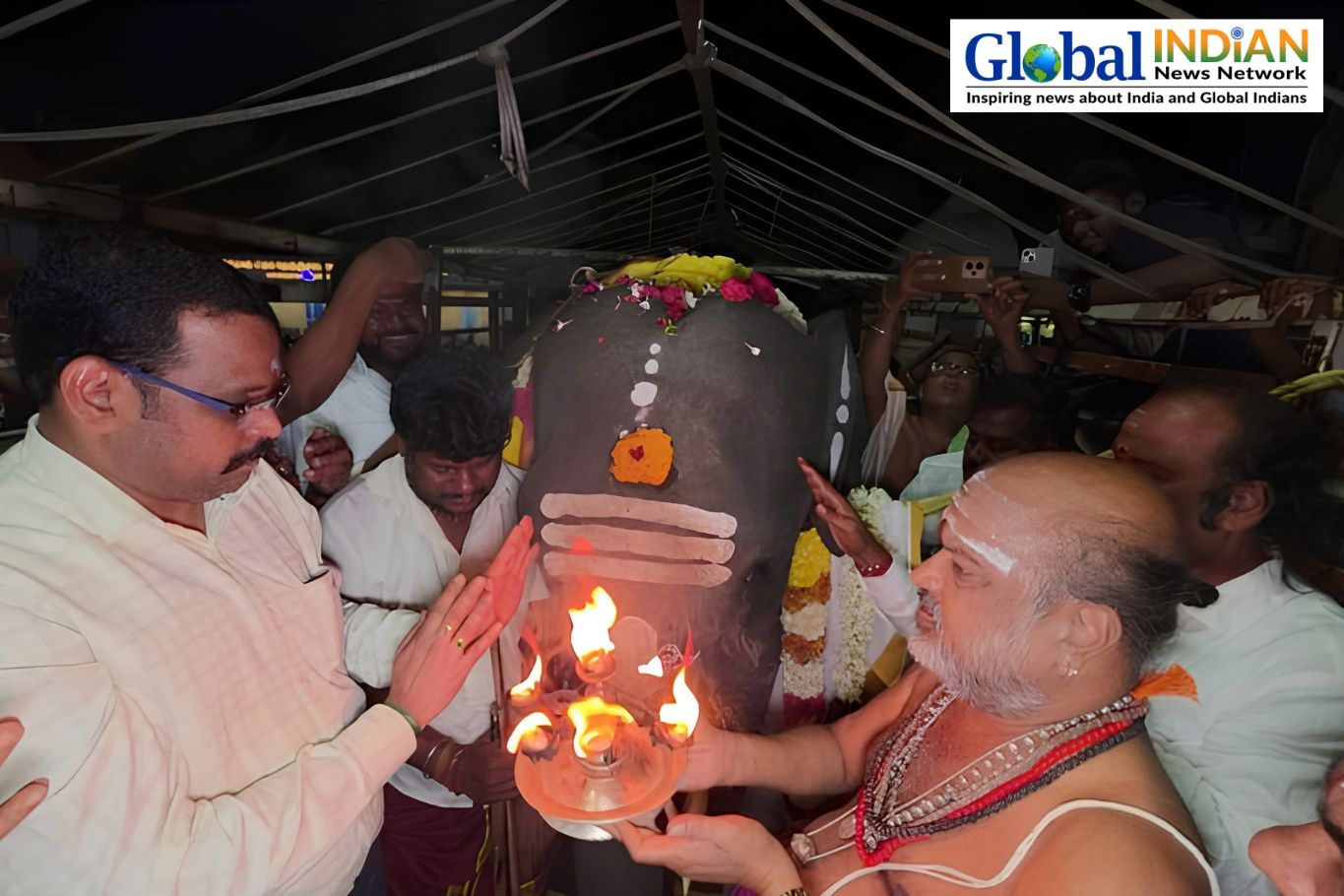
Carved from black stone, the sculpture has long been referred to by villagers as Thalai Illa Saami (headless deity). Local tradition holds that the idol is capable of invoking rainfall when villagers place a clay head on it during droughts. Measuring 48 centimeters tall and 38 centimeters wide, the statue depicts Buddha wearing a robe draped across his right shoulder and a cloth tied at the waist.
Stylistic details point clearly to its Chola-era origins. The idol shows distinctive features such as a broad chest, wide shoulders, three folds on the neck (known as trivali), and the right hand raised above the left in a symbolic gesture. Residents recalled that the missing head was once spotted in a nearby canal, though it has yet to be recovered. Archaeologists plan to continue searching the area in hopes of locating it.
Historical accounts also link Avudaiyarkovil to an active Buddhist presence during the Chola dynasty. Ancient texts mention the Buddhist scholar Buddhamitra, who authored the grammar work Vira Chozhiyam under the reign of King Vira Rajendra. He hailed from Ponpathi, near Avudaiyarkovil, and remnants of a moat and fort-like structure associated with him still remain in the area today.
Manikandan emphasized that the newly discovered idol not only deepens understanding of Pudukkottai’s Buddhist legacy but also underscores the importance of further archaeological exploration. Each discovery, he added, helps piece together the vibrant spiritual and cultural exchanges that shaped Tamil Nadu during the Chola period.