The Surat Diamond Bourse, celebrated as the largest office complex in the world and even bigger than the Pentagon, was envisioned as a glittering symbol of India’s growing trade ambitions. Yet today, the sprawling complex lies mostly deserted, with only a handful of traders operating inside.
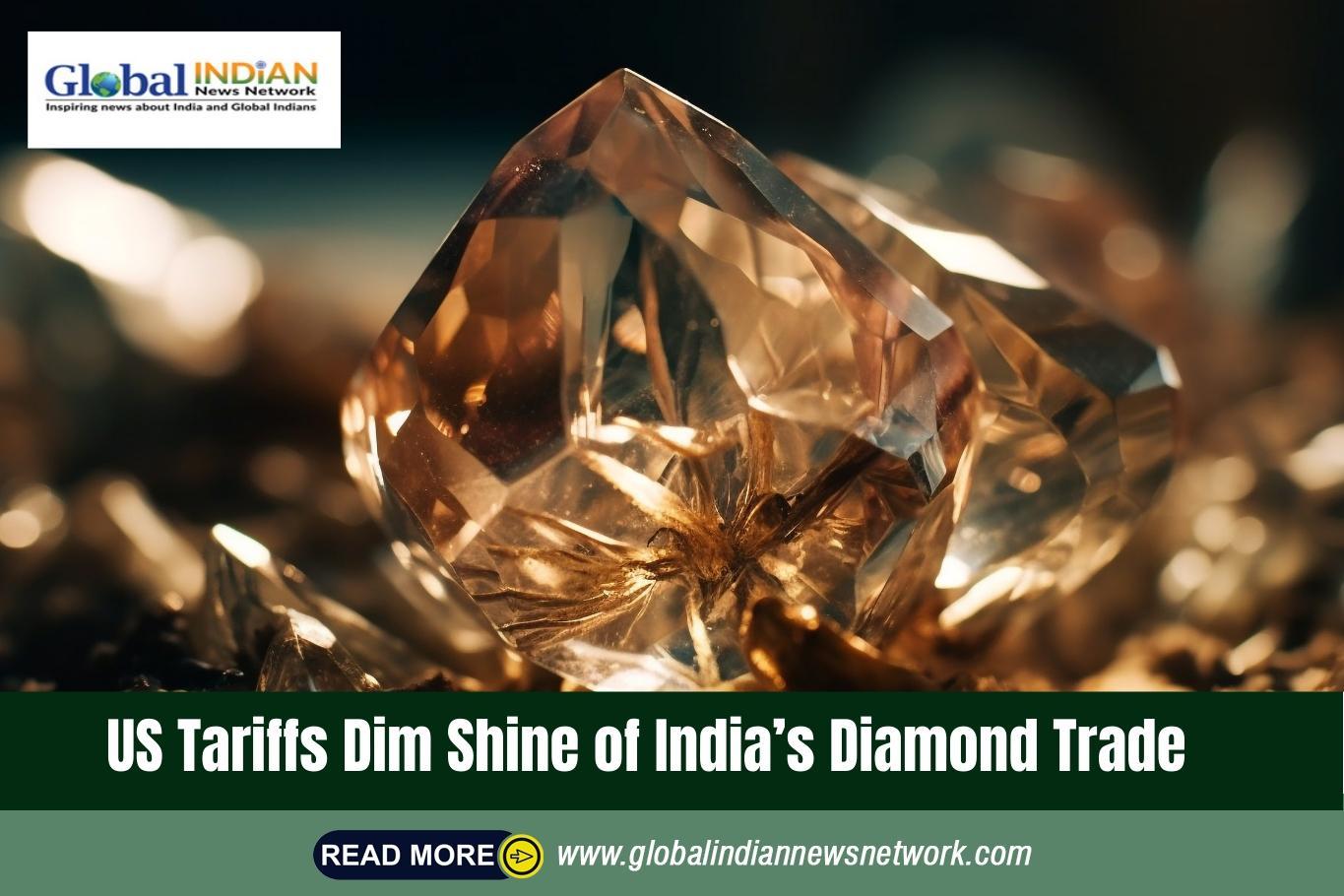
The diamond industry, which exports around $28.5 billion worth of gems and jewellery annually, is grappling with one of its toughest periods in decades. Exports have fallen to a 20-year low due to weak demand from China, and higher tariffs under US President Donald Trump now threaten access to India’s biggest market, which accounts for nearly one-third of its global shipments.
Surat, responsible for cutting and polishing more than 80% of the world’s rough diamonds, is at the center of this crisis. As US tariffs climb from 25% to 50%, orders are shrinking and traders are hesitant to commit. Smaller exporters have limited options to absorb the losses, while larger firms are exploring alternatives, including moving operations to countries like Botswana, which faces a lower 15% tariff.
Companies are already feeling the strain. Dharmanandan Diamonds, for instance, expects revenue to drop by up to 25%, while many cutting units in Surat have reduced working days, hours, and staff. One polishing unit owner noted that packets fetching $286 last year now barely sell for $206, forcing him to cut his workforce in half.
The Bourse itself, spread across 6.7 million square feet with nine interlinked towers, banks, vaults, and customs offices, has sold over 4,700 offices. But fewer than 250 are currently in use, as many buyers reconsider moving in amid industry uncertainty.
Without a new trade deal between India and the US, industry leaders warn that as many as 200,000 workers could lose their jobs. US buyers, faced with higher import costs, are likely to turn to alternative suppliers in Belgium, Israel, and Botswana. Meanwhile, Indian exporters are attempting to expand sales to Europe, the Middle East, and Asia, but penetrating new markets has proved challenging.
For now, India’s domestic market provides a modest cushion. The country has recently overtaken China as the world’s second-largest consumer of diamonds, and demand at home continues to grow. However, exporters agree that unless tariffs ease or new markets open, the sparkle of India’s diamond hub risks fading further.