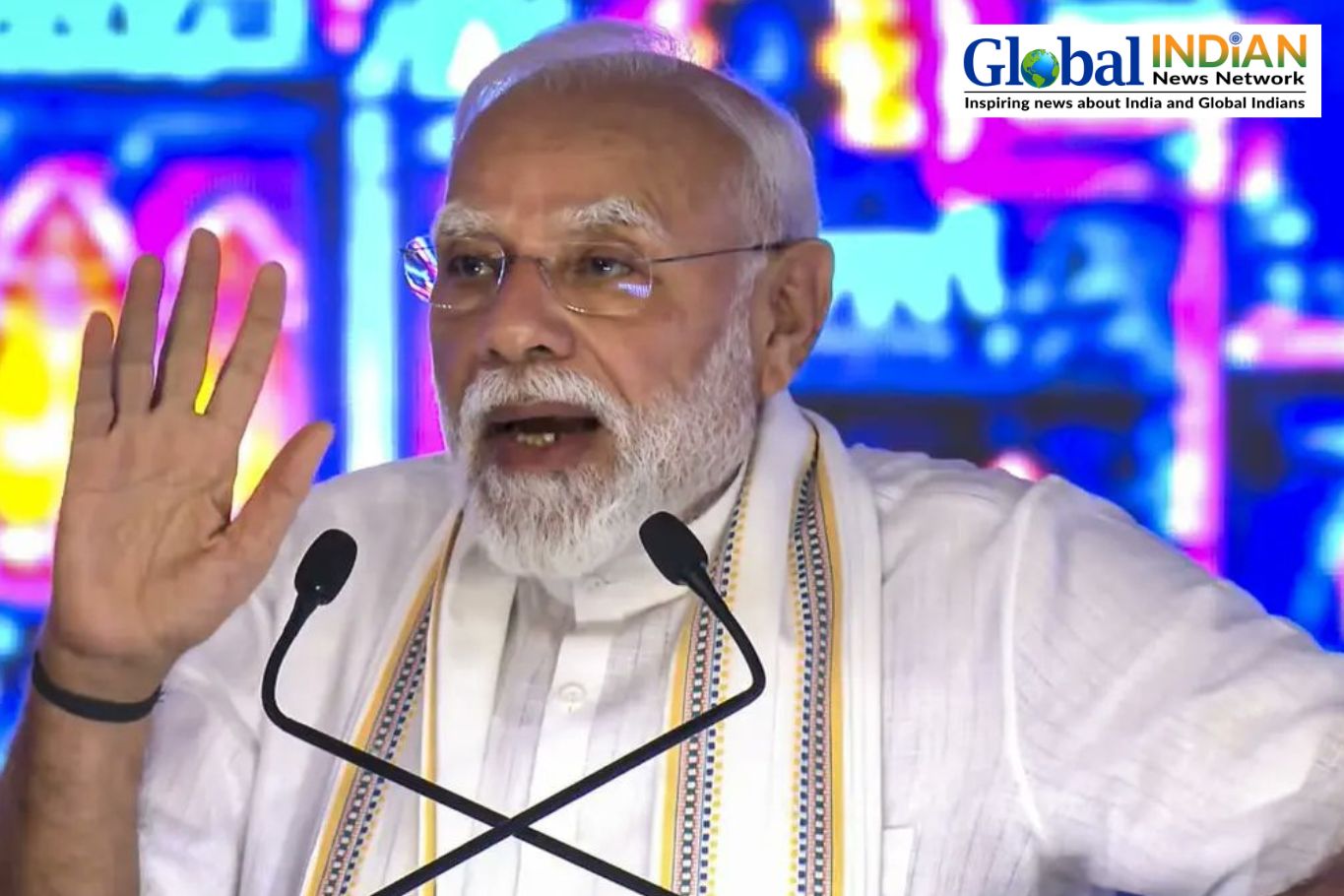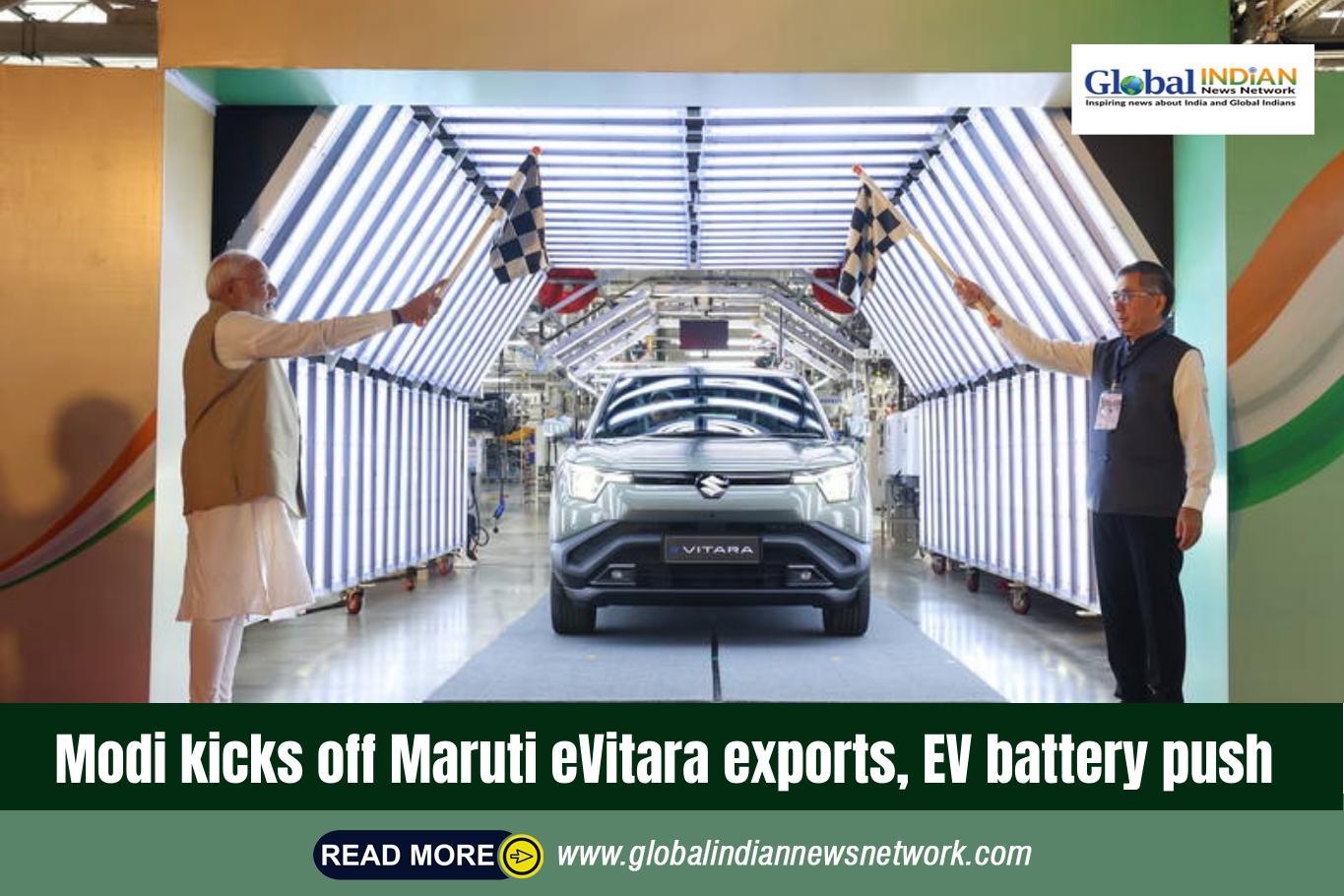
Prime Minister Narendra Modi, during a two-day visit to Gujarat, unveiled two milestone projects for India’s automotive and energy sectors on August 26. At Maruti Suzuki’s Hansalpur facility in Ahmedabad, Modi officially flagged off India’s electric vehicle exports to 100 countries and inaugurated localized production of hybrid battery electrodes.
The highlight of the event was the launch of exports for the Made-in-India e-VITARA, a battery electric vehicle (BEV) designed to strengthen India’s presence in the global EV market. Alongside this, the Prime Minister inaugurated the manufacturing of hybrid battery electrodes, a critical component in lithium-ion cells. This step is expected to boost India’s standing in global energy technology while advancing the country’s goal of self-reliance in battery production.
Sharing his thoughts on X, the Prime Minister wrote, “Today is a special day in India’s quest for self-reliance and being a hub for green mobility,” emphasizing the strategic importance of these launches.
The lithium-ion battery facility at Hansalpur has been established through a collaboration between Suzuki, Toshiba, and Denso. The joint venture signals a major breakthrough for India in hybrid and EV battery production, further reinforcing the country’s shift toward sustainable transportation solutions.
This development follows Modi’s remarks at the ET World Leaders Forum on August 23, where he highlighted India’s remarkable growth in automobile exports. Since 2014, annual automotive exports have more than doubled—from $6 billion to nearly $14.5 billion in 2025. He stressed that this surge demonstrates India’s expanding influence in the global automotive landscape.
While the localized battery electrode production is an important leap, questions remain on whether this will lead to more affordable BEV options for Indian consumers. Maruti Suzuki, India’s largest automaker, is already preparing for a major domestic launch—the much-anticipated e-VITARA electric SUV—scheduled for release on September 3.
Industry experts believe the combination of EV exports and lithium-ion battery manufacturing marks a turning point for India’s automotive future. The move not only opens global markets for Indian-made EVs but also lays the groundwork for reducing import dependency on critical battery components.
With India aiming to become a hub for clean energy mobility, these initiatives reflect a broader strategy: encouraging domestic innovation, strengthening industrial self-sufficiency, and positioning the country as a global leader in sustainable automotive solutions.