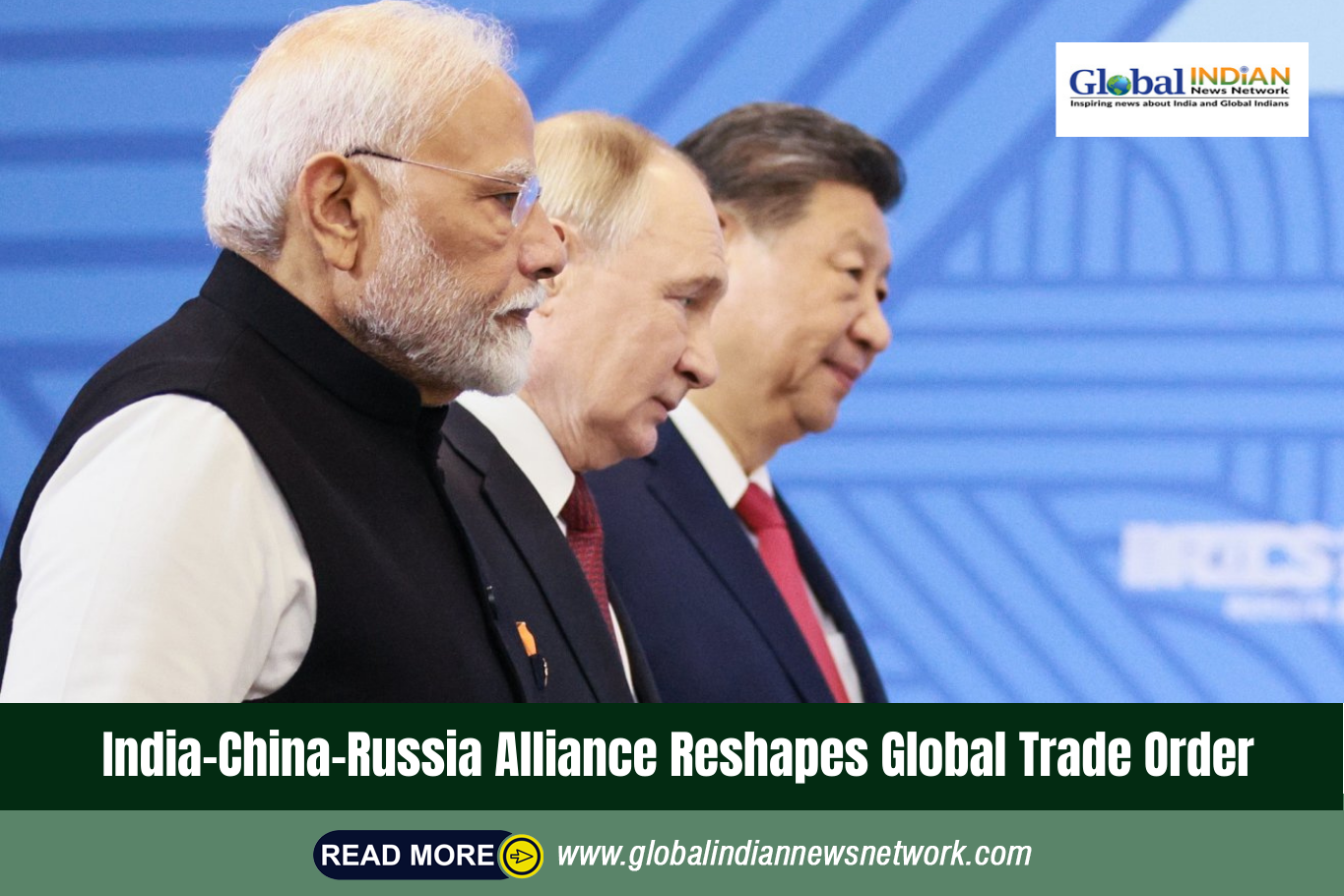
 Despite high-profile meetings between Donald Trump, Vladimir Putin, and Volodymyr Zelensky, the Russia-Ukraine conflict continues to fuel global uncertainty. Tariff disputes have further intensified trade tensions, but a quiet realignment is underway. From Moscow to Beijing to New Delhi, the emergence of an India-China-Russia triad is reshaping the economic map.
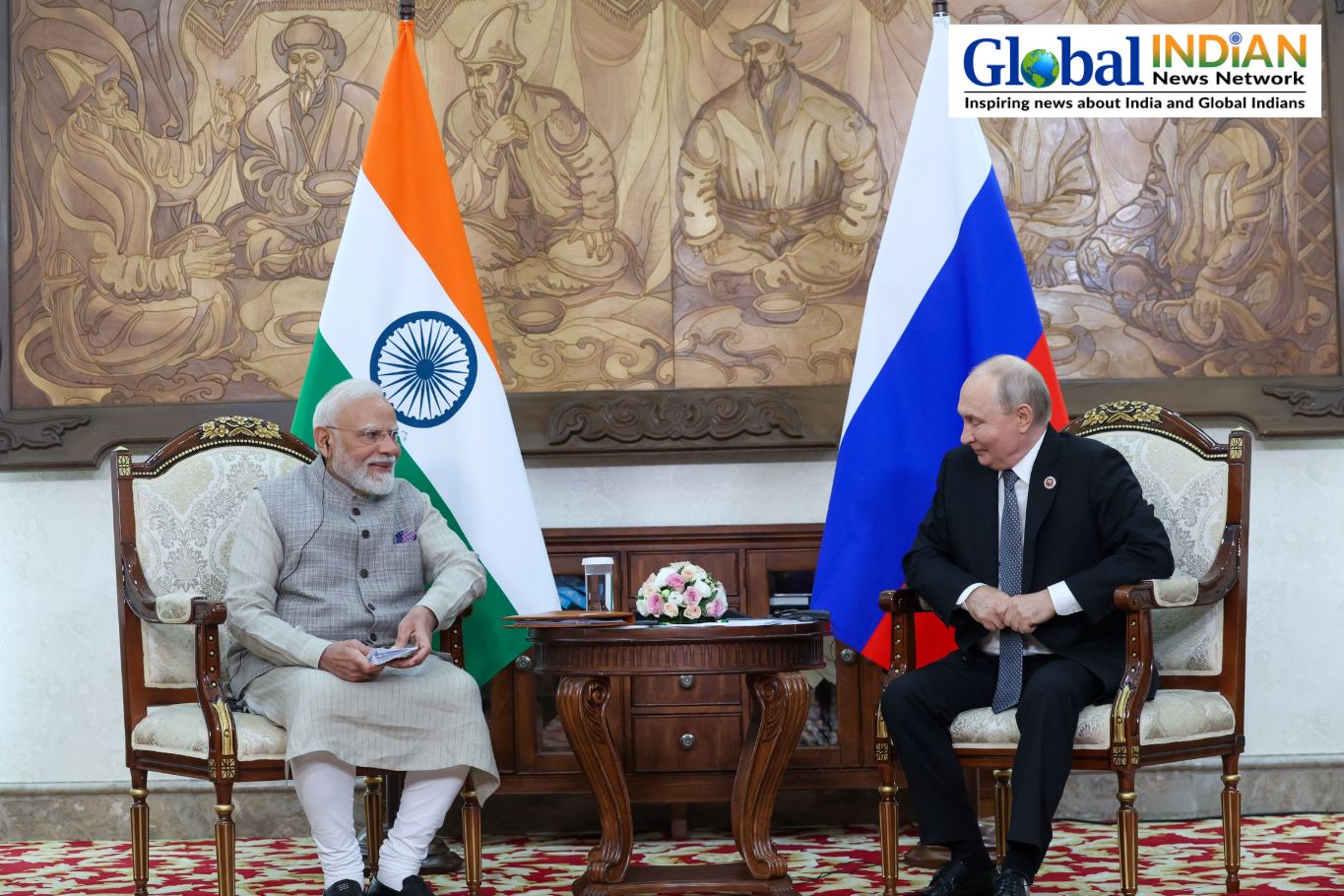
Russian President Vladimir Putin is expected to visit India by late 2025, while Indian Prime Minister Narendra Modi is preparing to attend the SCO Summit in China after seven years. Experts believe these moves signal the strengthening of a powerful bloc that challenges Western dominance in both trade and defense.
According to analysts, Trump’s tariffs will have limited impact in today’s multipolar economy. Since the creation of the WTO nearly 35 years ago, nations have been moving beyond a unipolar order. The India-China-Russia alliance reflects this shift, driven partly by a growing desire to reduce reliance on the US dollar.
Manish Bhandari of Vallum Capital explains the strengths of the triad: China’s manufacturing power, Russia’s energy resources, and India’s service economy with vast markets. Together, they represent $53.9 trillion in GDP (PPP)—almost a third of global output. With $5.09 trillion in exports and $4.7 trillion in foreign reserves, this partnership wields enormous economic influence.
The bloc’s ambitions extend beyond trade. Combined military spending of $549 billion accounts for over 20% of the world’s defense budget, while their energy consumption covers 35% of global demand. Analysts argue that this shift is not just about numbers but about a new balance of power, reducing dependence on the dollar and offering alternatives to Western-controlled trade routes.
India, in particular, is expected to play a central role. Its service sector and growing consumer base complement Russia’s energy and China’s industrial capacity. By purchasing Russian oil in local currencies, India and China have already started to bypass dollar-dominated systems.
Experts also suggest this triad could provide New Delhi leverage in negotiations over China’s Belt and Road Initiative, especially as US tariffs and European barriers squeeze Chinese exports. With supply chains diversifying toward India and Southeast Asia, the balance of global trade is shifting.
This strategic convergence signals the dawn of a new multipolar era—one where India, China, and Russia are set to shape the next chapter of global economic order.