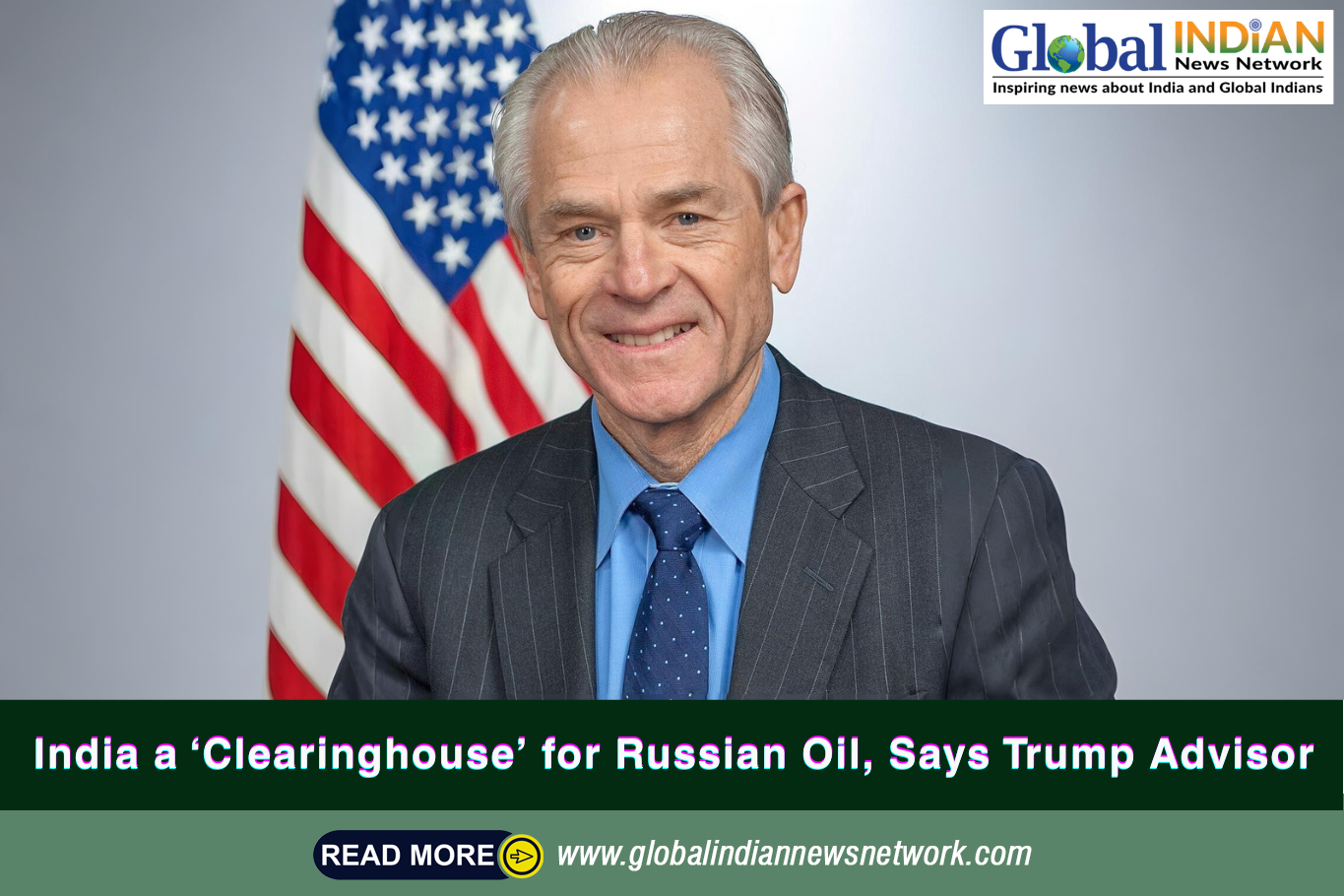
 Washington’s criticism of New Delhi’s energy choices has intensified, with White House trade adviser Peter Navarro warning that India’s continued purchases of Russian crude directly finance Moscow’s war effort in Ukraine. Writing in the Financial Times, Navarro argued that India’s position undermines its credibility as a US strategic partner, cautioning that New Delhi “is now cozying up to both Russia and China.”
According to NDTV, Navarro stressed that India cannot expect to be treated as a reliable ally of Washington while simultaneously expanding ties with two countries that are increasingly at odds with US interests. “If India wants to be treated as a strategic partner of the US, it needs to start acting like one,” he wrote, noting that the imports provide Russia with the dollars it needs to sustain its military campaign.
Earlier this month, President Donald Trump imposed an additional 25 percent tariff on Indian goods, citing New Delhi’s refusal to cut back on Russian oil. The move pushed total tariffs on Indian imports to 50 percent, compounding strain on trade relations between the two countries. India’s Foreign Ministry has defended its energy purchases, pointing out what it calls double standards — noting that while New Delhi is targeted for criticism, both the United States and the European Union continue to import significant volumes of Russian commodities.
Navarro also raised alarms about the transfer of advanced US military technology to India, saying such cooperation comes with risks given New Delhi’s growing engagements with both Moscow and Beijing. His comments reflect wider concern in Washington about India’s evolving foreign policy posture.
Meanwhile, India and China — longtime rivals — appear to be cautiously recalibrating their relationship. Chinese Foreign Minister Wang Yi is scheduled to arrive in New Delhi for border discussions with External Affairs Minister S. Jaishankar and National Security Advisor Ajit Doval. At the same time, Prime Minister Narendra Modi is expected to meet Chinese President Xi Jinping later this month during a major regional summit, underscoring the shifting dynamics.
Complicating matters further, a planned visit by US trade negotiators to New Delhi from August 25 to 29 has been cancelled, according to sources cited by NDTV. The cancellation has pushed back discussions on a potential trade agreement and dashed hopes that additional tariffs on Indian goods — set to take effect on August 27 — could be eased through negotiations.
As tensions escalate on multiple fronts, India finds itself navigating a delicate balance between Washington, Moscow, and Beijing. For New Delhi, the challenge lies in maintaining strategic autonomy while facing mounting pressure from the United States.