 The Western media’s reluctance to clearly highlight India’s superior performance during Operation Sindoor reflects a broader pattern of underplaying the nation’s growing military sophistication, according to a leading British publication.
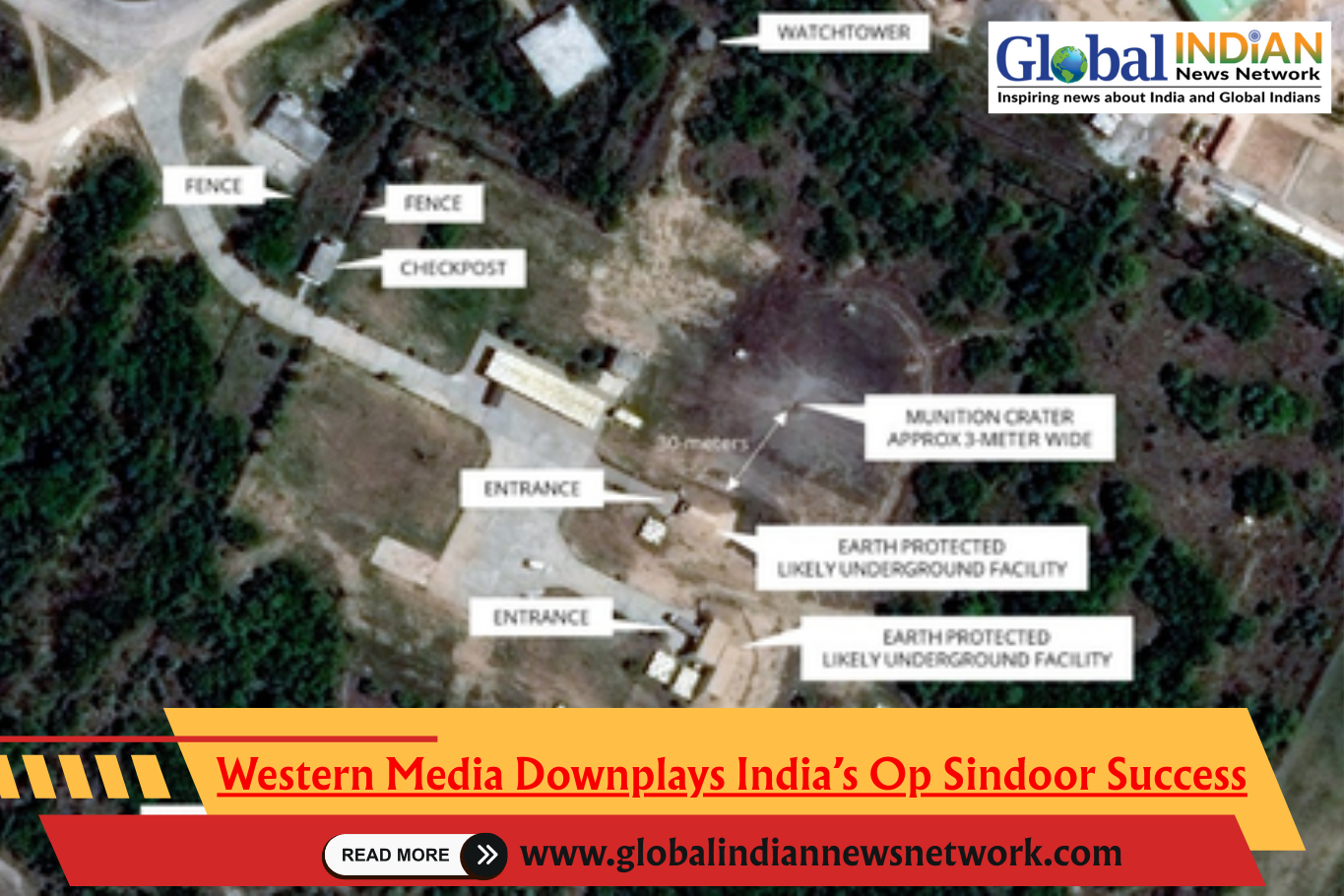
Launched on May 7 in response to the April 22 Pahalgam terrorist attack, Operation Sindoor targeted terror bases in Pakistan in one of India’s most decisive military actions since 1971. Satellite imagery and independent assessments confirmed extensive damage to Pakistani defence infrastructure, underscoring India’s precision strike capabilities and the operational disparity between the two countries.
Despite this evidence, major Western outlets portrayed the conflict as an equal exchange, avoiding acknowledgment of India’s technological and strategic edge. This approach often downplays India’s advancements while overemphasising Pakistani claims that lack verification.
Indian forces struck military installations across six airfields, demonstrating exceptional targeting accuracy and minimal collateral damage. Precision strikes at Bholari Air Base near Karachi damaged aircraft hangars, while control centres at Nur Khan Air Base in Rawalpindi — near Pakistan’s army headquarters — were hit effectively. The runway at Sargodha Air Base was damaged in multiple sections, and Rahim Yar Khan Air Base was rendered inoperable, as admitted by Pakistani authorities.
India’s operations also targeted radar installations and command centres, crippling Pakistan’s early warning systems. While Pakistan claimed retaliatory strikes between May 8–10, satellite data has not corroborated these assertions.
Analysts noted that Western reporting often highlighted Pakistani claims of civilian harm while ignoring the precision of Indian strikes on military targets — a selective emphasis not applied when covering other global military operations. This, they argue, reveals double standards and geopolitical biases.
The report further observed that Western sympathy towards Pakistan, driven by stability concerns, may be a strategic miscalculation given Islamabad’s growing alignment with China through projects like the Belt and Road Initiative, Chinese naval facilities at Gwadar, and significant military aid from Beijing. Such narratives, intentionally or not, risk strengthening a Chinese ally that directly challenges Western interests in the Indo-Pacific.