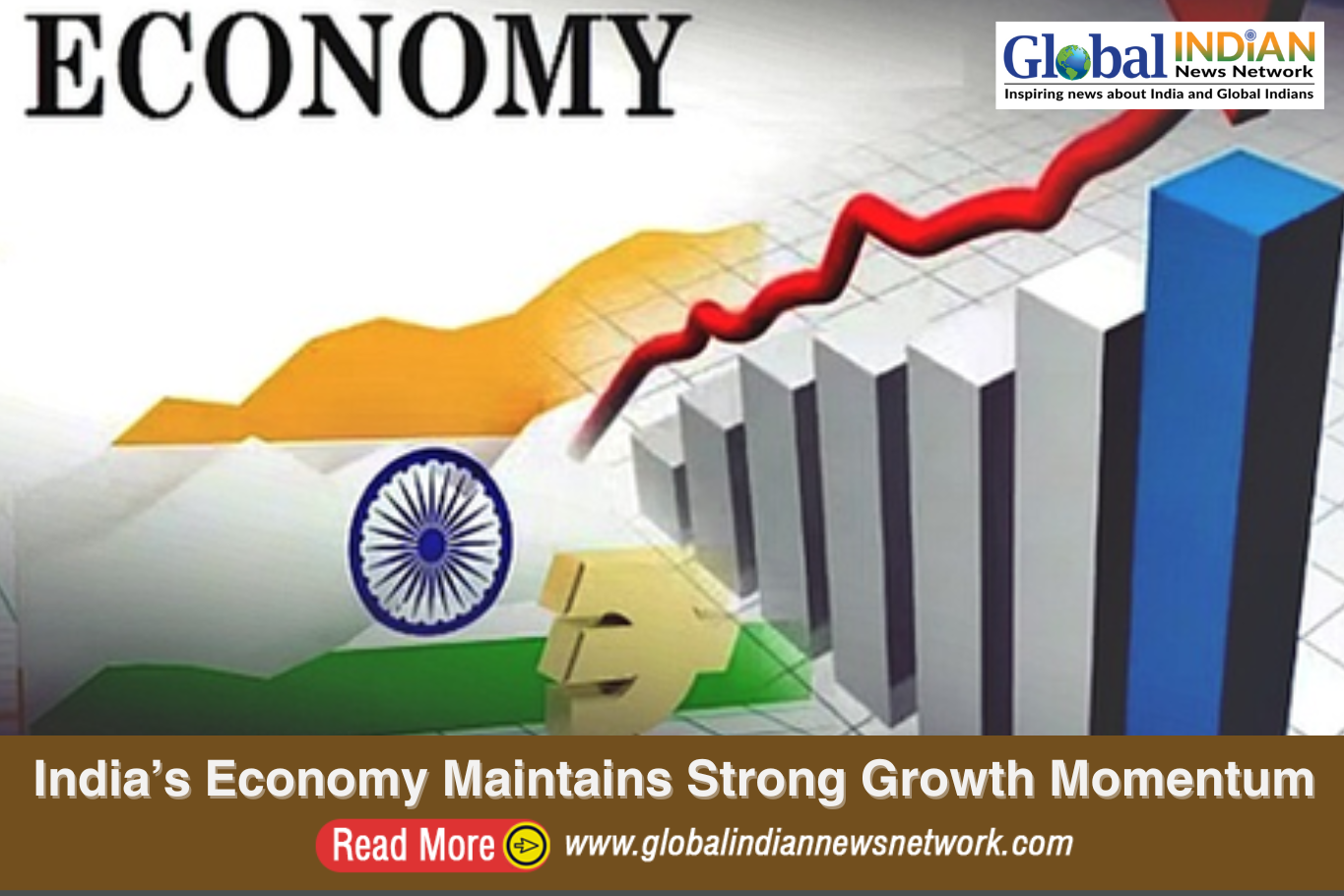
 India’s economy continues to display robust growth momentum, driven by resilient high-frequency indicators, according to Chief Economic Advisor V. Anantha Nageswaran. Speaking at an event in Mumbai, he emphasised that while trade-related challenges matter, they should not overshadow pressing priorities such as energy transition, AI development, and semiconductor manufacturing.
Nageswaran noted that last year’s consumption slowdown was primarily due to tight credit and liquidity conditions, prompting the government to introduce substantial middle-class tax cuts in the Union Budget. The Reserve Bank of India also cut policy rates by 100 basis points and ensured a liquidity surplus to stimulate growth.
On the potential impact of U.S. tariffs on India’s GDP growth, he said it was too early to draw conclusions. Instead, he urged policymakers and industry leaders to focus on building strategic capabilities. He identified AI and semiconductor manufacturing as critical areas where India must accelerate efforts to compete with global leaders like the United States and China.
The U.S. currently dominates AI research and chip design through companies such as Nvidia, Intel, and AMD, while China has scaled up chip manufacturing under state-backed initiatives. To bolster domestic capabilities, the Indian government has launched the Semicon India initiative, with the Cabinet Committee on Economic Affairs recently approving ₹4,600 crore for four semiconductor projects in Odisha, Punjab, and Andhra Pradesh.
Highlighting emerging shifts in consumer behaviour, Nageswaran pointed to a sharp rise in online gaming and options trading. In July alone, monthly spending on online gaming reached about ₹10,000 crore, implying an annualised run rate of ₹1.2 lakh crore. Drawing a parallel with speculative trading in derivatives, he remarked that such scenarios typically favour the platform operators rather than the participants.
He also observed that urban consumption is increasingly moving from listed to unlisted companies, leading to gaps in data capture for services consumption. To address these challenges, Nageswaran called for stronger public-private collaboration, long-term investment commitments, and a focus on national strategic objectives over short-term gains.