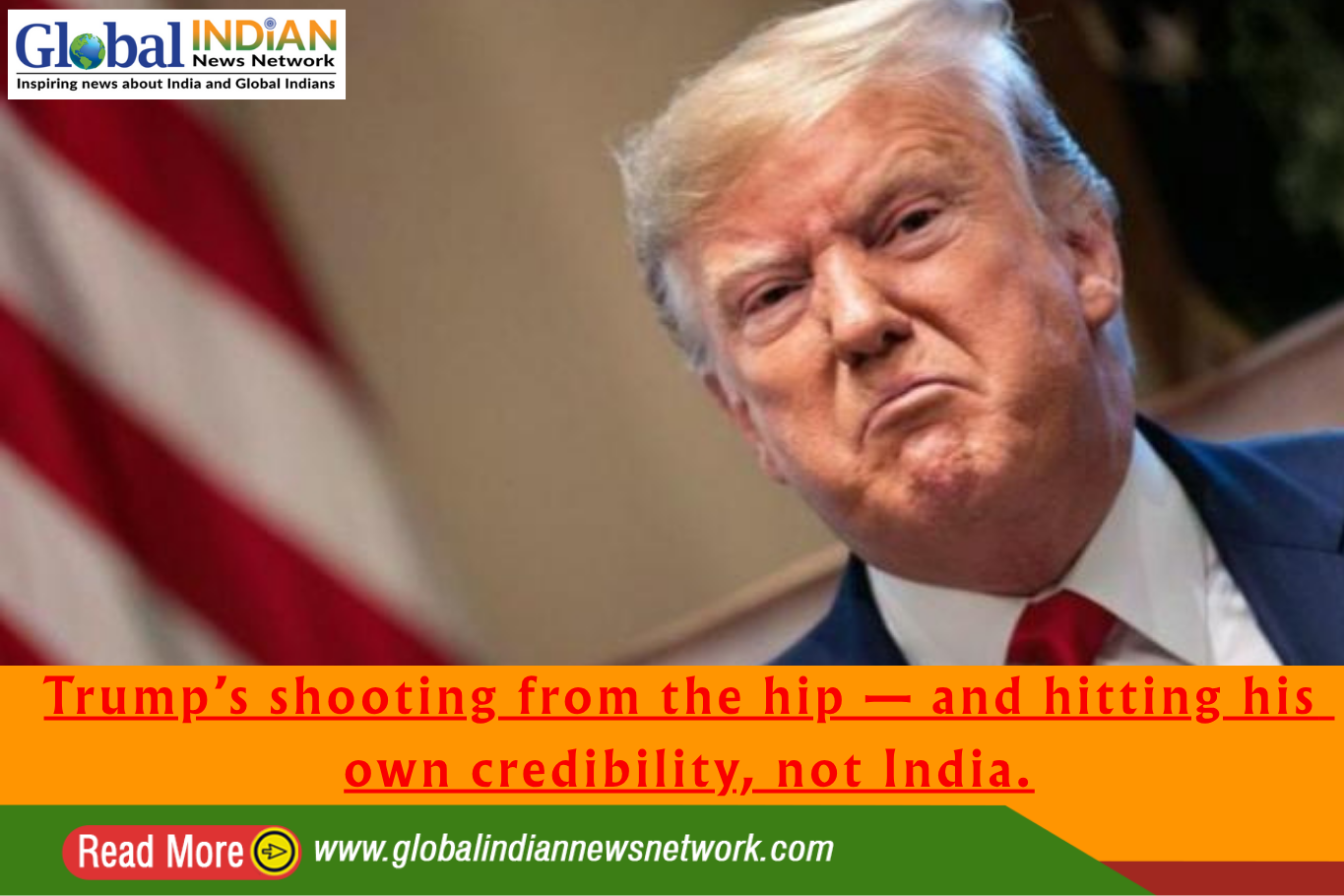
 In early August 2025, U.S. President Donald Trump stirred controversy by calling India a “dead economy” in a Truth Social post. This remark came alongside his claim that “we do very little business with India” and the announcement of steep tariffs—first 25%, then raised to 50%—targeting Indian imports in retaliation for New Delhi’s ongoing trade in Russian oil and defense equipment.
These comments, however, do not align with reality. U.S.-India trade hit record highs in recent years, with two-way goods and services trade exceeding $200 billion annually. India remains one of America’s fastest-growing trade partners, while the Indian economy itself is widely recognized as one of the most dynamic in the world.
India Still Roaring, Not “Dead”
- India is the fastest-growing major economy, with GDP growth projected to surpass 6% in 2025—more than twice the global average.
- According to the Reserve Bank of India, the country now contributes about 18% of global growth, compared with the U.S.’s 11%.
- The World Bank and IMF continue to forecast strong growth in exports, services, and manufacturing, reinforcing India’s status as a vital driver of global expansion.
Tariffs and Market Reaction
Indian equity markets reacted cautiously to the tariff escalation, with the iShares MSCI India ETF posting weekly and monthly declines. However, the fundamentals remain strong—and ironically, Trump-branded real estate projects in Gurgaon, Mumbai, and Pune continue to thrive, a sign of ongoing investor confidence in India’s future.
Political and Public Pushback
Union Minister Piyush Goyal countered Trump’s narrative, noting India’s transformation from the “Fragile Five” to the world’s top five economies and projecting it will soon become the third-largest economy.
Congress MP Shashi Tharoor dismissed the remarks as political posturing, saying Trump’s words should be viewed in context rather than as objective economic assessment.
Prime Minister Narendra Modi responded indirectly, citing India’s rapid infrastructure growth—such as the expansion of the metro network from five cities in 2014 to over 1,000 kilometers in 24 cities—as evidence of unstoppable progress.
Why These Statements Hurt Trump and America
While strong rhetoric can be part of trade negotiations, publicly dismissing a major ally’s economy as “dead” or downplaying bilateral trade sends the wrong message—both to India and the global community. India is not just a key economic partner; it is a strategic ally in the Indo-Pacific, a major democracy, and a counterbalance to China.
Such remarks risk damaging diplomatic trust, alienating one of America’s fastest-growing markets, and undermining U.S. credibility. Internationally, they can be seen as disrespectful and dismissive, reducing President Trump’s stature on the world stage and potentially limiting America’s ability to build coalitions on trade, security, and climate issues.
Bottom line: President Trump’s “dead economy” and “very little business” claims may grab headlines, but they clash with hard economic facts and risk damaging both his and America’s global image. India remains vibrant, growing, and increasingly important—and America stands to gain more by engaging constructively than by disparaging.