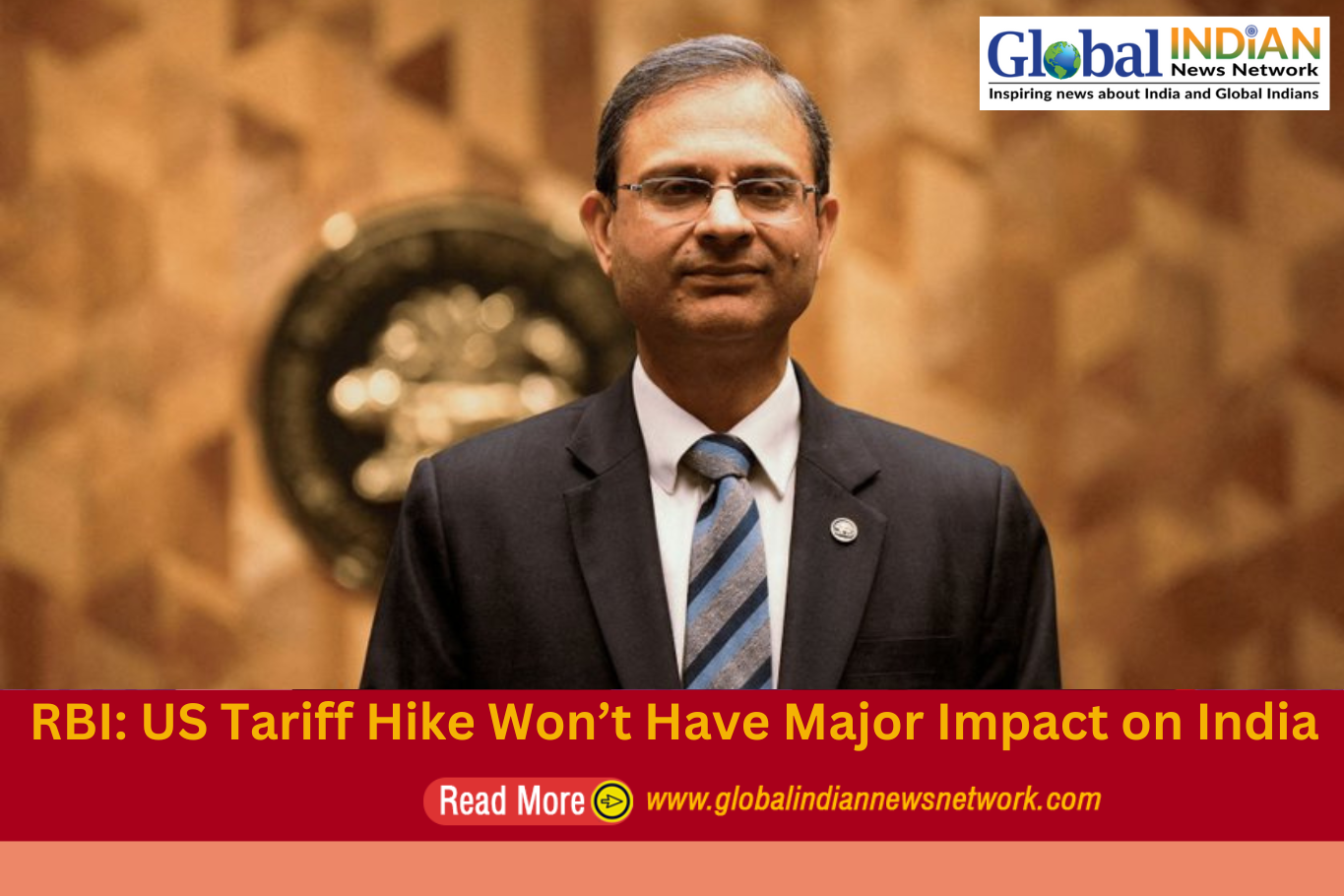
 Reserve Bank of India (RBI) Governor Sanjay Malhotra expressed confidence that the recent tariff hikes imposed by the United States would not significantly disrupt India’s economic stability. Addressing the media following the RBI’s latest monetary policy review, Malhotra emphasized that unless India introduces retaliatory tariffs, the effects of the US actions would be minimal. “We don’t anticipate any major economic fallout unless countermeasures come into play, which seems unlikely,” he noted.
Malhotra added that diplomatic dialogue could lead to a peaceful resolution of current trade tensions between New Delhi and Washington. The RBI had already adjusted its GDP growth outlook for FY 2025–26 to 6.5%, a slight revision from its earlier 6.7% estimate, to account for various global risks.
Highlighting the strength of India’s foreign exchange reserves, the RBI Governor stated that the central bank is well-equipped to handle external shocks, with reserves sufficient to cover imports for 11 months. “We’re confident in our ability to manage external sector pressures,” he said.
On concerns about inflation, particularly regarding reduced Russian oil imports due to geopolitical strains, Malhotra pointed out that India sources crude from multiple countries. Any shift in this supply mix, he said, would depend on global oil prices and how much of the cost is absorbed by government tax policy. “We believe the government would act prudently to cushion consumers if any price shocks occur,” he added.
Echoing this view, RBI Deputy Governor Poonam Gupta remarked that global factors are unlikely to cause a major rise in inflation. She stressed that about 50% of India’s inflation basket is made up of food items, which are primarily influenced by domestic supply conditions rather than international developments.
Both RBI officials struck a reassuring tone, suggesting that despite the turbulence in global trade and energy markets, India remains in a strong position to weather any short-term volatility.