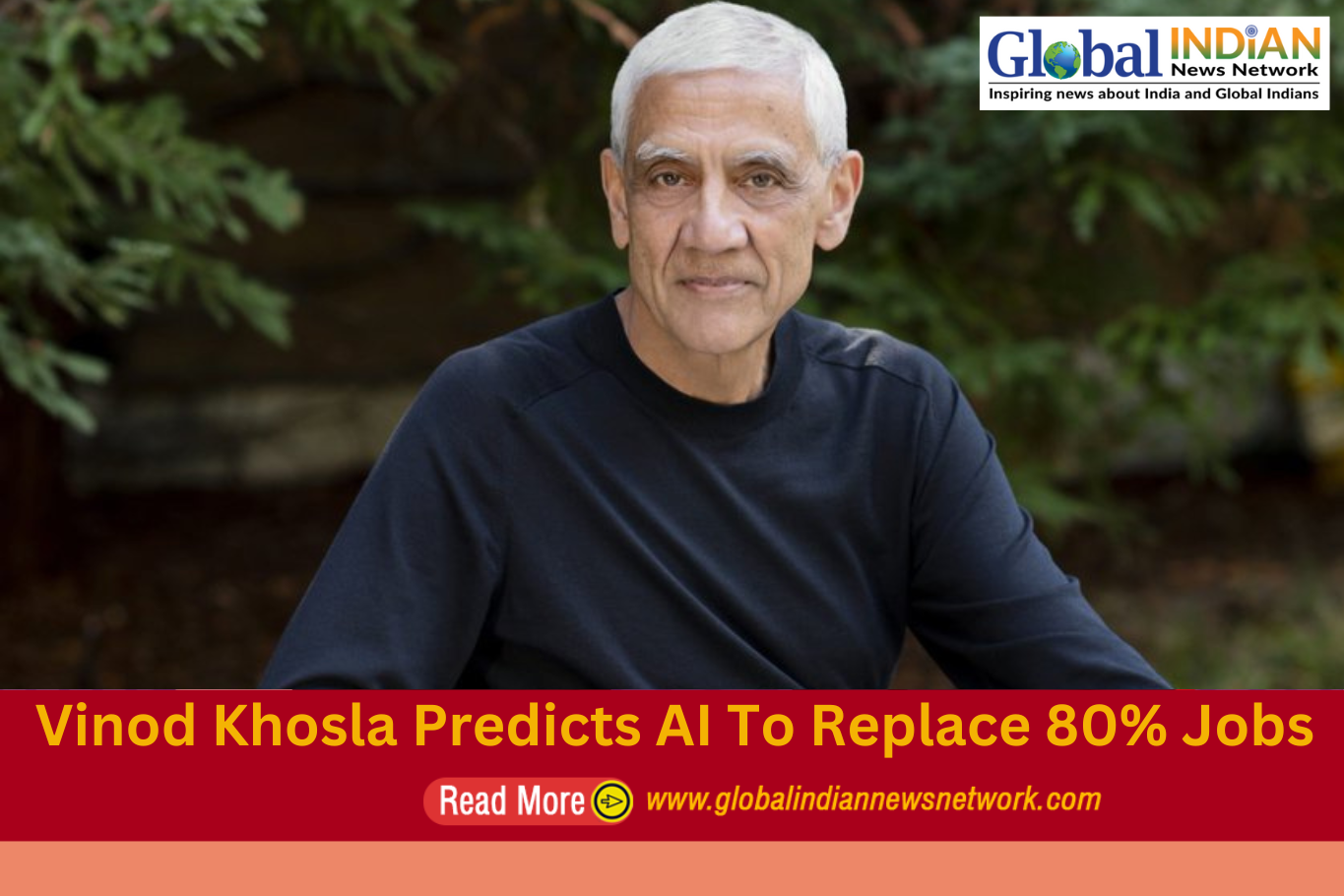
 Indian-American billionaire and venture capitalist Vinod Khosla has issued a bold forecast about the future of work. During a podcast interview with Zerodha’s Nikhil Kamath, Khosla predicted that artificial intelligence (AI) could replace up to 80% of current jobs within the next three to five years. While the number may sound alarming, he highlighted the massive opportunities AI will also create for those who are quick to adapt and constantly learning.
Khosla emphasized that success in tomorrow’s world will hinge less on deep expertise in one area and more on the ability to learn quickly and apply first principles thinking. He encouraged young professionals to prioritize flexibility and embrace a mindset of exploration. “Don’t aim to be a specialist; instead, be a generalist who can pivot and evolve,” he advised.
He believes the pace of innovation in the next 15 years will exceed that of the last 50, transforming sectors like engineering, finance, education, and healthcare. But, he warned, those unfamiliar with AI tools will be replaced by those who master them first. Startups won’t succeed simply because they use AI—it’s the human choices and creativity behind AI usage that will make the difference.
Khosla also presented a compelling vision for India’s future, especially in rural regions. He imagined a world where AI-powered services could deliver top-quality education and healthcare at near-zero cost. For example, an AI tutor could rival elite private schooling, and AI-driven medical advice in a village might even outperform Stanford-level cardiologists in terms of access and affordability. According to him, half the economy could be supported by nearly free, software-driven public services.
He sees this technological shift as a potential equalizer, not a threat, especially for ambitious minds in small towns. The key, he stressed, is nurturing curiosity, building systems thinking, and embracing change. “Education now must teach us how to learn, not just what to learn,” he said.
Ultimately, Khosla’s message was clear: AI is a powerful tool, and it’s up to us—humans—to decide how we use it. Those who stay rigid risk becoming obsolete, but those who adapt can lead the future.