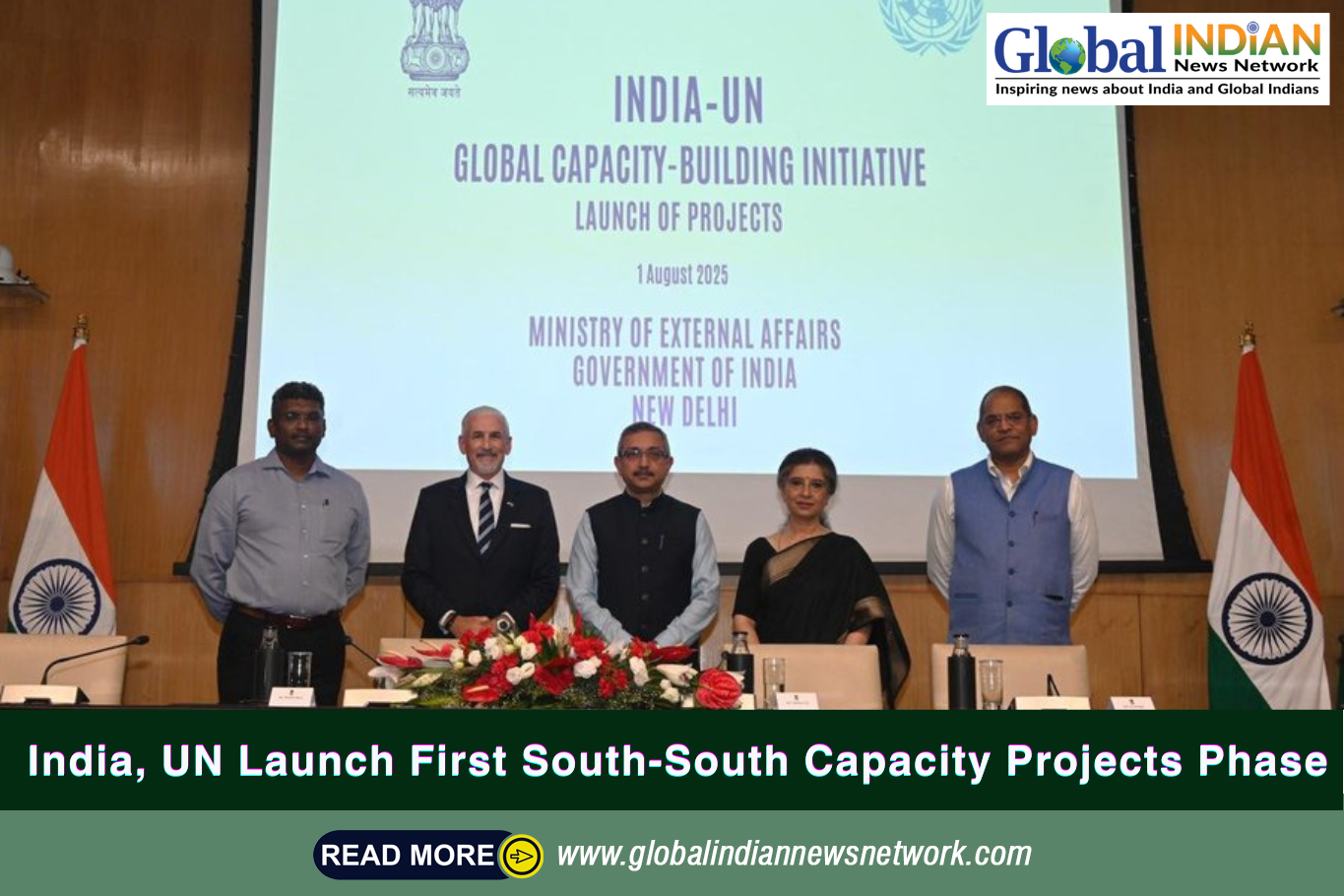
In a significant push for global collaboration and Sustainable Development Goals (SDGs), India and the United Nations have officially rolled out the first phase of their joint Global Capacity-Building Initiative. This phase encompasses four distinct development projects across nine countries: Zambia, Laos, Nepal, Barbados, Belize, Saint Kitts and Nevis, Suriname, Trinidad & Tobago, and South Sudan.
The announcement was made on August 1 in New Delhi by Tanmaya Lal, Secretary (West) in the Ministry of External Affairs. The event saw the presence of UN Resident Coordinator Shombi Sharp, diplomats, ITEC representatives, and officials from key UN and Indian institutions.
The initiative aims to strengthen South-South cooperation through focused efforts in four critical areas: food security, public health, vocational education, and census preparedness. These projects will use India’s development expertise and best practices to uplift peer nations, aligning with SDG-17, which emphasizes global partnerships.
Under this collaboration, the United Nations will act as a bridge to connect India’s innovative institutions and development models with the needs of the Global South. These capacity-building actions will be supported by the newly established UN India SDG Country Fund and implemented in part through the Indian Technical and Economic Cooperation (ITEC) framework.
Speaking at the launch, Tanmaya Lal emphasized the importance of mutual learning and international collaboration, noting that this initiative is a reflection of India’s growing global leadership in development cooperation.
UN Resident Coordinator Shombi Sharp echoed this sentiment, highlighting India’s continued commitment to the philosophy of Vasudhaiva Kutumbakam—”the world is one family.” He noted that India’s proactive approach and innovation-driven institutions are helping expand the scope and impact of South-South partnerships.
These efforts mark a promising beginning for long-term international cooperation aimed at shared prosperity, equity, and sustainable progress in developing regions.