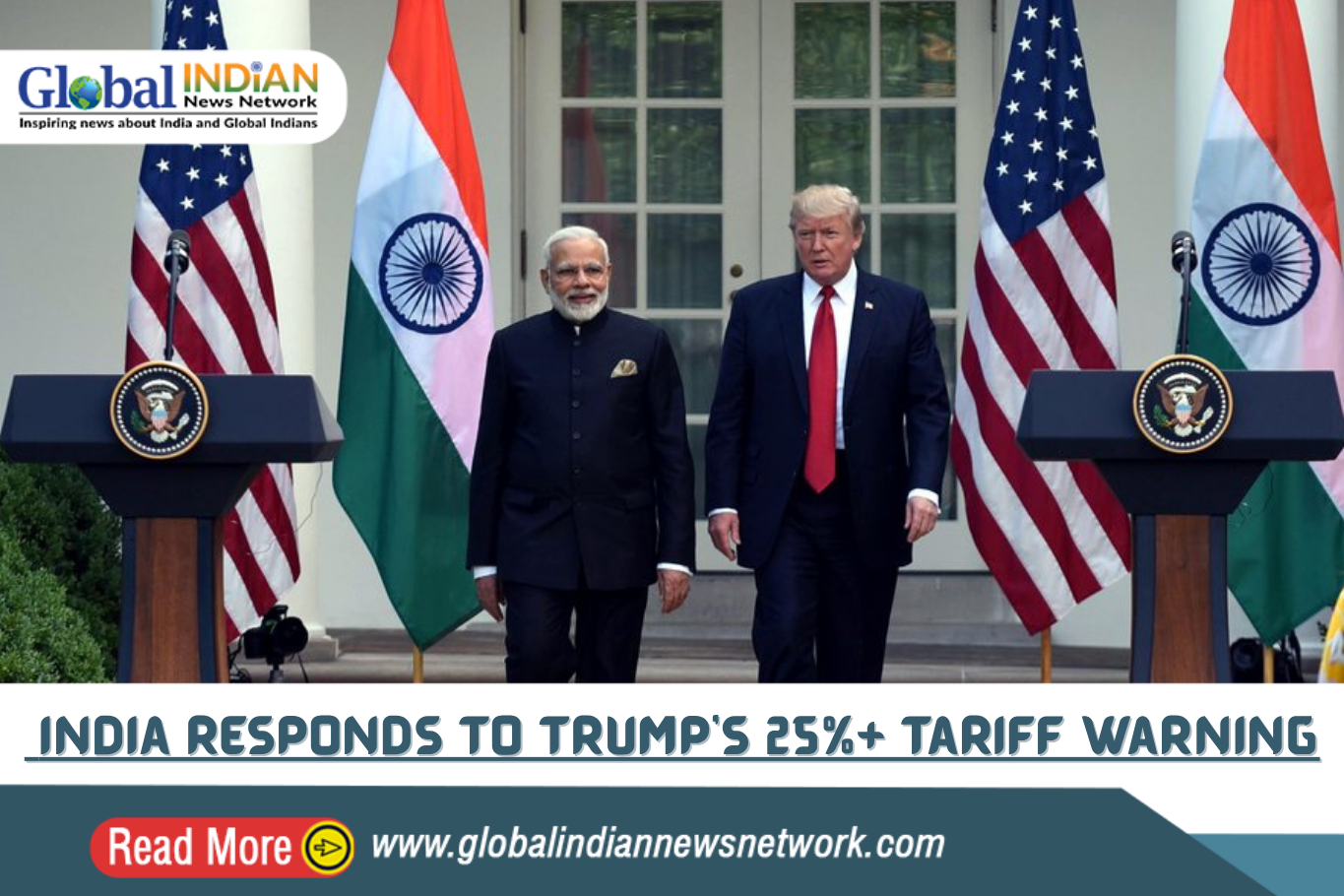
 In a strong move targeting India’s trade practices, US President Donald Trump has announced a 25% tariff along with an additional penalty on Indian imports starting August 1. Labeling India’s trade environment as heavily restricted, Trump stated that the country maintains “the highest tariffs in the world” and imposes “obnoxious non-monetary barriers” that have long hindered equitable trade with the United States.
Reacting to Trump’s social media declaration, India’s Ministry of Commerce & Industry issued a calm yet firm statement. The government affirmed it had taken note of the development and is reviewing the potential implications. India reiterated its commitment to reaching a fair, balanced, and mutually beneficial trade agreement with the US, emphasizing that negotiations had been ongoing for several months. The ministry also highlighted that all actions necessary would be taken to defend national interests.
The Indian government stressed the significance it places on safeguarding the interests of domestic farmers, small business owners, and micro-enterprises. Referring to its recent Comprehensive Economic and Trade Agreement with the United Kingdom, the ministry made it clear that national priorities would not be compromised in any global trade pact.
Trump’s announcement also criticized India’s continued defense and energy relations with Russia. He pointed out that India remains a top buyer of Russian arms and energy resources—even during the Ukraine conflict. He stated, “India has long sourced its military equipment from Russia and continues to be one of its biggest energy buyers, alongside China—at a time when the world is urging Russia to halt the war in Ukraine.”
Concluding his post with a definitive warning, Trump said the 25% tariff and associated penalties would take effect August 1, underlining his dissatisfaction with the current trade setup. Despite this pressure, India appears poised to handle the situation diplomatically, focusing on balanced negotiations while upholding the interests of its economic sectors.