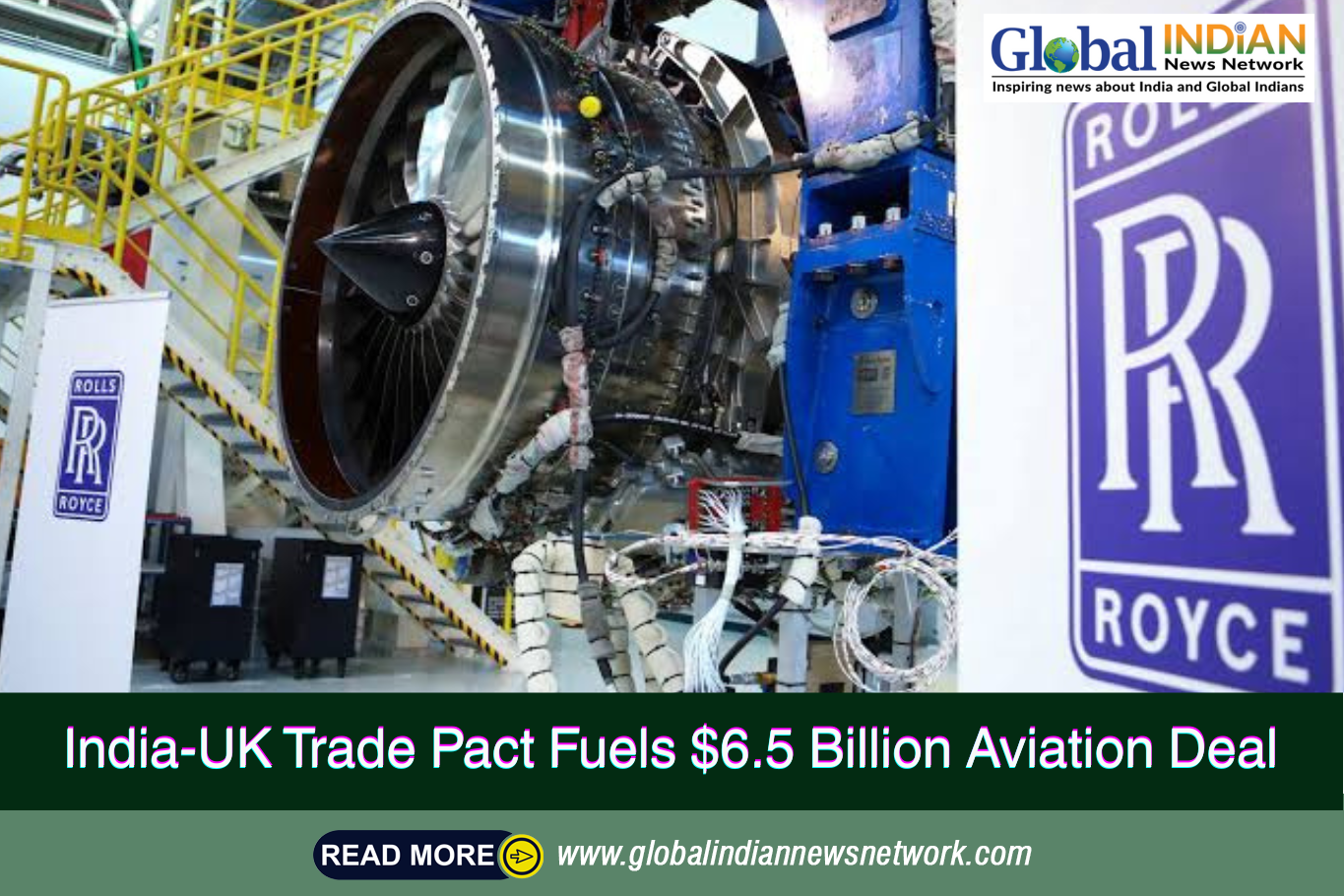
Airbus and Rolls-Royce have landed multi-billion-dollar contracts totaling nearly $6.5 billion to supply aircraft and advanced engines to Indian carriers, a breakthrough commercial result of the newly signed India-UK Free Trade Agreement (FTA). This development comes just a day after the landmark pact was finalized on July 24, 2025, showcasing early benefits of reduced trade barriers and enhanced economic cooperation.
The agreement, which slashes the average tariff on UK exports to India from 15% to just 3%, immediately unlocked business opportunities across sectors. European aviation leader Airbus and British engineering icon Rolls-Royce will jointly deliver state-of-the-art aircraft and Trent XWB engines, empowering India’s fast-growing aviation market while supporting thousands of manufacturing jobs in the UK.
Prime Minister Narendra Modi praised the agreement as a transformative moment for both economies, highlighting how it reduces business costs and drives cross-border investments. Already, over two dozen UK-based firms—including Indian-founded Carbon Clean and med-tech innovator Occuity—have announced major commercial ventures in India as a direct result of the deal.
The aerospace contracts aim to boost air connectivity across India and align with the country’s vision to modernize its aviation network. Rolls-Royce engines are expected to power fuel-efficient fleets, aligning with global sustainability goals. This collaboration also sets the stage for future industrial partnerships and technology sharing between the two nations.
But the benefits extend beyond aviation. The FTA opens up duty-free access for Indian exporters of spices, seafood, and turmeric, offering a boost to Indian farmers, while also safeguarding sensitive agricultural sectors in the UK. British Prime Minister Keir Starmer described the deal as a “historic achievement” that will lower prices for UK consumers, especially on clothing and shoes, while lifting wages and living standards.
Looking ahead, the FTA aims to double two-way trade to $120 billion by 2030, creating tens of thousands of new jobs across sectors such as clean energy, agri-tech, medical devices, and advanced manufacturing. The deal represents a strategic leap in India-UK relations, cementing a long-term alliance built on mutual growth, innovation, and global competitiveness.