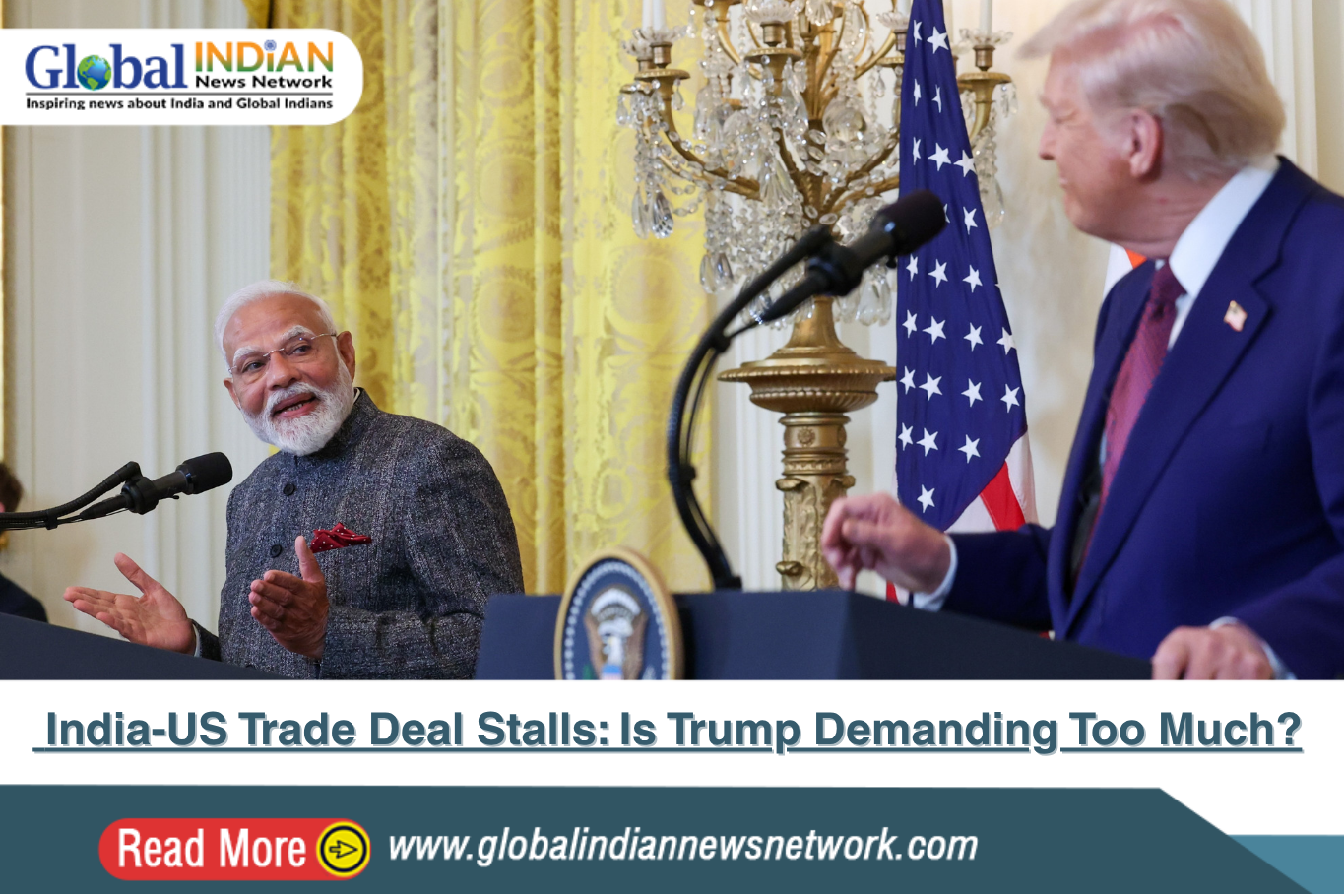
Despite months of negotiations and several rounds of dialogue, India and the United States have not yet sealed a trade agreement. Meanwhile, Washington has finalized trade deals with countries like Vietnam, Indonesia, Japan, and the Philippines in recent weeks.
The fifth round of discussions between the two nations ended without any breakthrough. Though US officials have claimed that a deal with India is “close,” several contentious issues continue to hold back progress.
A major obstacle remains India’s insistence on protecting its agriculture and dairy sectors. With over 700 million people in rural India dependent on farming—including around 80 million small dairy farmers—India is pushing back against the US demand for reduced tariffs on products like dairy, wheat, rice, and genetically modified crops. The US, however, is eager for greater market access, especially for GM foods, ethanol, corn, apples, and almonds.
India is also pressing for tariff reductions on its exports to the US, especially steel, aluminium, and automotive components. For example, the US recently raised import tariffs on Indian steel to 50%.
Beyond tariffs, digital trade has become another sticking point. Washington wants its tech firms to gain broader access to India’s digital market, while New Delhi remains cautious due to data protection and intellectual property concerns. The US also sees India’s data localization rules as protectionist.
Adding a strategic layer to the friction, India’s involvement with BRICS and continued energy ties with Russia have drawn concern from Washington. Analysts warn that increased India-China-Russia cooperation could disrupt US geopolitical priorities.
Experts argue the US is applying tougher demands on India than on countries like Japan. Unlike smaller economies that accepted limited concessions, India is negotiating harder due to the political and economic sensitivity of sectors involved.
India’s trade deficit with the US—nearly $45.7 billion in 2024—adds another layer of complexity, as does its average tariff rate of 17%, compared to just 3.3% in the US.
Talks are expected to resume in August when a US delegation visits Delhi. Though India has not yet received formal notice of upcoming US tariffs (unlike 14 other countries), time is running short, and pressure is mounting on both sides to find common ground.