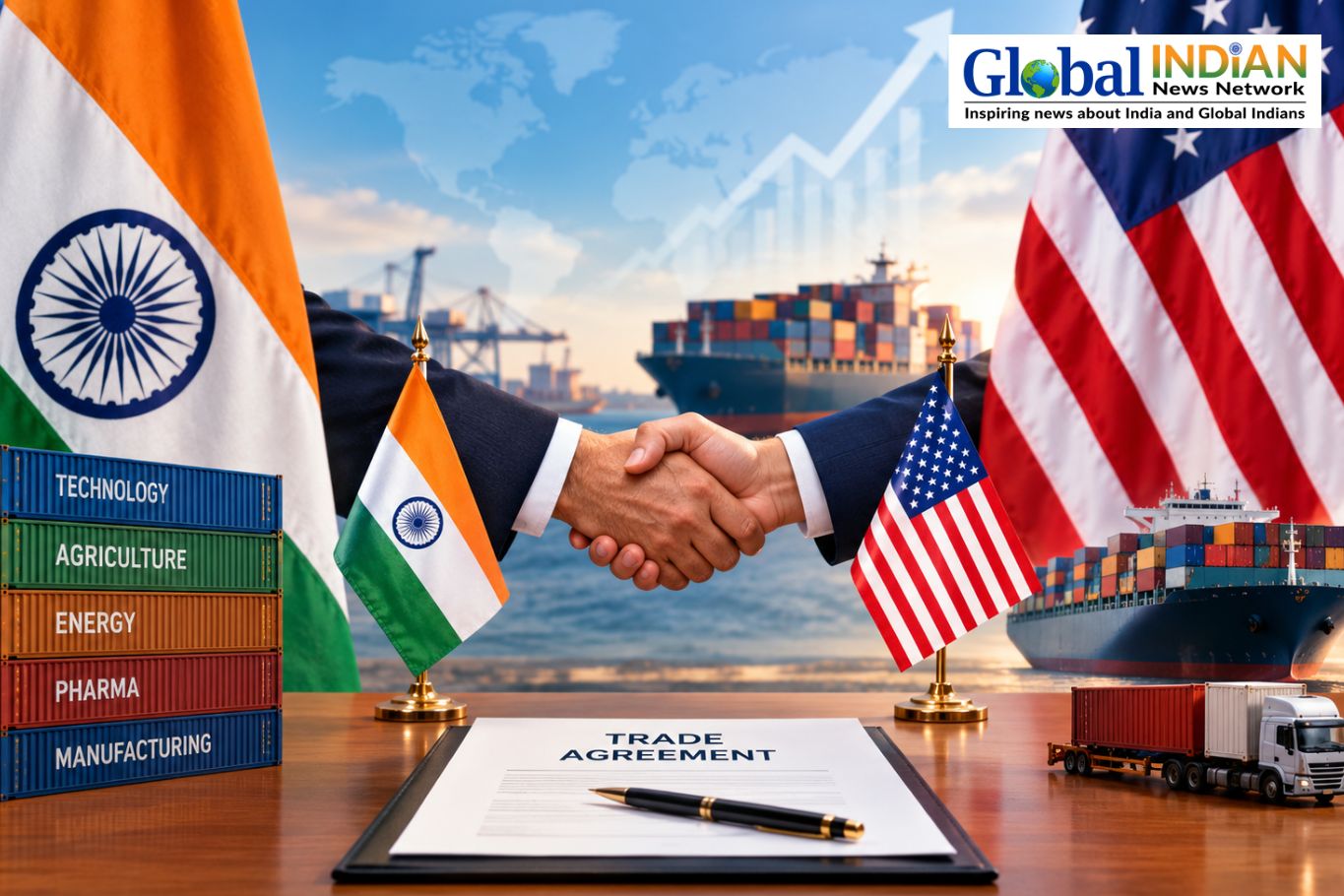
Trade discussions between India and the United States have picked up momentum as both nations aim to conclude an interim agreement before August 1. Former US President Donald Trump hinted at expanding market access, underscoring the urgency of the negotiations. Talks are set to continue into September and October, but both sides are working toward a short-term trade arrangement first.
According to government sources, a US delegation will visit India in late August for another round of discussions. Last week, both countries completed their fifth negotiation round in Washington, led by India’s chief negotiator Rajesh Agrawal and US Assistant Trade Representative Brendan Lynch.
Key sectors under negotiation include agriculture, dairy, automobiles, and steel. India remains firm in rejecting tariff cuts on dairy products, citing its consistent stance across all free trade agreements. Indian farmers’ organizations have urged the government to keep agricultural matters off the table in any trade deal.
India has requested the US to remove its additional 26% tariff and reduce levies on steel and aluminum by 50%. The automotive sector is another critical point, with India seeking relief from the current 25% tariffs. Simultaneously, India wants preferential tariff treatment for its labor-intensive industries such as textiles, gems, jewelry, leather goods, garments, plastics, chemicals, shrimp, oilseeds, grapes, and bananas.
On the US side, there’s a push for India to reduce duties on selected industrial products, automobiles—especially electric vehicles—alongside wines, petrochemicals, agricultural produce, dairy, apples, tree nuts, and genetically modified crops.
Earlier this year, Trump announced reciprocal tariffs on multiple nations. Although the US initially delayed implementing these higher tariffs until July 9, they extended the deadline to August 1 to continue trade talks.
Meanwhile, India’s exports to the US surged by 22.8% in the April to June quarter, reaching $25.51 billion. As both nations navigate trade tensions, their focus remains on creating a mutually beneficial deal that addresses duties, market access, and non-market economy regulations.