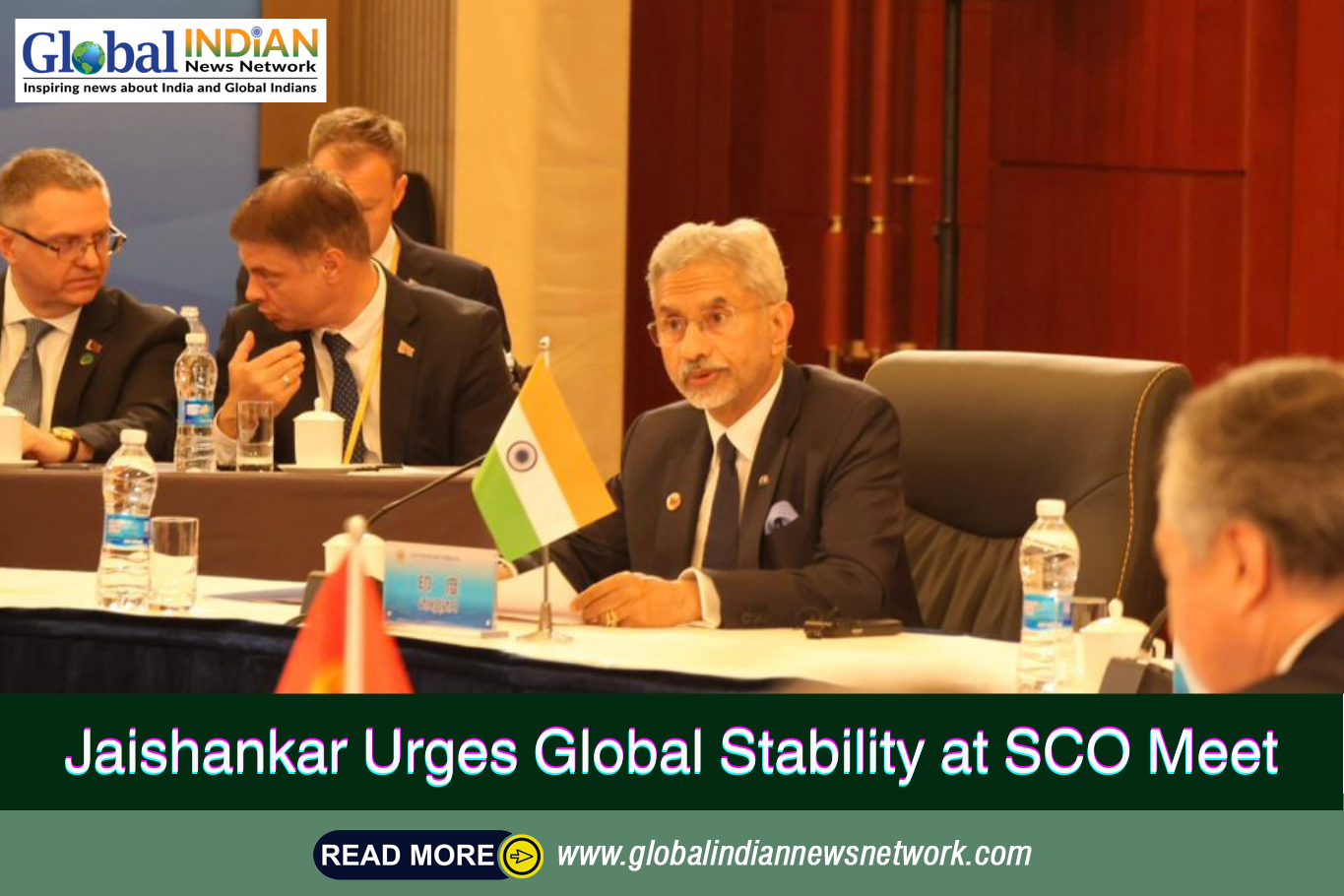
 Amid growing global uncertainties, India’s External Affairs Minister S Jaishankar urged nations to collaborate in restoring stability to the world order. Speaking at the Shanghai Cooperation Organisation (SCO) Council of Foreign Ministers’ meeting in Tianjin, he expressed concern over the increasing prevalence of conflicts, competition, and coercion in international relations. Jaishankar stressed the need for urgent action to address these issues, particularly given the current climate of economic turbulence and geopolitical friction.
Jaishankar highlighted that the global system has become significantly more disordered in recent years. He pointed to the rising number of conflicts and trade disputes as symptoms of this instability. The minister emphasized the importance of reducing risks across various sectors, including economic and security domains, while working collectively to tackle long-standing global challenges that threaten shared interests.
Chinese Foreign Minister Wang Yi, who is also a member of the Political Bureau of the Communist Party of China’s Central Committee, addressed the meeting as well. He presented a strategic vision for the SCO’s evolution, offering five key proposals to help guide the organization through a period of dramatic global shifts. According to Wang, the world is witnessing an accelerated pace of changes not seen in a century, with traditional power structures giving way to a more multipolar landscape.
Wang noted that while economic globalization continues to expand and the Global South gains influence, challenges such as hegemonic practices, protectionist policies, and regional conflicts are escalating. He called on SCO member nations to strengthen the group’s unity and build a framework that aligns with both historical responsibility and future security.
Jaishankar and other foreign ministers from the SCO’s member states were present at the meeting, reinforcing the need for dialogue and consensus-building during a period marked by global turbulence. Both India and China, despite their bilateral tensions, appear to agree on the broader goal of stabilizing international systems and fostering cooperation within the SCO framework.
The summit concluded with calls for stronger collaboration to handle the current geopolitical shifts and safeguard collective global interests.