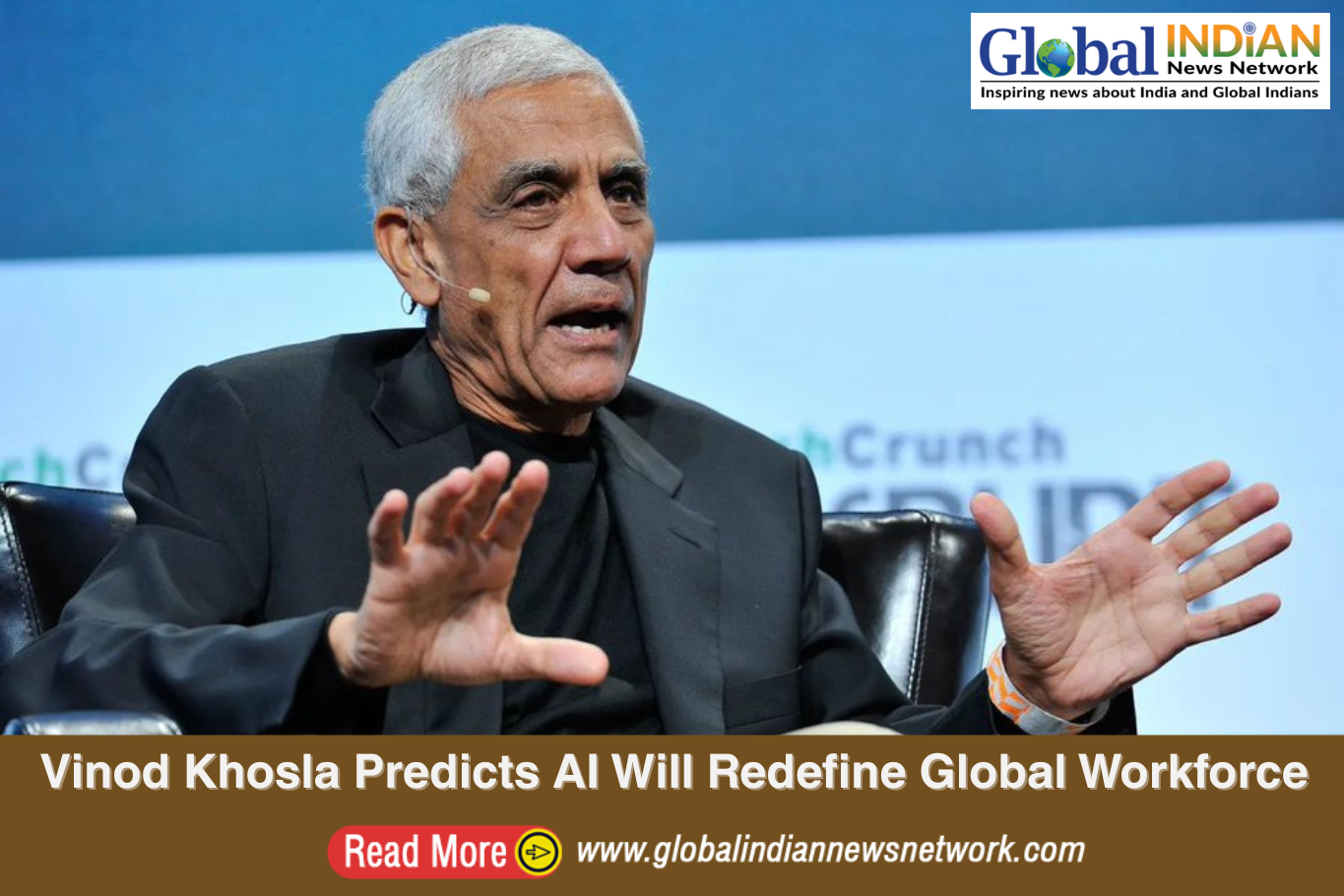
Prominent Silicon Valley venture capitalist Vinod Khosla has issued bold predictions about the sweeping impact of artificial intelligence on the global economy and workforce. Speaking on the “Uncapped With Jack Altman” podcast, Khosla projected that within just five years, AI systems will be capable of performing 80% of economically valuable tasks currently done by humans. His comments represent one of the most accelerated timelines for AI integration voiced by a top tech investor.
Khosla, co-founder of Khosla Ventures and an early backer of companies like Square and Instacart, described AI as the most disruptive force he has seen in decades. Comparing the scale of change to the technological revolutions of the 1960s, he suggested that nearly every job and industry is on the brink of reinvention.
By 2040, Khosla envisions a world where the necessity to work disappears. He believes people will choose to work based on passion, not financial obligation. This potential “post-work society” would redefine how economies function, shifting away from survival-driven labor.
The veteran investor also warned that large corporations face existential threats from AI-led innovation. He anticipates the 2030s will witness a record-breaking rate of Fortune 500 company failures, as new market entrants leverage AI to create disruptive models that established firms cannot match. Khosla compared this to past corporate collapses like Sears and Toys “R” Us, but expects AI to accelerate such changes dramatically.
Khosla outlined specific sectors he believes AI will transform. In healthcare, he predicts AI will make expert medical advice universally accessible, essentially removing scarcity in specialized care. Consumer robotics will follow, with humanoid robots performing household tasks like cooking becoming mainstream by the 2030s. He is also optimistic about energy breakthroughs, particularly in fusion and ultra-high-temperature geothermal, which could drastically cut electricity costs.
He cautioned, however, about geopolitical risks, particularly from authoritarian regimes like China using AI for both defense and social influence. Despite these concerns, Khosla remains committed to investing in high-risk, high-reward technologies, emphasizing that entrepreneurs—not experts—will shape the future.
His projections challenge society to rethink labor, education, and the very structure of global economies in an AI-driven world.