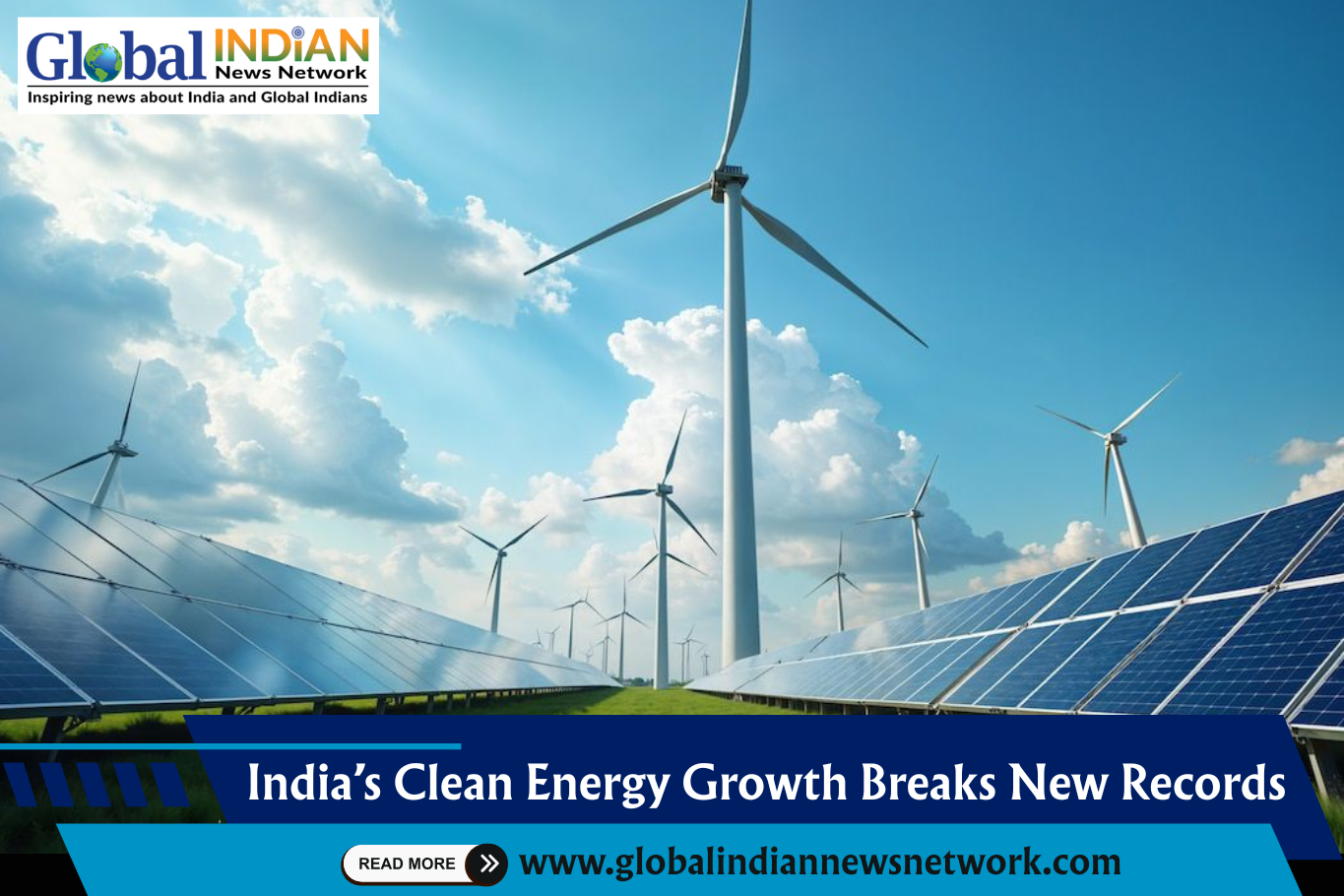
 India’s renewable energy landscape has seen a monumental transformation in June 2025, with a 420% year-over-year increase in capacity additions. According to Union Minister for New and Renewable Energy, Mr. Pralhad Joshi, the nation’s clean energy installations surged from 1.4 gigawatts (GW) in June 2024 to 7.3 GW this year. Speaking at the IVCA Renewable Energy Summit in Mumbai, he emphasized this achievement as a milestone in India’s journey toward green energy leadership.
A standout success in this transition is India’s solar power sector, which expanded an extraordinary 4,000% since its early days. Solar capacity has skyrocketed from just 2.82 GW to a massive 117 GW in 2025. Wind energy is also seeing significant momentum, growing 140% to reach 51.7 GW compared to 21 GW a few years ago.
One of the most notable shifts is in solar pricing. Over the last decade, solar tariffs have dropped dramatically by 80%. In 2010-11, solar energy cost $0.13 per unit, but by 2025, this figure has fallen to just $0.025 per unit. With solar combined with battery storage now cheaper than thermal power, renewable energy has officially become the most economical option for electricity generation in India.
Foreign Direct Investment (FDI) in clean energy is fueling this rapid growth. In 2023 alone, India secured $4.88 billion in renewable energy investments, contributing to a total of $18.60 billion since 2020. The first quarter of 2025 witnessed an even steeper climb, with green energy investments reaching $9.8 billion—a 7.7 times increase compared to the same period last year.
Mr. Joshi also highlighted India’s largest waste-to-energy plant in Ahmedabad as a beacon of sustainable development. This facility processes 1,000 tonnes of solid waste daily, converting it into electricity—a model of how environmental initiatives can drive urban transformation.
With 83% of 2024’s power sector investments focused on renewable projects, the minister called on global investors to continue backing India’s clean energy revolution. He stressed that this sector not only benefits the environment but also provides growth opportunities for farmers, communities, and urban areas alike, making it a win-win for both the planet and the economy.