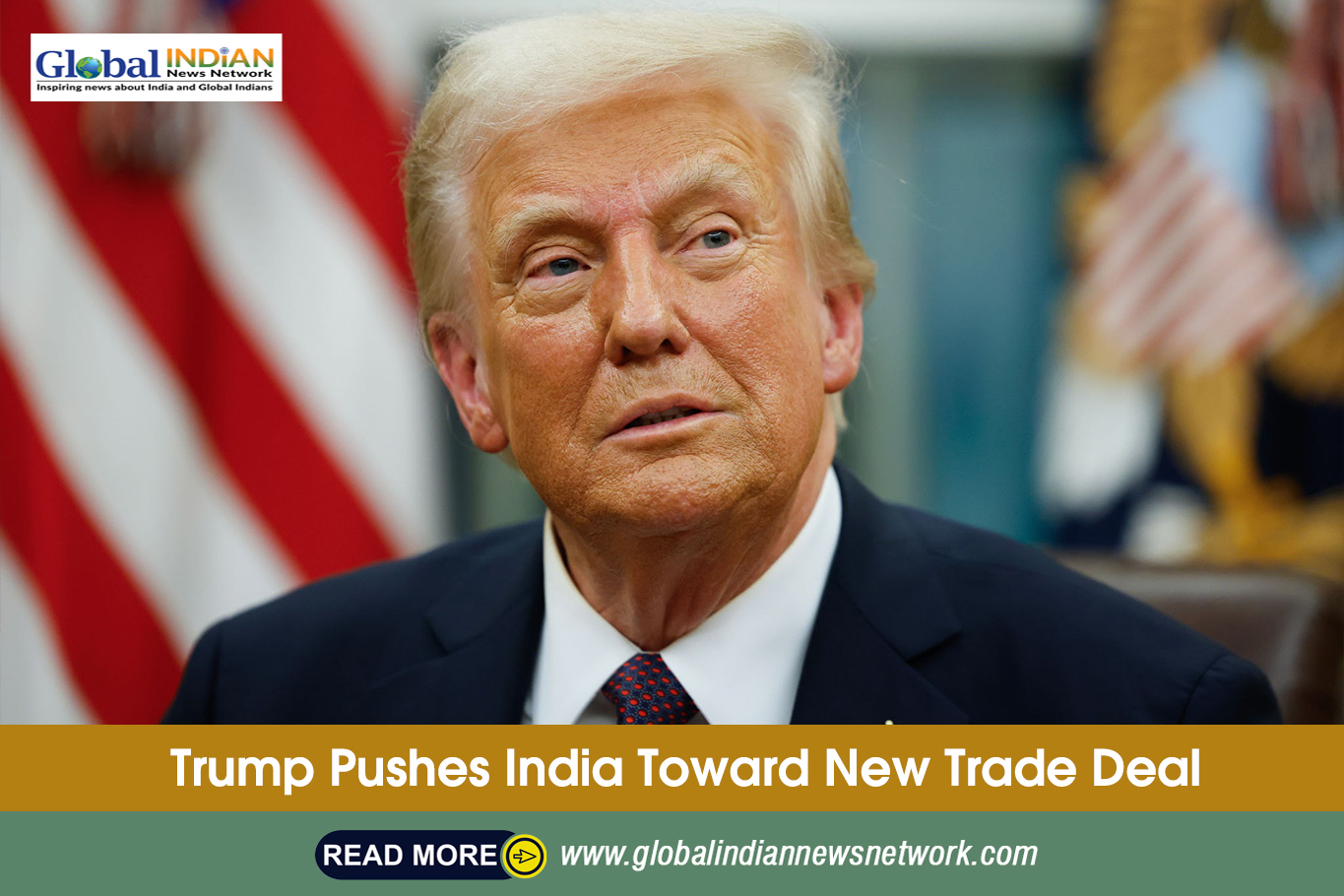
 President Donald Trump has indicated that India may soon finalize a new trade agreement with the United States, potentially resembling the deal Washington recently struck with Indonesia. Speaking to reporters in Washington, Trump said negotiations are underway to provide US businesses greater entry into the Indian market.
Referencing the Indonesia pact, Trump explained that the US will impose a 19% tariff on goods entering the country from Jakarta, while Indonesian imports of US products will be exempt from such duties. He noted, “India basically is working along that same line. We’re going to have access into India.”
Negotiators from both nations are racing to conclude discussions before an August 1 deadline set by Trump. Failure to reach a deal could lead to unilateral tariff hikes imposed by the US, a strategy Trump is pursuing with multiple trading partners, including the European Union. He has warned of tariffs as high as 35% if agreements are not reached in time. However, it remains uncertain if the final terms with India will mirror the Indonesia arrangement exactly, as that would involve significant concessions from New Delhi.
If a deal similar to the Indonesia agreement is adopted, it could result in a 19% tariff on Indian exports to the US, while Indian import duties on US products would be removed. Such a move could reshape trade relations between the two nations.
Trump also addressed energy-related sanctions, mentioning a potential resolution between Russia and Ukraine. He suggested that Russian President Vladimir Putin might agree to a peace deal before a 50-day deadline expires, which would prevent countries like India from facing additional tariffs on Russian energy imports. Trump has threatened a 100% punitive tariff on nations that continue purchasing Russian oil and gas, aiming to cut Moscow’s revenue streams and pressuring importers to help end the conflict.
Meanwhile, Senate Republican leader John Thune is delaying legislation proposing a 500% tariff on Russian energy imports, after Trump expressed doubt over the need for congressional action, stating he could impose penalties himself.
Trump emphasized that prior to these negotiations, US businesses had limited access to markets like India and Indonesia. Now, through tariff leverage, he believes the US is securing stronger trade positions, especially for critical imports like copper and rare earth minerals from Indonesia.