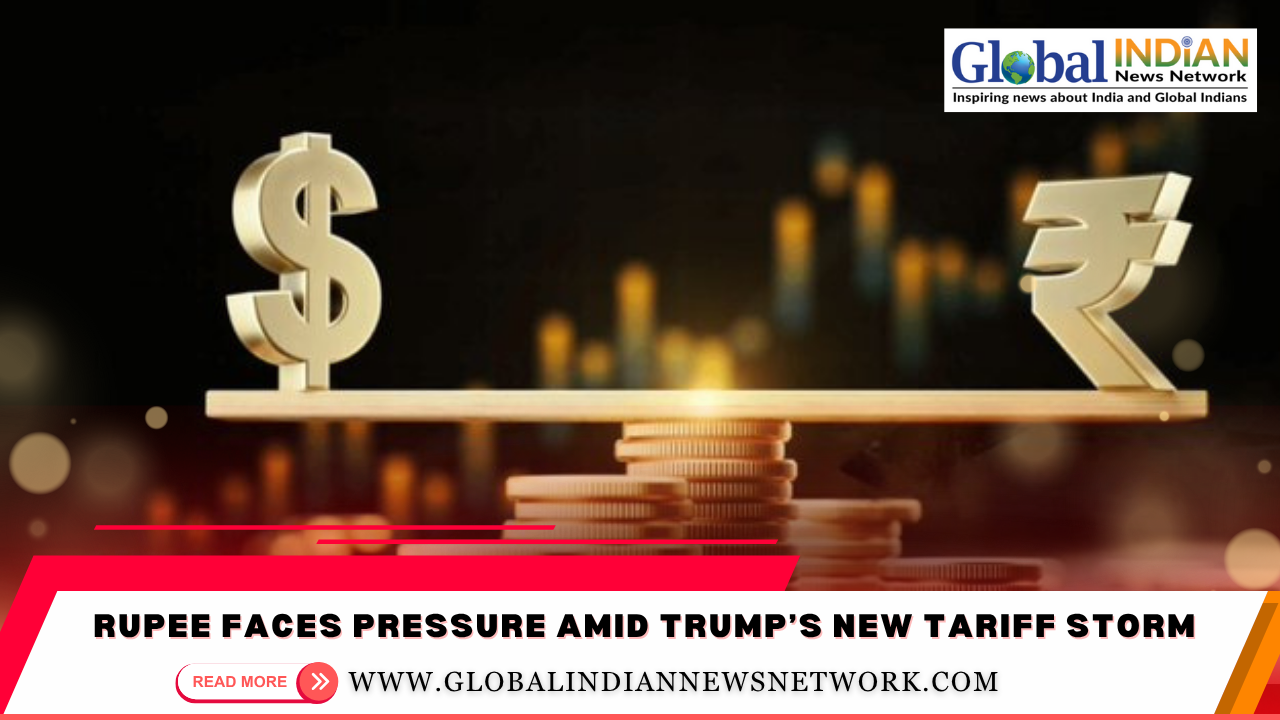
The Indian rupee is expected to open on a weaker note Monday as renewed tariff threats from US President Donald Trump have triggered a fresh wave of risk aversion in global markets. Concerns over escalating trade tensions are putting downward pressure on Asian currencies, including the rupee, as investors pull back from riskier assets.
Early indicators suggest the rupee may open in the 85.90 to 85.94 range, compared to Friday’s close at 85.80. Market participants are closely watching the 86 to 86.10 level, which has so far acted as a critical support zone for the rupee. According to a Mumbai-based currency trader, while there’s a real possibility of breaching this level, past attempts have failed, as the rupee tends to rebound just when it seems on the verge of breaking down.
Trump escalated his tariff campaign over the weekend by announcing a 30% import duty on goods from the European Union and Mexico, effective August 1. This comes after a series of tariff measures, including a 35% duty on Canadian imports, a proposed 15–20% blanket tariff on other trading partners, and threats of 50% levies on smaller nations.
According to analysts at ANZ Bank, Trump’s tariff announcements have been relentless, raising fears of a broader trade war. However, markets seem to be partially shrugging off the impact. Last week, the S&P 500 index fell just 0.3%, and the 10-year US Treasury yield dipped by 7 basis points, suggesting investors may be becoming desensitized to these threats.
Attention now shifts to the June US inflation report, due Tuesday. If consumer price data comes in softer than expected, and shows minimal impact from the recent tariffs, there’s a chance the Federal Reserve will consider a rate cut at its next policy meeting, ANZ noted.
Other key market indicators include the dollar index, which climbed near 1% last week to 97.96, and Brent crude prices, slightly up at $70.4 per barrel. Additionally, foreign investors purchased $98.1 million in Indian equities on July 10, according to NSDL data, reflecting continued interest in the Indian stock market despite currency volatility.