In a significant leap toward India’s maiden human spaceflight program, the Indian Space Research Organisation (ISRO) has successfully conducted two hot-fire tests of the Service Module Propulsion System (SMPS) for the upcoming Gaganyaan mission. The tests were carried out on July 3 at the ISRO Propulsion Complex (IPRC) in Mahendragiri, Tamil Nadu.
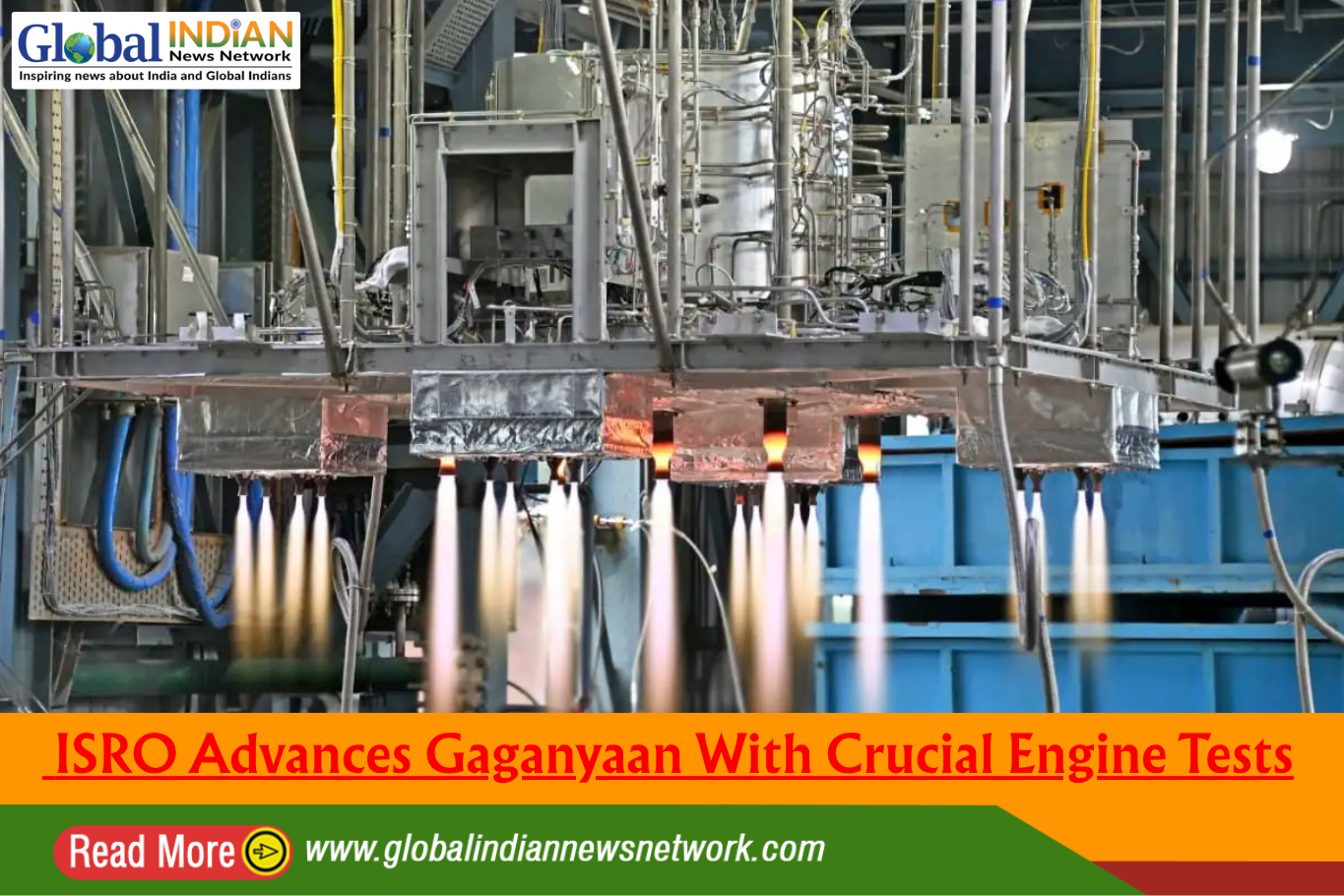
The twin evaluations featured short-duration firings—one lasting 30 seconds, the other 100 seconds—and were aimed at verifying the configuration and functionality of the propulsion system. ISRO reported that the system performed flawlessly, with all engines operating within the expected parameters.
Crucially, the 100-second trial showcased the simultaneous operation of all 16 Reaction Control System (RCS) thrusters alongside the five Liquid Apogee Motors (LAMs), simulating both steady-state and pulsed firing modes. This marked a significant milestone in validating the system for real-world conditions.
The SMPS, developed by ISRO’s Liquid Propulsion Systems Centre (LPSC), is a critical element of the Gaganyaan Orbital Module. It is responsible for orbital adjustments and plays a pivotal role in emergency abort scenarios, ensuring astronaut safety during mission contingencies.
The propulsion system is engineered with five LAM engines, each generating 440 Newtons of thrust, and 16 RCS thrusters, delivering 100 Newtons apiece. These engines must work in harmony to perform precise maneuvers in space.
ISRO used a newly enhanced test article, updated based on insights from earlier trials, and designed to replicate the conditions expected during actual space operations. This adds another layer of credibility to the system’s readiness.
Buoyed by the success, ISRO has announced that a full-duration hot test will follow soon, bringing the Gaganyaan mission one step closer to liftoff.
Meanwhile, Group Captain Shubhanshu Shukla, India’s first astronaut-in-training under the Gaganyaan banner, is currently aboard the International Space Station (ISS) as part of Axiom Mission-4, gaining hands-on experience to support the country’s debut human spaceflight.
With every successful test, India inches closer to sending its first humans into space, cementing its place among the elite global spacefaring nations.