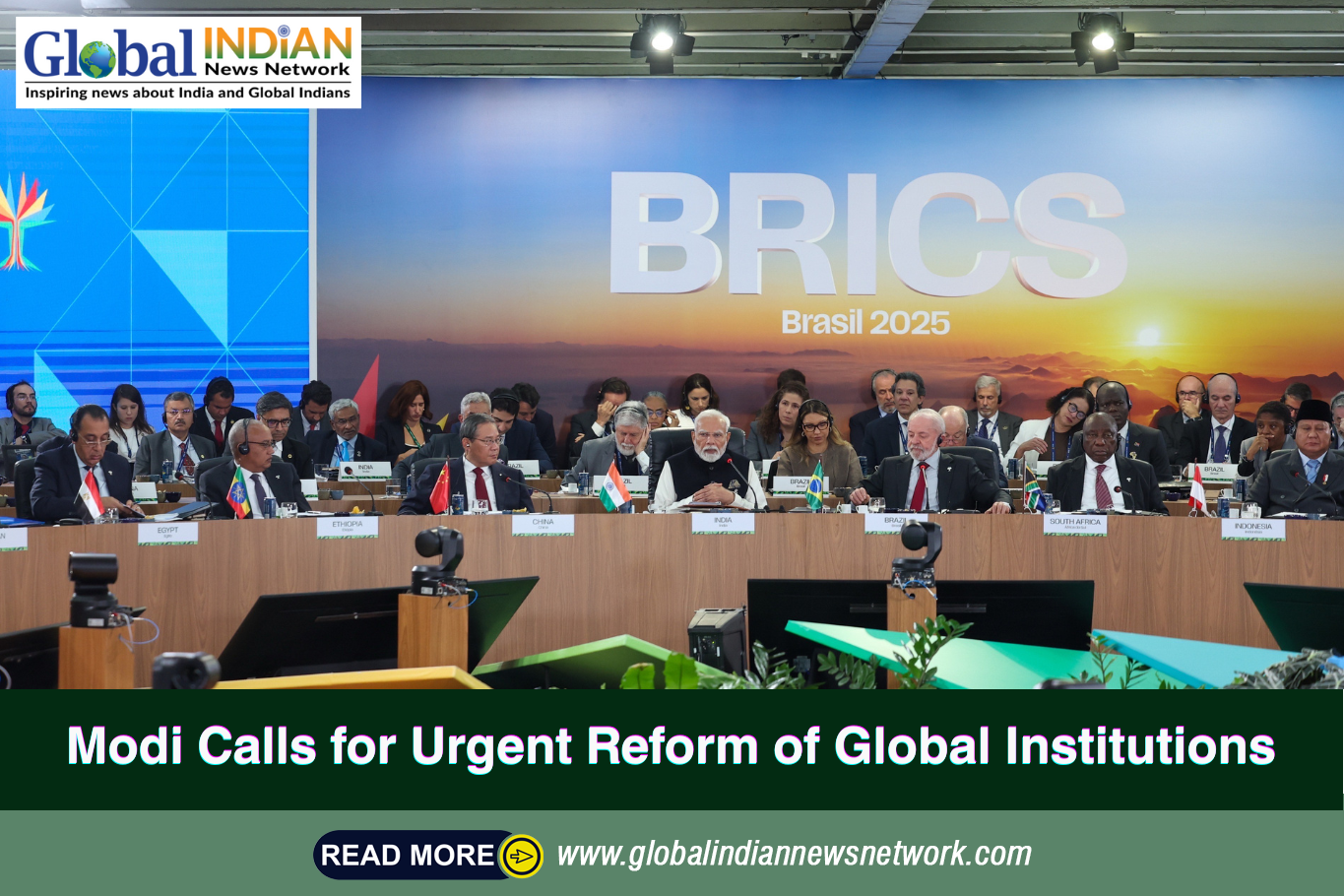
Speaking at the 17th BRICS Summit in Rio de Janeiro, Indian Prime Minister Narendra Modi strongly advocated for an immediate revamp of global governance institutions. Highlighting their growing irrelevance in today’s world, he emphasized that organizations like the UN Security Council, World Bank, International Monetary Fund (IMF), and World Trade Organization (WTO) must undergo structural reforms to remain effective in the 21st century.
“These institutions were created in a different era and no longer have the capacity to respond to modern-day challenges,” Modi said, according to a statement from the Prime Minister’s Office (PMO). He underscored the importance of building a multipolar and inclusive global order that reflects today’s geopolitical and economic realities, especially for developing nations.
Modi thanked BRICS leaders for lending their support to long-standing calls for reform of the UN Security Council and for including strong language in the Rio Declaration to this effect. He reiterated India’s commitment to advocating for the interests of the Global South and called for greater access to climate finance and technological collaboration for developing nations.
Addressing a special session on multilateralism, economic affairs, and artificial intelligence (AI), Modi urged the BRICS bloc to lead the charge in creating a balanced world order, especially during times of growing international instability. He also pushed for the New Development Bank (NDB), set up by BRICS countries, to take a more flexible and demand-driven approach to financing projects, ensuring both long-term sustainability and impact.
The summit also brought attention to global security, with Modi condemning terrorism as one of the greatest threats to humanity. Referring to the April 22 terror attack in Pahalgam, he labeled it a crime against the entire world and stressed the need for unified global action. “There can be no leniency for nations or groups that finance, support, or shelter terrorism,” he asserted. “Zero tolerance must be the standard.”
Leaders concluded the summit by adopting the Rio de Janeiro Declaration, which laid out collective commitments to reform outdated institutions, strengthen multilateralism, combat terrorism, regulate AI responsibly, and enhance cooperation in areas like climate finance and critical mineral supply chains.