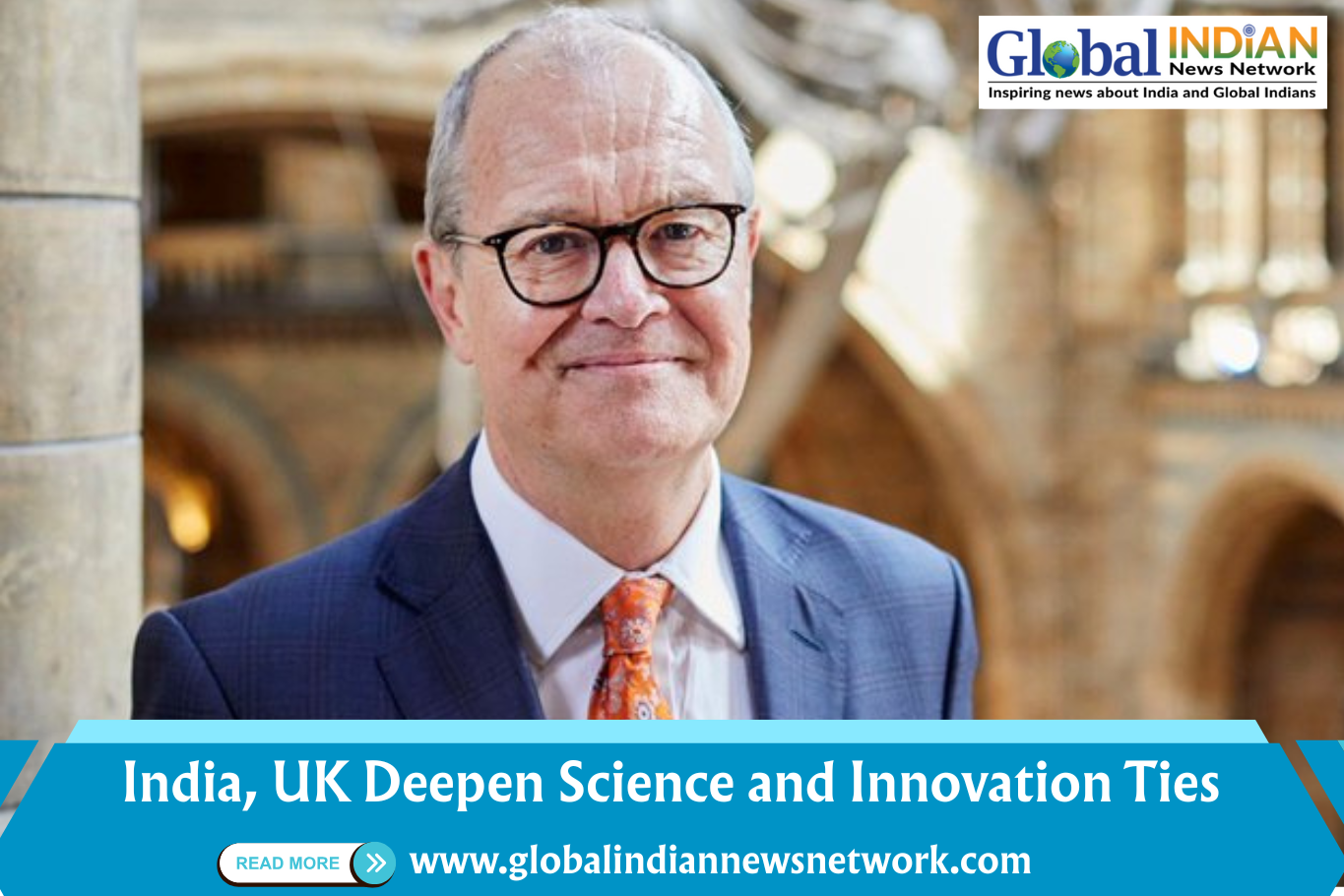
 India’s growing influence in global science and technology is impossible to ignore, according to Britain’s Minister for Science, Research and Innovation, Patrick Vallance. Speaking at the India Global Forum’s Future Frontiers Forum in London, Vallance stressed that the United Kingdom must build on its strong academic and scientific ties with India. The event, titled Unlocking UK–India Collaboration for a New Era of Innovation, highlighted how the two nations can accelerate collaboration through fresh policies and joint ventures.
Vallance emphasized the importance of expanding skilled migration through tools like the Global Talent Visa, which is expected to foster stronger professional exchange between the countries. He also shared that the UK government will soon launch its new Industrial Strategy, which will outline future frameworks to deepen cooperation with India in key innovation sectors.
India’s Union Commerce and Industry Minister, Piyush Goyal, also took the stage to reaffirm the importance of the recently signed India–UK Free Trade Agreement (FTA). Goyal noted that the FTA goes beyond trade and serves as a platform to build partnerships in cutting-edge domains like advanced manufacturing, digital infrastructure, clean energy, and emerging tech.
Lord Ara Darzi, a prominent member of the UK’s House of Lords and known for his pivotal role in reforming the National Health Service (NHS), also addressed the gathering. He praised India’s rapid progress in healthcare innovation and encouraged expanded collaboration in medical research, biotech, and digital health services.
The forum wasn’t just talk—it also offered a glimpse into India’s thriving startup scene. Zypp Electric, a logistics-focused clean mobility startup, took center stage and was awarded the Clean Tech Award by Octopus Energy, reflecting global recognition for Indian climate-tech innovators.
With India surging ahead as a science and technology hub and the UK seeking fresh innovation partners post-Brexit, both nations appear poised to chart a future built on collaboration, talent sharing, and mutual growth. As their political, economic, and academic ecosystems align, the UK–India innovation corridor could be one of the most significant global partnerships of the next