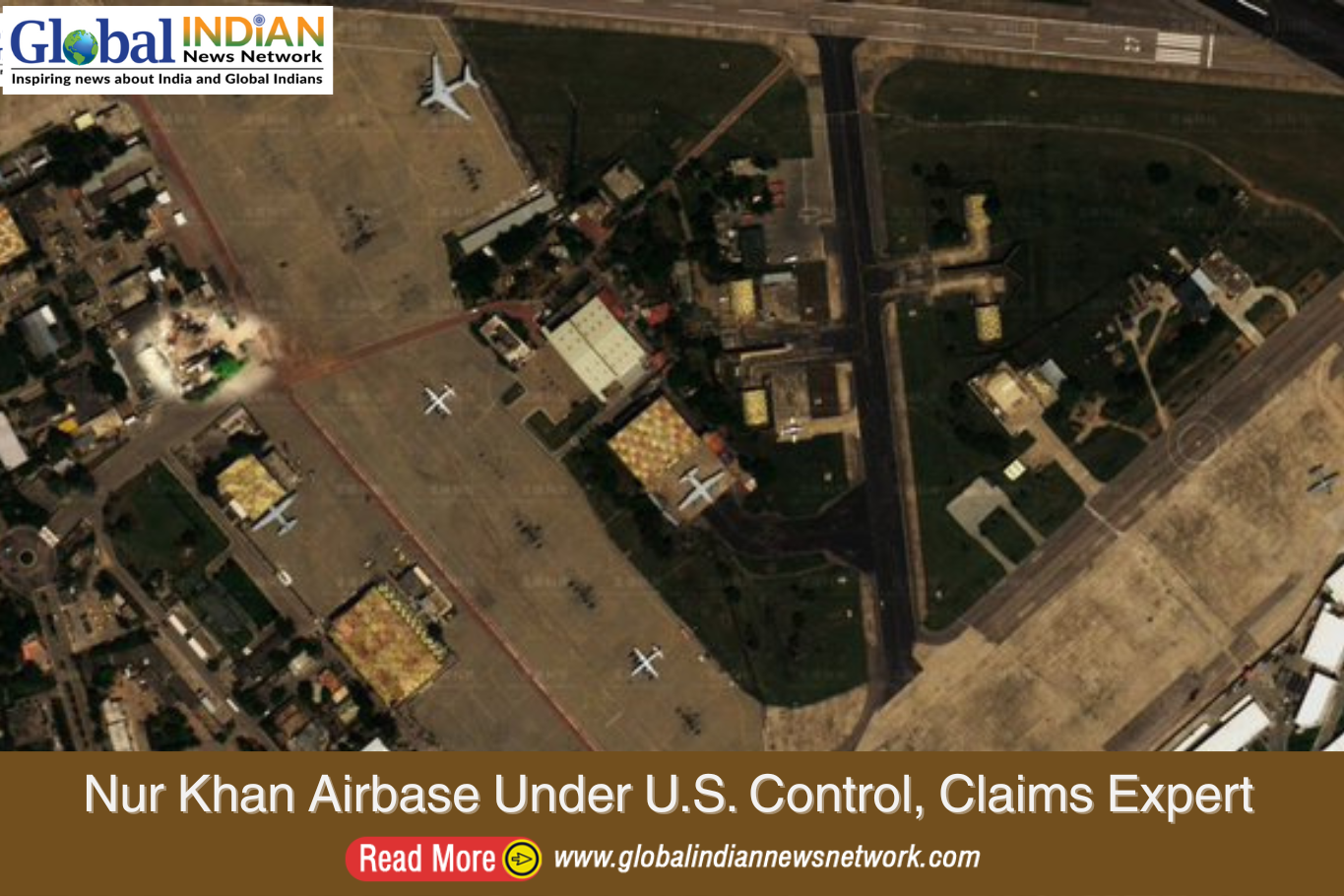
 A startling revelation by a prominent Pakistani defense analyst has ignited serious debate about the depth of military cooperation between the United States and Pakistan. Imtiaz Gul, a widely known security expert, has asserted that the Nur Khan airbase in Rawalpindi—one of Pakistan’s most strategically sensitive military facilities—is effectively under the control of American forces.
This statement, made public through a video circulating across social platforms, comes on the heels of India’s Operation Sindoor, a precision military response to the terrorist attack in Pahalgam. India’s coordinated strike targeted several Pakistani air bases, including the Nur Khan facility, raising critical questions about regional security and sovereignty.
According to Gul, even top-ranking officers in the Pakistan Army are reportedly restricted from intervening in the operations conducted at the Nur Khan airbase. The implication is that Pakistan may have entered into an undisclosed agreement with the United States, allowing American forces to operate on their soil with minimal oversight. While these claims remain unverified by official sources, their impact on public sentiment and strategic dialogue has been significant.
Gul also noted the recurring presence of U.S. aircraft at the base. While sightings are frequent, there is little to no information regarding their cargo, missions, or operational mandates. This level of secrecy has sparked growing concerns over Pakistan’s transparency and control over its military infrastructure, especially given the airbase’s proximity to Islamabad and the Pakistan Army’s General Headquarters.
The Nur Khan base plays a vital role in Pakistan’s defense architecture. Not only does it serve as a command center for military air mobility and transport, but it also lies near facilities that supervise the country’s nuclear capabilities. With such high stakes, any suggestion of foreign dominance over the area carries deep implications for national security.
India’s attack on the Nur Khan airbase during Operation Sindoor further intensified scrutiny. The retaliatory strikes, aimed at eliminating terror networks and infrastructure, reportedly inflicted damage on the facility, although official details remain scarce.
Neither the Pakistani military nor the government has issued a formal response to Gul’s claims, leaving room for rampant speculation. The lack of denial only deepens the mystery around whether a bilateral understanding exists between Islamabad and Washington regarding control over this critical base.
As the debate grows, citizens and security analysts alike are left wondering: Who really governs one of Pakistan’s most vital air bases, and what does that mean for the nation’s sovereignty and strategic independence?