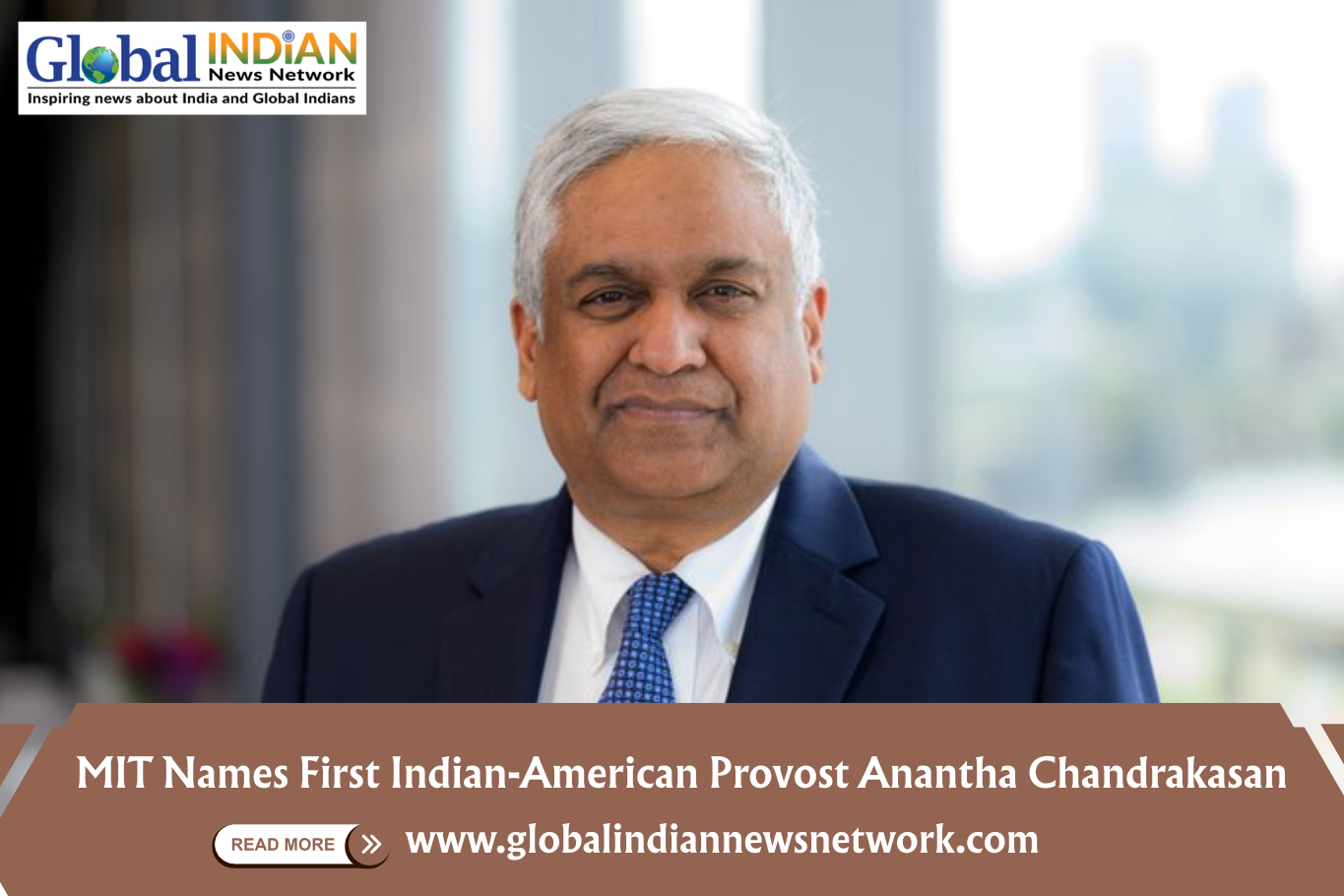
 Professor Anantha Chandrakasan, a prominent academic originally from Chennai, has been named the next provost of the Massachusetts Institute of Technology (MIT), marking a historic milestone as the first Indian-American to assume this prestigious leadership position. He will officially take office on July 1.
Currently serving as MIT’s chief innovation and strategy officer, Chandrakasan also holds the role of dean of engineering. He was selected from a pool of distinguished internal candidates. MIT President Sally Kornbluth highlighted his exceptional ability to lead transformative initiatives across the institute.
As provost, Chandrakasan will take on one of MIT’s most vital responsibilities — serving as the chief academic and budget officer. He will oversee academic planning, faculty development, and institutional strategy, while managing a team of vice provosts handling areas such as the arts, research, and international collaboration.
“I’m deeply honored to take on the provost’s role,” Chandrakasan said. “My goal is to empower faculty, students, researchers, and staff to keep pushing the boundaries of discovery and impact.”
Kornbluth acknowledged that Chandrakasan steps into the role at a time of growing uncertainty surrounding federal support for research and international talent. She praised his dynamic leadership style, entrepreneurial mindset, and ability to secure external funding — qualities that will prove crucial in navigating MIT through these complex times.
The Indian Consulate in New York congratulated Chandrakasan, recognizing his long-standing commitment to advancing R&D collaboration between the United States and India. They noted his ongoing work with Indian government bodies and private stakeholders to foster innovation between the two nations.
Chandrakasan has led MIT’s School of Engineering since 2017 and was named the institute’s first-ever chief innovation and strategy officer earlier this year. He previously headed MIT’s largest academic department — Electrical Engineering and Computer Science — and served as director of the Microsystems Technology Laboratories.
As provost, he has outlined three key focus areas: ensuring MIT’s long-term institutional and financial health, attracting and retaining world-class talent, and driving interdisciplinary research that combines STEM with human-centered disciplines.
To support inclusive and informed decision-making, he plans to create advisory groups composed of faculty, students, researchers, and external partners.
“MIT has a unique opportunity to lead breakthroughs in AI, semiconductors, quantum technologies, biomanufacturing, and more,” he stated. “But beyond technical skills, we need graduates who understand human insight — which is why bridging STEM and the humanities is so vital.”
Chandrakasan earned his BS, MS, and PhD in electrical engineering and computer sciences from the University of California, Berkeley.