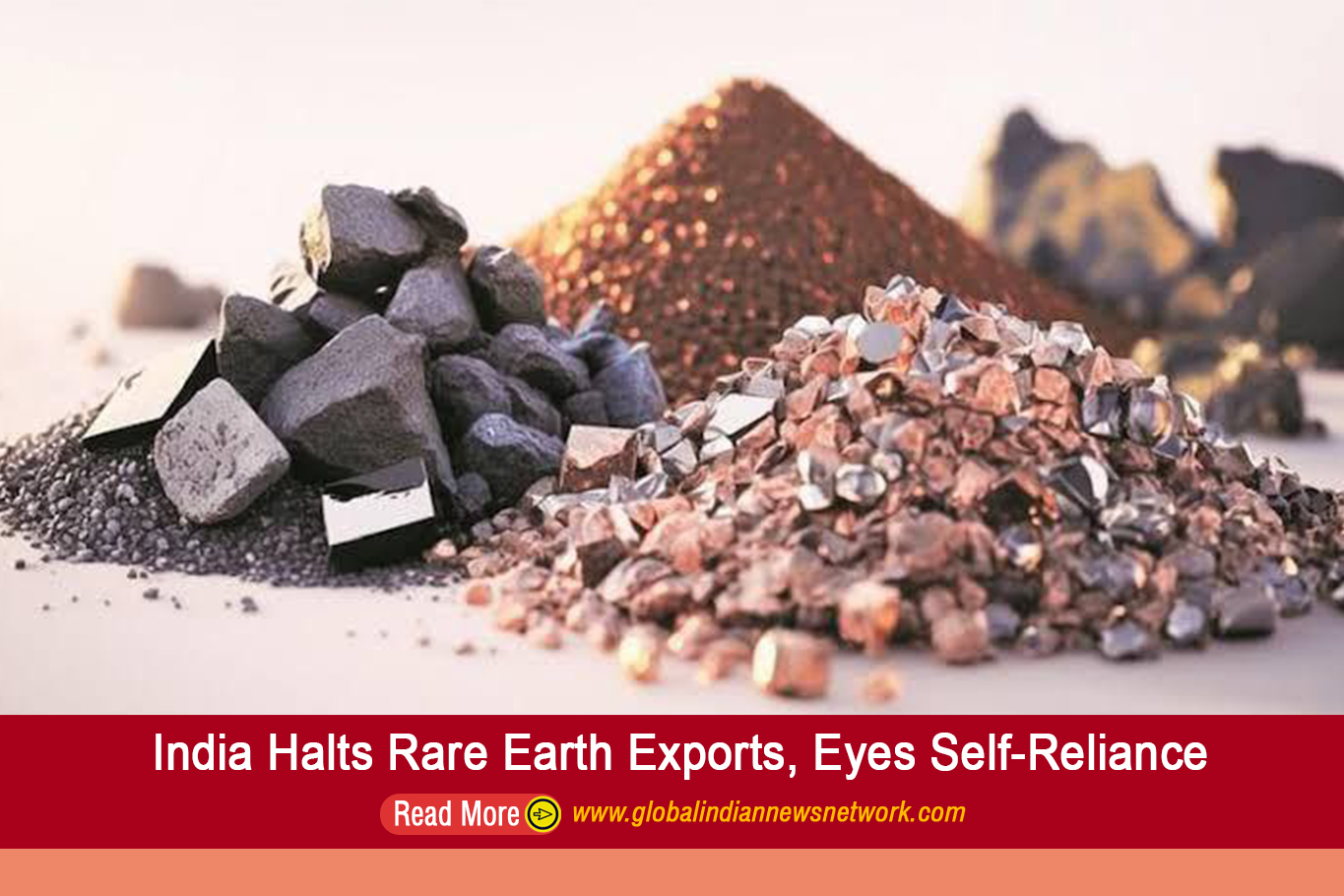
 India has initiated a significant shift in its rare earth export strategy by instructing Indian Rare Earths Limited (IREL), a government-run entity, to suspend rare earth shipments to Japan. This decision comes under a 13-year-old trade deal, but the focus has now turned toward preserving resources like neodymium—an essential material in electric vehicle (EV) motors—for domestic use. Union Commerce and Industry Minister Piyush Goyal recently met with key auto industry leaders and emphasized the urgent need to secure critical minerals amid tightening global supply chains.
In 2024, India exported over 1,000 metric tonnes of rare earth elements to Japan, roughly one-third of IREL’s total production of 2,900 metric tonnes. These exports were previously justified due to India’s limited capacity to process rare earths domestically. However, with China imposing fresh restrictions on its own rare earth exports, New Delhi is now prioritizing national reserves and reducing foreign reliance.
Although India holds the fifth-largest reserves of rare earths globally, at around 6.9 million metric tonnes, the country lacks in-house magnet production capability. In FY25, India imported about 53,748 tonnes of magnets—most of them sourced from China. Currently, Toyos Rare Earths India, affiliated with Toyota Tsusho, manages the processing of India’s rare earths. IREL operates an extraction facility in Odisha and a refining plant in Kerala and aims to produce 450 metric tonnes of neodymium in FY26, with plans to double that by 2030.
While the bilateral export agreement with Japan may pose certain challenges, officials expect diplomatic discussions to reach a constructive resolution. To further support local industry, the Indian government is introducing financial incentives to encourage rare earth refining and magnet manufacturing in the country. These initiatives are designed to support key sectors such as defense, nuclear energy, electric vehicles, wind turbines, and healthcare technologies. Additionally, IREL is exploring collaborations to scale up domestic magnet output, signaling a broader commitment to building resilient and strategic mineral supply chains essential for India’s green and tech-driven future.