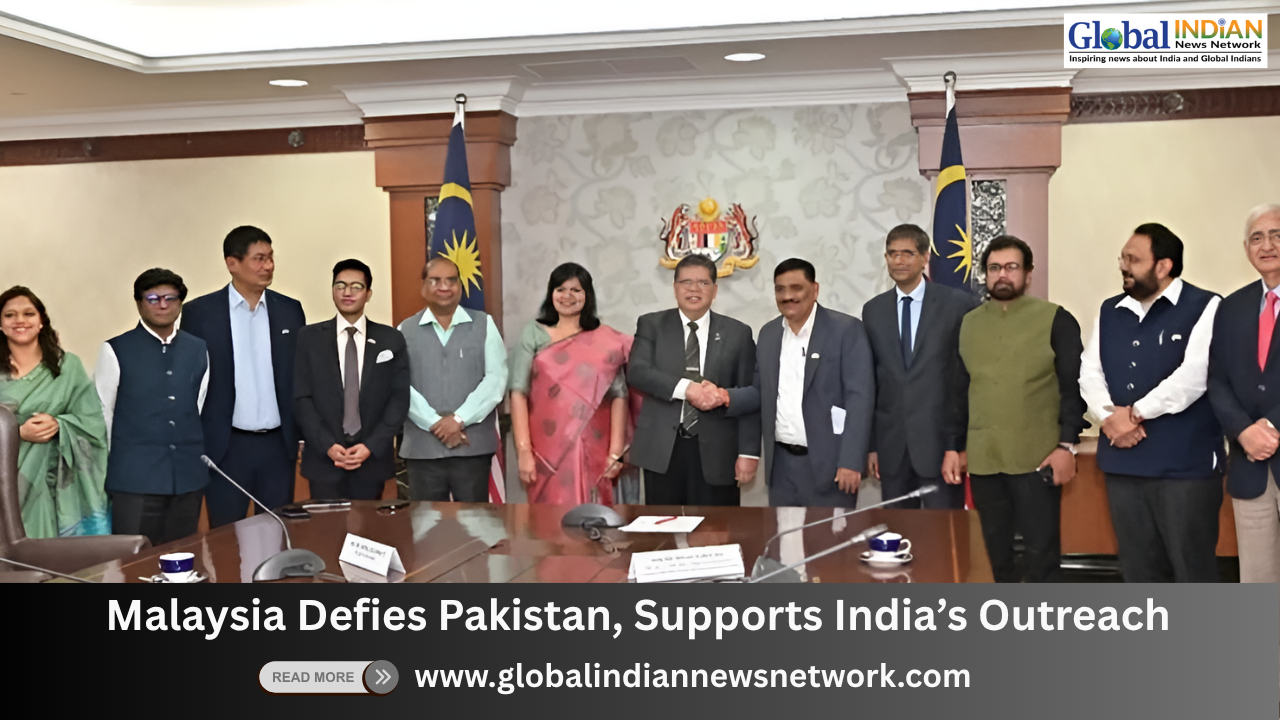
 In a clear diplomatic rebuff to Pakistan, Malaysia allowed all ten scheduled events led by India’s Operation Sindoor delegation, despite Islamabad’s request to call them off. Citing Kashmir-related issues at the United Nations, Pakistan had urged Malaysia to cancel the Indian programs, appealing to shared religious identity by stating, “We are both Islamic countries… don’t support the Indian side.”
However, Malaysian authorities did not bow to pressure. Instead, they gave full clearance to the nine-member Indian parliamentary delegation, which had just concluded its multi-country tour. The final leg brought them to Kuala Lumpur after successful stops in Japan, South Korea, Singapore, and Indonesia.
Led by JDU MP Sanjay Jha, the Indian delegation included members from multiple political parties: BJP leaders Aparajita Sarangi, Brij Lal, Pradan Baruah, and Hemang Joshi; Trinamool’s Abhishek Banerjee; CPM’s John Brittas; Congress’s Salman Khurshid; and seasoned diplomat Mohan Kumar.
While in Malaysia, the delegation met with representatives of the People’s Justice Party (PKR), headed by YB Sim Tze Tzin, who had previously served in Mahathir Mohamad’s cabinet. The discussions centered around India’s firm approach to cross-border terrorism and the success of Operation Sindoor’s surgical responses against terror infrastructure in Pakistan.
Speaking at an Indian community gathering in Kuala Lumpur, Abhishek Banerjee underlined that dialogue with Pakistan should only resume if Islamabad is prepared to return Pakistan-occupied Kashmir.
Upon their return from the tour, Sanjay Jha told PTI that the five visited nations had all conveyed condolences for victims of the Pahalgam terror attack and acknowledged India’s precision military action as a necessary and justified response.
Malaysia’s choice to back India’s diplomatic efforts—despite pressure from Pakistan—signifies a key moment in global diplomacy, reflecting wider international alignment with India’s counter-terror stance promoted through Operation Sindoor.