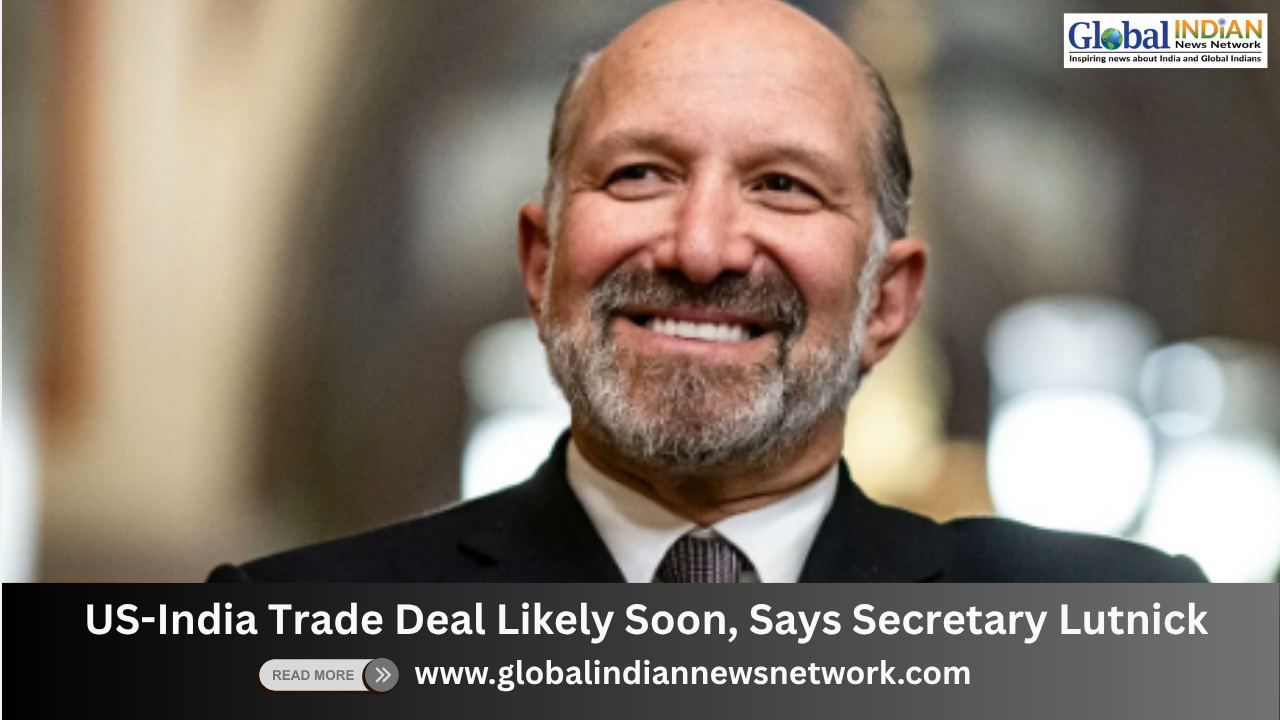
 A major trade agreement between India and the United States could soon be on the horizon, according to US Commerce Secretary Howard Lutnick. Speaking at the US-India Strategic Partnership Forum, Lutnick voiced “strong optimism” that the two nations are nearing a deal that serves their respective interests.
“We’re in a very, very good place,” said Lutnick, suggesting that an agreement could be reached in the near future. He commended India’s swift pace in negotiations, which contrasts with the typical multi-year timeline for international trade deals.
“India’s moving quickly, and I appreciate that,” he added. “We’re trying to wrap this up in a month, which is not how trade talks usually go.”
The talks are aimed at securing a mutually beneficial agreement ahead of a self-imposed July 9 deadline. Lutnick, who has decades of experience doing business in India, pointed to the strong personal connection between former US President Donald Trump and Indian Prime Minister Narendra Modi as a positive influence on bilateral relations.
Despite his optimism, Lutnick criticised India’s current trade policies, calling them “very protectionist.” He specifically took issue with high tariffs on American goods, urging India to lower them to enable a more balanced partnership.
He also raised concerns about India’s military ties with Russia, stating that continued reliance on Russian defence equipment irritates US policymakers. Nonetheless, he acknowledged India’s increasing purchases of American military gear.
On a broader geopolitical note, Lutnick was critical of India’s involvement in BRICS, suggesting it may not align with American expectations.
Lutnick also outlined future cooperation areas, including artificial intelligence and technology. He proposed enhanced tech-sharing, including US support for building large data centres in India, as part of a strategic pivot away from Chinese influence.
A notable proposal from Lutnick was the “Trump Gold Card,” a potential immigration initiative aimed at attracting international entrepreneurs. The programme would offer favourable tax and residency terms for those operating in both the US and Indian economies.
Lutnick also mentioned plans to shift certain industries to India while bringing high-end manufacturing back to the US. “We want to relocate a number of sectors to India,” he said.
Reinforcing his personal affinity for the country, Lutnick remarked, “I’m a great fan of India,” sharing anecdotes about playing cricket and attending house parties with Indian friends. “Even the people in the government know that’s true,” he said with a smile.