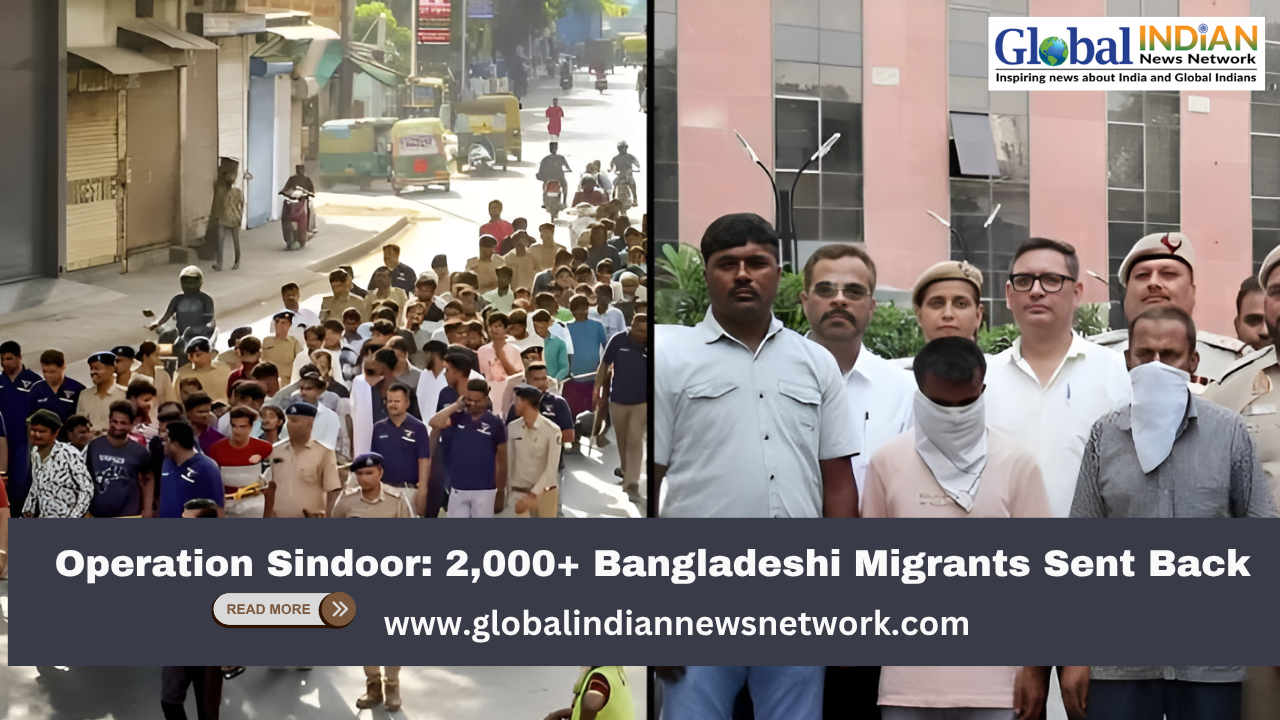
 Since the initiation of Operation Sindoor on May 7, more than 2,000 undocumented Bangladeshi nationals have been deported from India, according to government sources cited by The Indian Express. The ongoing nationwide operation focuses on identifying, verifying, and expelling individuals lacking legal documentation.
An equivalent number of migrants have reportedly presented themselves at the India-Bangladesh border, requesting repatriation amid intensifying fears of arrest and detention.
While the crackdown is primarily active in Tripura, Meghalaya, and Assam, Gujarat has emerged as the leading contributor, accounting for nearly half of all deportations so far. Other states such as Delhi, Haryana, Maharashtra, Rajasthan, and Assam are also involved in the operation, which is being coordinated by the Ministry of Home Affairs.
“This initiative is systematic and ongoing,” a senior official told The Indian Express, noting that states with significant economic activity are actively verifying migrant documents. “The Pahalgam attacks in April shifted the national mood, prompting a sharp acceleration in deportations. Gujarat led the first wave, with other states quickly following suit.”
As per the report, many deportees are transported by Indian Air Force aircraft to border locations, where they are kept in temporary BSF-run camps. After brief detentions, they are given food and a small sum in Bangladeshi currency before being handed over to the Border Guards Bangladesh (BGB).
A security officer explained that the choice of Tripura, Meghalaya, and Assam was strategic rather than political, as these regions offer logistical convenience. In contrast, enforcement in West Bengal is more complicated due to the interconnected border villages and emotional ties among families split by the boundary.
The fear of detention has also led to voluntary repatriation, with nearly 2,000 individuals turning themselves in at border outposts after media coverage heightened anxieties. “They would rather return home than risk detention,” a source stated.
Most deportees are migrant laborers, often impoverished and lacking legal support. According to officials, those with long-term roots in India are more reluctant to leave and are more likely to challenge their deportation.
While the operation has so far proceeded smoothly and without resistance, authorities are wary of diplomatic friction if weekly deportation figures surge beyond 10,000 to 20,000. To prevent repeat migration, the government is pushing for biometric profiling and integration of deportee records with national immigration databases.
“This isn’t new—similar drives were carried out under the UPA government,” said one official. “But many migrants returned once enforcement relaxed. That’s why this time, we’re focusing on digital identification to make the process more effective and long-lasting.”