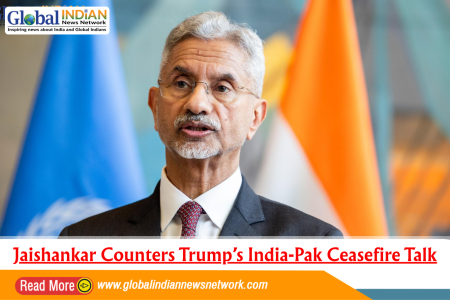
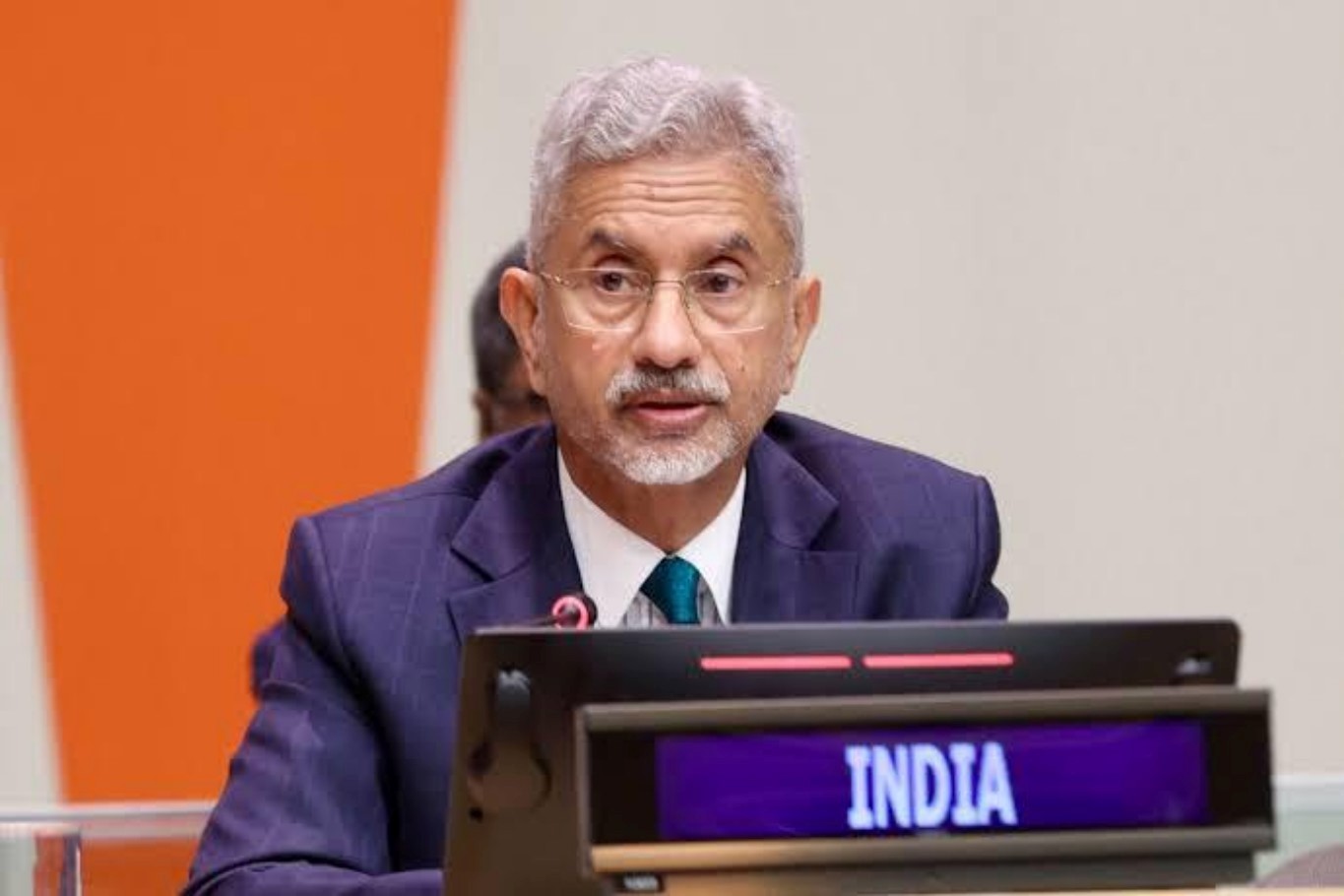
 External Affairs Minister S. Jaishankar strongly denied US President Donald Trump’s claim that Washington was involved in facilitating the India-Pakistan ceasefire agreement concluded on May 10. Speaking to Dutch broadcaster NOS, Jaishankar stated clearly, “The US was in the United States,” emphasizing that the ceasefire was a bilateral matter between India and Pakistan with no external mediation.
Jaishankar explained that India’s position has always been straightforward: if Pakistan wanted to halt hostilities, the Pakistani military leadership had to communicate directly with their Indian counterparts. This communication took place as Pakistan’s army initiated the ceasefire by reaching out through the hotline. India responded accordingly, leading to the agreed cessation of firing. Jaishankar dismissed Trump’s claim, stating, “This is something between us and the Pakistanis. We propose to deal with it bilaterally.”
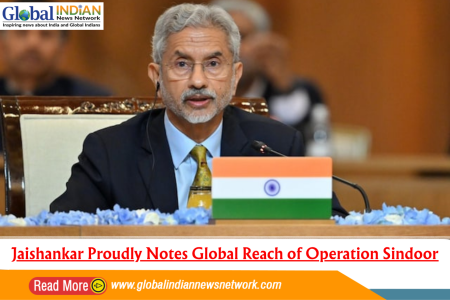
Regarding Operation Sindoor, Jaishankar clarified it was launched out of necessity in response to terrorist attacks and is not a provocation. He reiterated India’s commitment to continuing the operation as a message to terrorists that any attacks similar to the April 22 incident would be met with firm retaliation, regardless of where the terrorists are located, including inside Pakistan.
The minister highlighted Pakistan’s long history of using proxy forces to destabilize India, noting that even at the time of independence, Pakistani military personnel operated disguised as tribal fighters in Kashmir. Jaishankar maintained that although military actions continue as part of Operation Sindoor, it is currently dormant due to the ceasefire agreement.
On the sensitive issue of Kashmir, Jaishankar firmly stated that Kashmir is an integral part of India. He underlined that no country negotiates the status of its territory and noted that Pakistan illegally occupies part of Kashmir since 1947-48. India remains open to discussions with Pakistan, but only when Pakistan is willing to relinquish its illegal hold on the region. The minister stressed that future talks would be serious and bilateral, rejecting any external involvement.