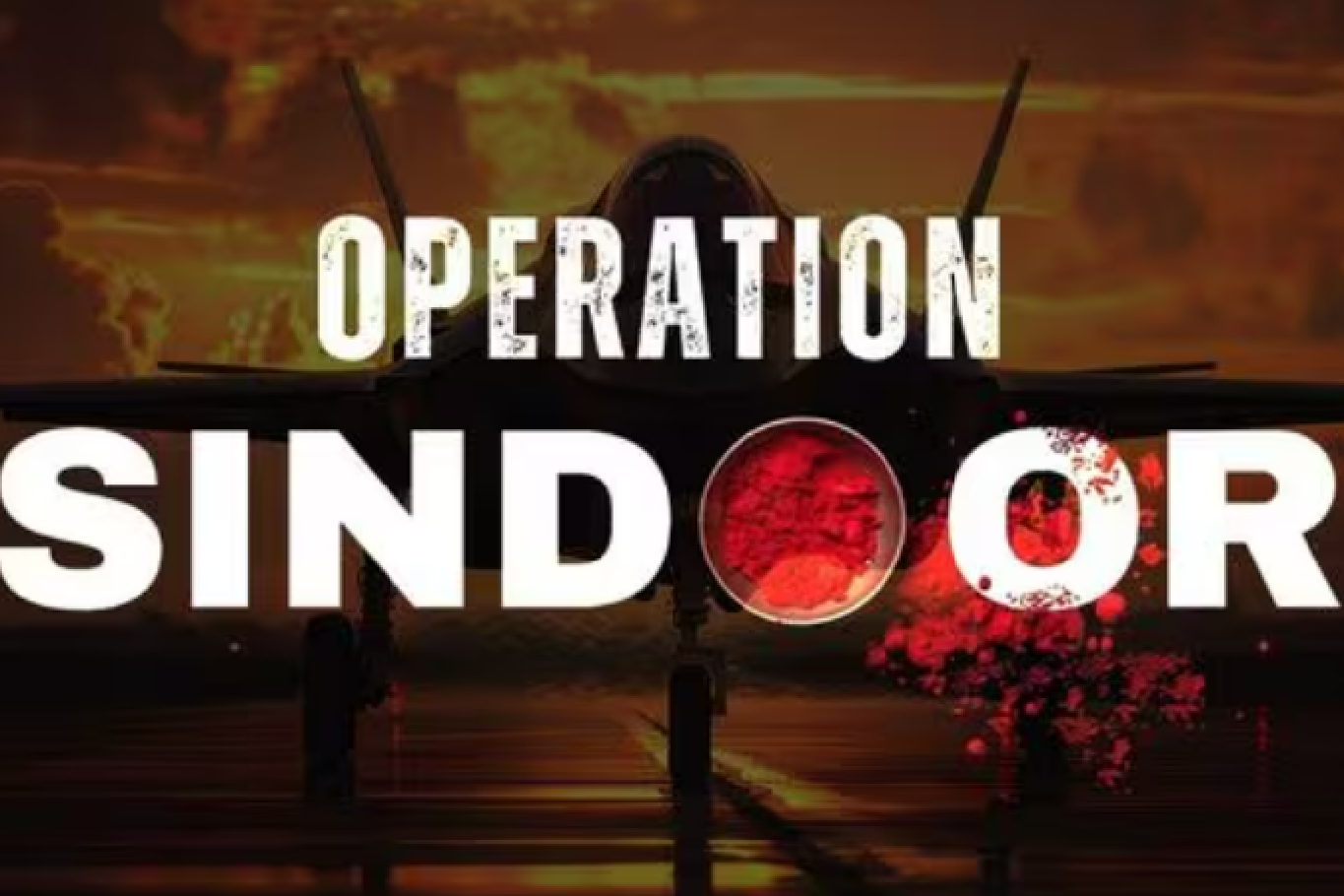
The phrase “Operation Sindoor,” associated with a recent Indian cross-border military response, is rapidly turning into a coveted intellectual property asset. Trademark applications for the term have been submitted in the United States, the United Kingdom, and India, targeting sectors like media, streaming, advertising, and entertainment.
On May 9, 2025, New York-based Rohith Baharani filed for the trademark in the United States under International Class 041. This category includes entertainment-related services, specifically the intent to license or sell the title to production houses, OTT platforms, or distribution channels. Filed under an “intent to use” basis, the mark hasn’t yet been used in commerce and awaits examination under U.S. Classes 100, 101, and 107.
The United Kingdom recorded a separate application just a day earlier, on May 8, 2025, by Vikas Mahajan of Devon. His trademark application covers Classes 35, 38, and 41, which include advertising, telecommunication services, and educational offerings.
Meanwhile, India has seen a surge of interest in trademarking “Operation Sindoor.” As of mid-May, at least 14 applications have been filed across different classes—from clothing to media services. One significant applicant, Indian giant Reliance, briefly entered the race but withdrew its application a day after filing under Class 41 for entertainment-related services.
Despite the term’s origin as a military codename, Indian law does not offer automatic IP protection for such phrases. The Ministry of Defence does not register or commercialize these names, leaving them vulnerable to claims from private individuals unless deemed misleading or offensive under the Trade Marks Act, 1999.
While Indian law requires proof of use or intent to use for registration, foreign applicants can still challenge domestic claims through the Madrid Protocol, which facilitates multi-country registration from a single base. For instance, a registered trademark in the US or UK can be extended to India via this system. If accepted during India’s examination process, it could block or override local applications.
Experts note that while “Operation Sindoor” symbolizes valor and national pride, its transformation into a commercial asset highlights the blurred lines between public symbolism and private ownership in a global IP landscape.