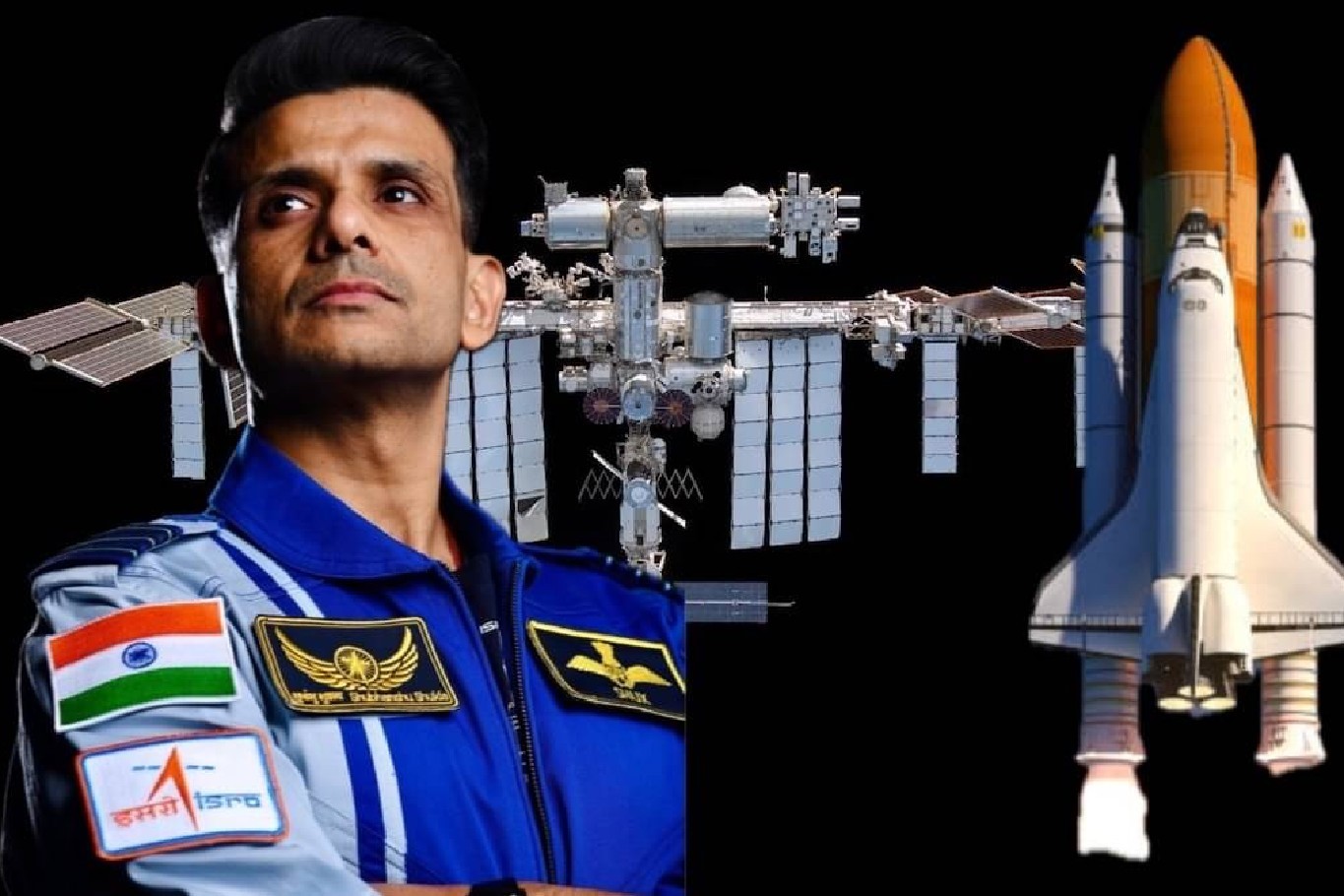
On Thursday, US-based Axiom Space announced a rescheduling of its upcoming Ax-4 mission, which will carry astronaut Shubhanshu Shukla — soon to be the first Indian to visit the International Space Station (ISS). Originally planned for launch on May 29, the mission is now set to take off on June 8 at 9:11 a.m. ET (6:41 p.m. IST) from the Kennedy Space Center in Florida, aboard a SpaceX Falcon 9 rocket.
Joining Shukla on this groundbreaking journey will be veteran commander Peggy Whitson from the US, Slawosz Uznanski-Wisniewski of Poland, and Hungary’s Tibor Kapu. Shukla, who will serve as the mission pilot, will help operate and navigate the SpaceX Dragon spacecraft, stepping in to manage systems and assist with manual intervention if required.
“This mission is a landmark for commercial spaceflight,” Axiom Space said in its official release. “For the first time ever, astronauts from India, Poland, and Hungary will fly together to the ISS under a government-backed initiative—each country making a return to human space exploration after over 40 years.”
NASA confirmed the delay, citing a need to accommodate scheduling for other upcoming missions. The agency noted that the shift provides extra time for preparing the spacecraft, finalising mission logistics, and ensuring all systems are gone.
Shukla’s forthcoming space mission represents a landmark achievement in India’s space exploration journey. He will be the first Indian to travel to space since Rakesh Sharma’s Soviet-assisted mission in 1984. Shukla was chosen by ISRO in 2019 after Prime Minister Narendra Modi declared in 2018 that India would soon send one of its own to space.
Now 39, Shukla was selected as pilot for the Ax-4 mission earlier this year in January. The mission is a collaborative effort between NASA and ISRO, set to provide crucial data aiding the development of Axiom’s upcoming space station.
During his stay aboard the ISS, Shukla will participate in scientific experiments, including research on cyanobacteria—a microorganism with potential to produce oxygen in space conditions. The study aims to evaluate how these organisms behave in microgravity and whether they can help support long-term space missions.
“They’re being tested for their ability to thrive in microgravity and possibly generate oxygen for future crews,” Shukla previously explained.
His mission isn’t just a milestone for India but a leap for international collaboration in space exploration.