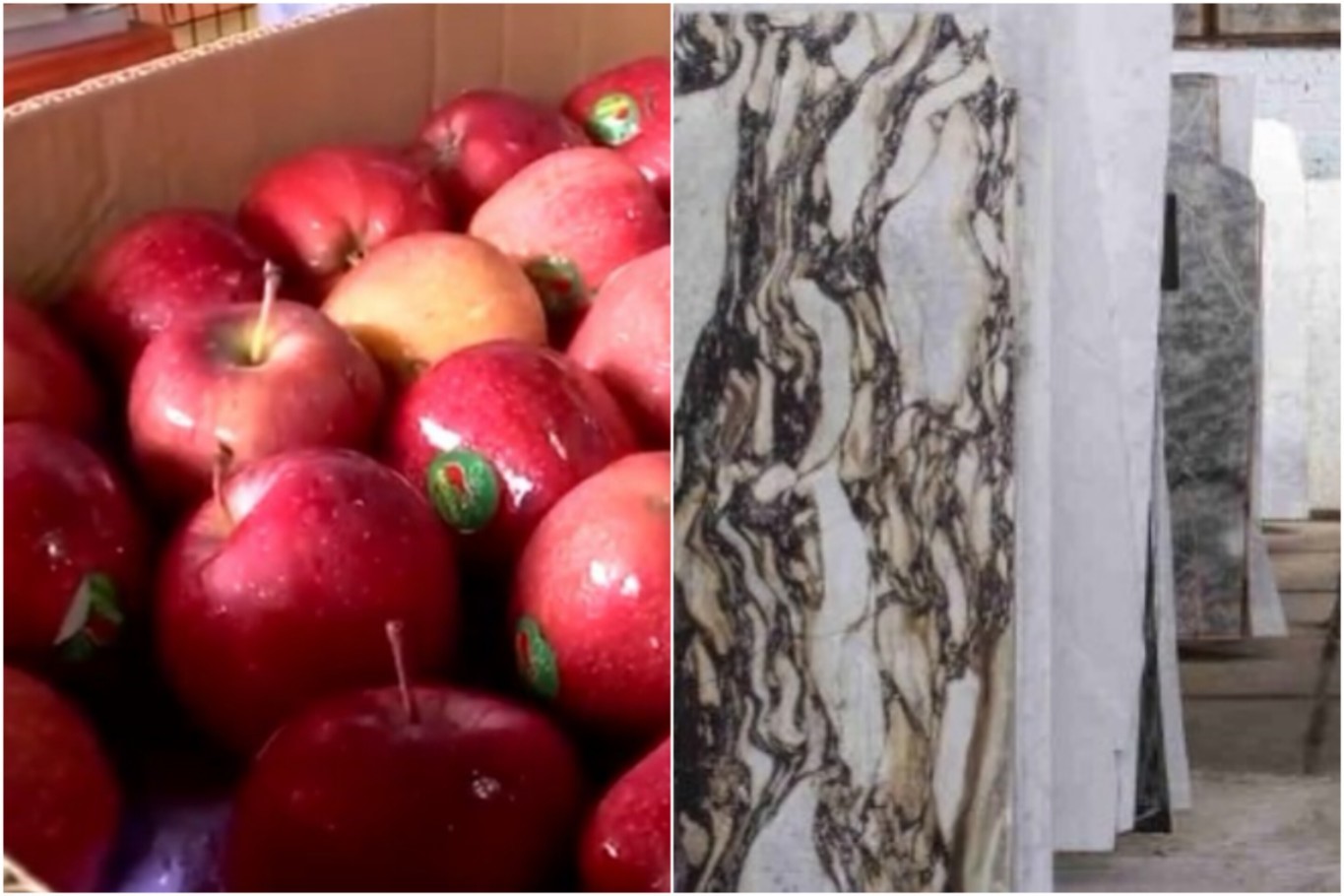
Following Turkey’s recent support for Pakistan after the Pahalgam terror attack and India’s Operation Sindoor, an economic boycott of Turkish goods is gaining momentum in India. The initial social media calls to “Boycott Turkey” have expanded beyond the internet, with Indian traders and consumers across various sectors, from marble to fruit markets, refusing Turkish imports in favor of national interests.
Udaipur, a key marble production hub, has witnessed the strongest reaction, with the Udaipur Marble Processors Association formally calling for a halt to Turkish marble imports. Turkey, which provides nearly 70% of India’s imported marble, worth $300–400 million annually, is at the center of this protest. The association’s president, Kapil Surana, stated they had petitioned the Prime Minister to implement a ban on Turkish marble, emphasizing that business should never take precedence over national pride.
Meanwhile, in India’s fruit markets, Turkish apples have been completely replaced by those from countries like Iran, the U.S., New Zealand, and Indian states such as Himachal and Uttarakhand. Traders in cities like Pune and Mumbai report a drastic drop in demand for Turkish apples, once a lucrative market valued at around $120–150 million in seasonal revenue. The boycott is being seen as a patriotic response, as traders prioritize national loyalty over profit.
The ongoing tension between India and Pakistan, coupled with disruptions in the Kashmir region, has also led to higher apple prices, with retail prices rising by $0.30–0.40 per kilogram. The boycott isn’t just about hurting Turkish exports—it’s a message to the world that India will not tolerate nations that support terrorism.
Indian traders are advocating for a wider economic disengagement, calling on the government to expand these restrictions beyond marble and apples. This movement is a reminder of India’s firm stance on national security and its growing economic power.