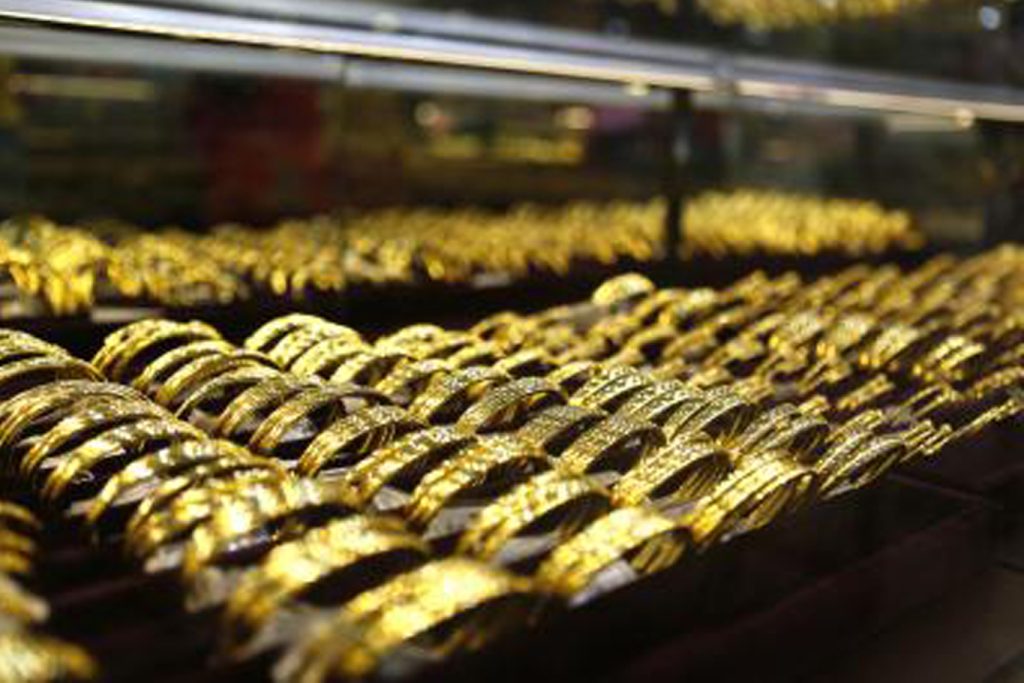
The Reserve Bank of India (RBI) reported that, as of the end of March 2025, it held a total of 879.59 metric tonnes (MT) of gold. Of this, 511.99 MT was maintained within the country, as disclosed by the central bank on Monday.
The RBI further stated that 348.62 MT of the total gold reserves were stored securely with the Bank of England and the Bank for International Settlements (BIS). Additionally, 18.98 MT were retained in the form of gold deposits.
In terms of U.S. dollars, the value of gold as a component of the total foreign exchange reserves rose notably—from 9.32 per cent at the end of September 2024 to approximately 11.70 per cent at the end of March 2025. This data was included in the RBI’s ‘Half Yearly Report on Management of Foreign Exchange Reserves’.
During the half-year under review, the overall foreign exchange reserves showed a decline—from $705.78 billion at the end of September 2024 to $630.61 billion by the end of January 2025. However, by the end of March 2025, reserves had recovered slightly to $668.33 billion.
Between the period of end-December 2023 and end-December 2024, India’s external assets rose by $79.7 billion, while its external liabilities also increased by $76.1 billion.
The composition of foreign currency assets (FCA) includes a diversified set of multi-currency assets, which are managed through multi-asset portfolios in alignment with global best practices.
As of March-end 2025, the total FCA stood at $567.56 billion. Of this amount, $485.53 billion had been invested in securities, $45.68 billion was placed with other central banks and the BIS, and the remaining $36.34 billion comprised deposits held with overseas commercial banks.
To diversify its reserve portfolio and explore innovative strategies and financial instruments, the RBI confirmed that a limited portion of these reserves is managed by external asset managers.
As of the end of December 2024, India’s foreign exchange reserves were sufficient to cover 10.5 months of imports based on the balance of payments method—down from 11.8 months at the end of September 2024.
Additionally, the ratio of short-term debt (based on original maturity) to reserves increased from 19.1 per cent in September 2024 to 22.0 per cent by December 2024.
The RBI also noted that the proportion of volatile capital flows—which includes cumulative portfolio inflows along with outstanding short-term debt—to reserves went up from 67.8 per cent at the end of September 2024 to 74.3 per cent by the end of December 2024.