 As India and the United States work toward finalizing a bilateral trade agreement by the fall of 2025, Washington has taken the lead in shaping the global trade narrative, according to Ajay Srivastava, Founder of the Global Trade Research Initiative (GTRI) and a former trade official. He observes that the US administration has effectively portrayed India’s trade policies and tariffs as a major cause of the US trade deficit.
Since starting his second term, President Donald Trump has repeatedly called for tariff parity, asserting that the US will mirror tariffs imposed by trading partners, including India, in pursuit of what he calls “fair trade.” Although the tariffs are currently on a 90-day pause to allow trade discussions, Trump has criticized India for its high import duties and restrictive regulations, referring to the country as a “tariff king.”
Srivastava, however, challenges this narrative. He explains that India, in fact, pays more in trade to the US than it receives. For example, US companies earn substantial profits and royalties from Indian markets, and over $15 billion is spent annually by Indian students studying in the US. In addition, major American technology companies like Google, Amazon, Meta, and Tesla enjoy extensive market access in India.
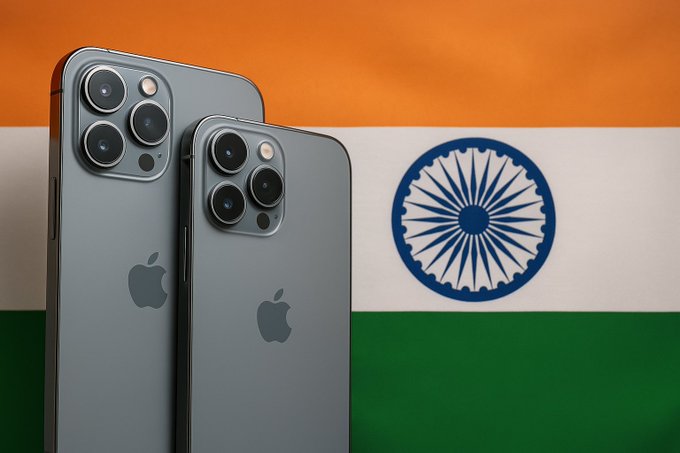
He illustrates this point with the example of an iPhone made in India and sold in the US. Though counted as a full export from India, Apple earns over $450 per unit, while India receives less than $25, distorting trade balance data.
Instead of pushing back, Srivastava says Indian policymakers are urging businesses to reduce Chinese imports and increase purchases from the US. He cautions that India’s subdued response is allowing Washington to control the public narrative and extract more favorable terms in ongoing Free Trade Agreement (FTA) negotiations.
Srivastava recommends India take a measured approach, avoiding a broad FTA under global uncertainty. He suggests a limited pact focusing only on industrial goods would better protect national interests.
Meanwhile, during a February 2025 meeting, President Trump and Prime Minister Narendra Modi announced “Mission 500,” aiming to double bilateral trade to $500 billion by 2030. India’s exports climbed 11.6% to $86.5 billion, while imports rose 7.4% to $45.3 billion in 2024–25, creating a $41 billion trade surplus. The US continues to push for reciprocal tariffs on countries with significant trade surpluses.
Commerce Minister Piyush Goyal’s recent visit to the US signifies India’s commitment to move forward, as both nations prepare for the first phase of a mutually beneficial, multi-sector trade agreement by late 2025.