British Members of Parliament have voiced serious concern over the ongoing persecution of religious minorities and the deteriorating law and order situation in Bangladesh, currently under the interim administration led by Muhammad Yunus. They renewed calls for free, fair, and inclusive elections to be held at the earliest.
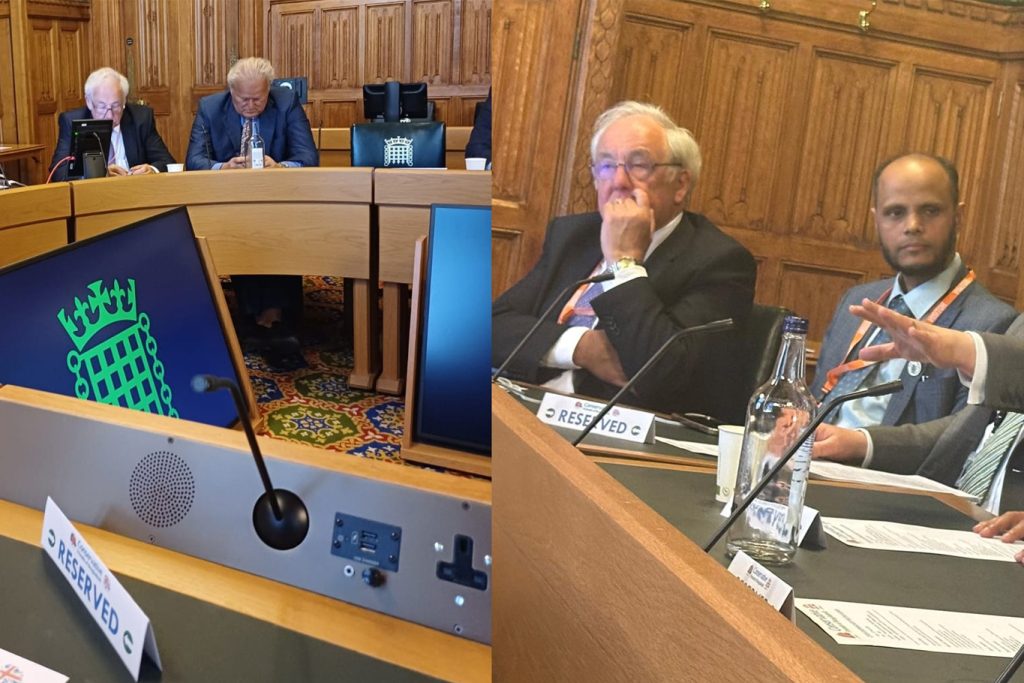
These concerns were raised during a recent meeting of the ‘Conservative Friends of Bangladesh’ held at Westminster, chaired by Lord Jonathan P. Marland, who also serves as the Chairman of the Commonwealth Enterprise and Investment Council.
The meeting featured key British Conservative MPs including Richard Fuller (MP for North Bedfordshire and Shadow Chief Secretary), Gareth Bacon (MP for Orpington and Shadow Transport Secretary), and Bob Blackman (MP for Harrow East, Chairman of the 1922 Committee, and Chair of the Backbench Business Committee).
MP Bob Blackman highlighted the daily threats faced by minority communities in Bangladesh and emphasized the urgent need for inclusive elections to address the crisis. Richard Fuller echoed similar sentiments, stressing the fragile political landscape under the current interim government and urging the UK government to collaborate with Bangladeshi authorities in pushing forward democratic reforms that would lead to general elections.
Gareth Bacon also underlined the turbulent political transition underway in Bangladesh. He called on all stakeholders to join forces to stabilize the situation and to lay the foundation for early elections.
In his address, Lord Marland expressed optimism that Bangladeshis could overcome their current challenges with support from allies both within the country and internationally. He also expressed hope that the British Conservative Party and the Conservative Friends of Bangladesh could contribute to resolving the ongoing crisis.
Overall, the participants expressed grave concern regarding the plight of religious minorities amid the unstable political environment. They also acknowledged the country’s weakened economic condition and pledged continued support from Conservative leaders to ensure a democratic revival, economic recovery, and stronger protections for minority communities.
This meeting follows an earlier seminar held on April 8 at the British Parliament’s House of Commons. Chaired by senior British politician and legal expert Lord Alex Carlile of Berriew, the session focused on “Democracy, Human Rights, Good Governance, Rule of Law and the Role of Political Parties in Bangladesh’s Current Political Landscape.” It was organized by MP Bob Blackman, who once again called for genuine efforts to ensure upcoming elections are fair, impartial, and inclusive.
King’s Counsel John Cammegh contributed a message to the seminar, advising the Bangladeshi government to focus on democratization—politically, socially, and economically—rather than pursuing an International Criminal Tribunal against the previous administration. He cautioned that such tribunals often serve as tools for political vengeance, potentially deepening national divisions. Cammegh instead advocated for the formation of a Truth and Reconciliation Commission to foster healing and unity.
Meanwhile, Bangladesh Nationalist Party (BNP) Chairperson and former Prime Minister Begum Khaleda Zia is expected to return to Dhaka from London by May 5. She had traveled to the UK on January 8 for advanced medical treatment. Her return is anticipated to accelerate discussions surrounding the scheduling of national elections.
Mounting pressure continues on Interim Prime Minister Muhammad Yunus to announce a date for general elections. He has previously indicated that elections may take place either by the end of 2025 or in the first half of 2026.