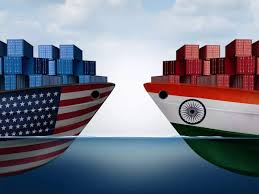
 India is likely to be the first country to finalize a bilateral trade agreement with the United States as part of an effort to avoid incoming tariffs under President Donald Trump’s renewed trade policies. According to US Treasury Secretary Scott Bessent, India’s transparent trade policies, low levels of non-tariff barriers, lack of currency manipulation, and restrained use of government subsidies have made negotiations with New Delhi significantly smoother compared to other nations.
Speaking at the World Bank and IMF annual meetings held in Washington, Bessent acknowledged India’s constructive approach and called it a leading example in trade cooperation. This possible deal emerges as Indian exports to the US continue to attract a 10% duty, while a proposed 26% retaliatory tariff has been paused for 90 days, ending July 8, 2025.
The suspended tariff is part of a broader policy by President Trump, aimed at urging trade partners to eliminate market barriers and reduce the trade imbalance with the US. In this context, the possible trade deal with India reflects Washington’s aim to create more balanced and reciprocal economic relationships.
Meanwhile, US Vice President JD Vance, during his recent visit to Jaipur, Rajasthan, called on India to expand its market accessibility and ease remaining non-tariff restrictions. He also emphasized the importance of increasing Indian imports of American energy products and defense technologies, noting that such steps would not only foster stronger trade dynamics but also deepen the strategic ties between both countries.
If successful, the agreement could serve as a model for future US trade negotiations while further strengthening the economic and political bond between the world’s largest democracies.