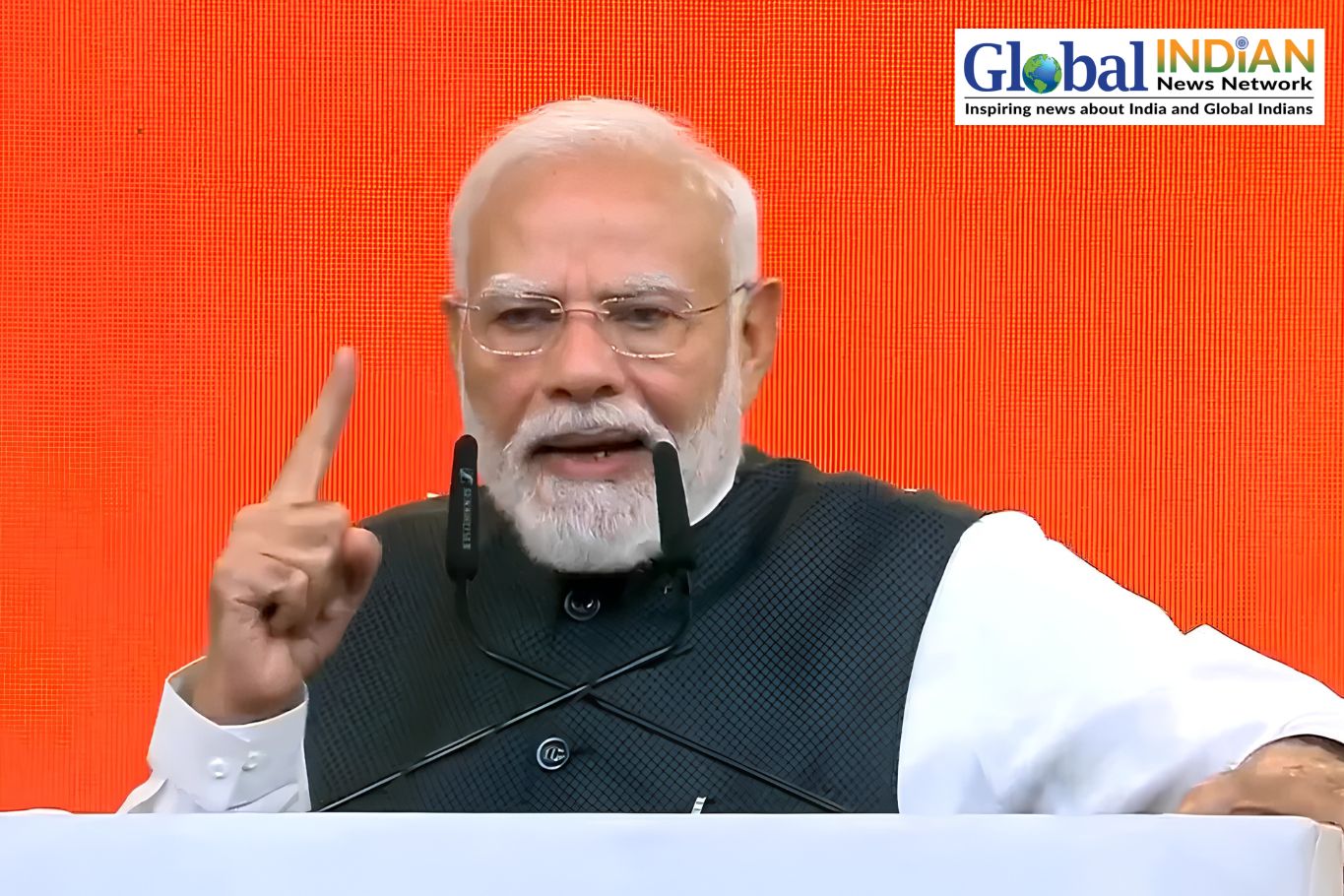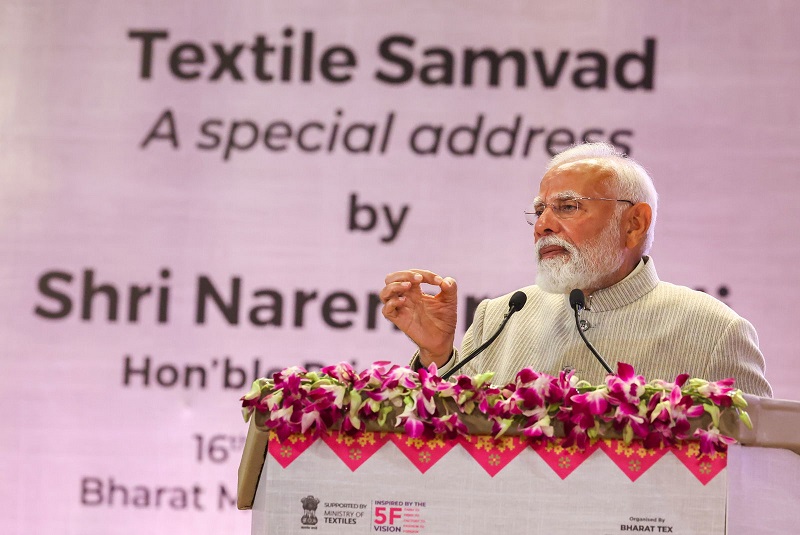
At Bharat Tex 2025, Prime Minister Narendra Modi emphasized that India’s textile sector could transform “fast fashion waste” into a valuable opportunity. By utilizing the country’s rich heritage in textile recycling and upcycling, India can reduce waste while creating sustainable economic growth. Fast fashion, where millions of garments are discarded monthly, is a major contributor to environmental harm, and PM Modi warned that fashion waste might reach 148 million tons by 2030. However, India can turn this challenge into an opportunity with its expertise in reusing materials like old fabric for mats, rugs, and quilts.
The Prime Minister also shared that the Ministry of Textiles has signed a Memorandum of Understanding (MoU) to promote upcycling with organizations like the Standing Conference of Public Enterprises and e-Marketplace. Additionally, pilot projects for collecting textile waste are already underway in cities such as Navi Mumbai and Bangalore. Encouraging startups to embrace these opportunities, PM Modi predicted that India’s textile recycling market could reach USD 400 million soon, with the global recycled textile market potentially growing to USD 7.5 billion.
Highlighting India’s textile legacy, the Prime Minister noted that centuries ago, textiles played a key role in India’s prosperity and could do so again as the country aims to become a developed nation. Events like Bharat Tex 2025 contribute to India’s growing prominence in the global textile market, attracting participants from over 120 countries. With strong growth in exports and a target of increasing textile exports to USD 9 billion by 2030, the Prime Minister emphasized the need for collaboration, innovation, and access to financing to propel India’s textile industry into the global spotlight.