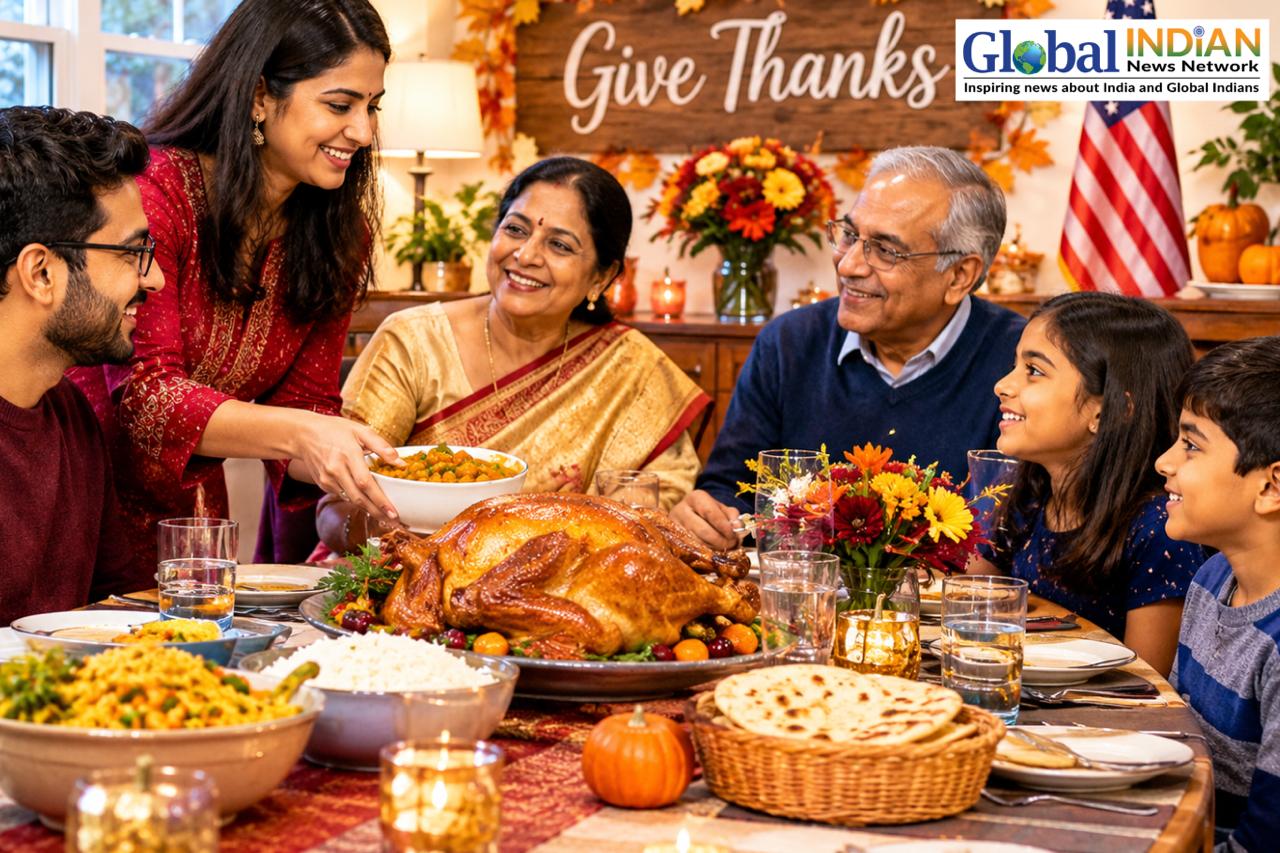
Indian-American families across the United States are giving Thanksgiving a distinctive cultural touch by combining traditional American celebrations with Indian cuisine, family customs, and community service. As the country prepares for Thanksgiving on November 26, 2026, temple gatherings, charitable food initiatives, and family dinners are highlighting how immigrant communities have embraced the holiday while preserving their heritage.
Several Hindu organizations are opening their doors for festive meals. ISKCON of Houston has invited the public to its annual Thanksgiving feast, while ISKCON of New York City will host a dinner at Brooklyn’s Govinda’s restaurant. The menu features quinoa pulao, baked paneer kebab, vegetable quiche, and cheesecake, with proceeds supporting a book-distribution initiative. Meanwhile, volunteers in Jersey City participated in a Thanksgiving and Guru Nanak Dev Ji seva drive organized by Let’s Share a Meal, preparing and distributing food to people in need. The nonprofit draws inspiration from Sikh principles of selfless service and communal dining.
For many immigrant families, adapting to Thanksgiving has also meant experimenting with traditional recipes. Some have introduced tandoori-spiced turkey, biryani stuffing, and vegetarian alternatives alongside conventional dishes. Celebrity chef Maneet Chauhan has explored similar combinations through menus featuring turkey tikka masala, cranberry five-spice chutney, and sweet potato raita. Food writer Priya Krishna has also described how cranberry sauce became a family favorite alongside matar paneer, chickpeas, squash, and puri.
Thanksgiving, however, carries a more complex historical significance. George Washington proclaimed a national day of thanksgiving in 1789, while Abraham Lincoln established its November observance in 1863. The fourth Thursday of November became the federal holiday in 1941. For Indigenous communities, the occasion also serves as a reminder of historical displacement and violence, with the National Day of Mourning observed in Plymouth, Massachusetts, since 1970.
Through food, hospitality, and volunteerism, Indian Americans continue to shape Thanksgiving into a celebration that accommodates diverse traditions while encouraging gratitude and togetherness.