US President Donald Trump has cited India’s 7 per cent GDP growth and relatively low interest rates to argue that the United States should reduce borrowing costs to accelerate economic expansion. Criticising the Federal Reserve’s monetary policy, Trump suggested that lower interest rates could help the American economy achieve significantly higher growth.
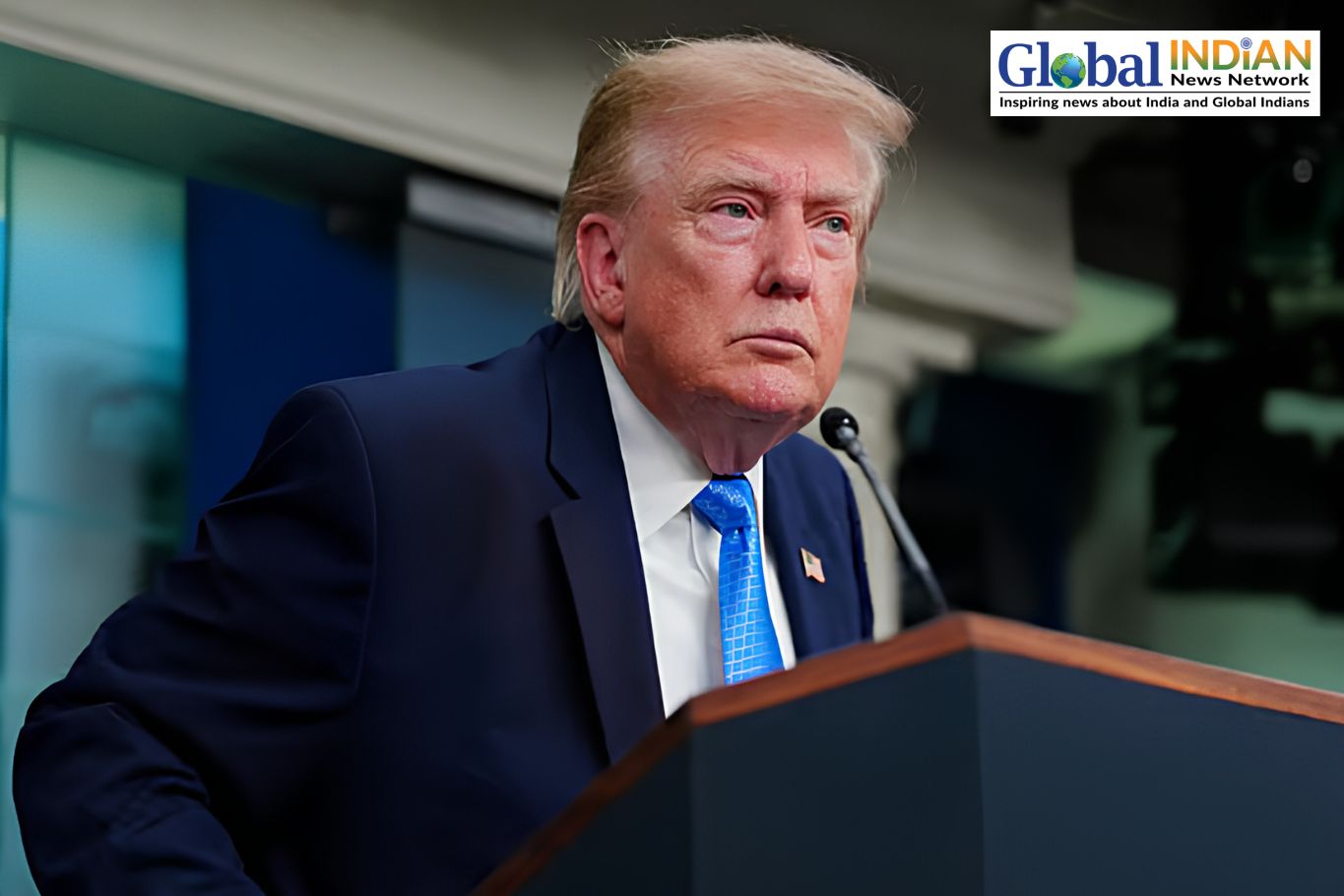
Speaking to reporters at the White House, Trump accused the US Federal Reserve of being overly political and questioned its approach to interest rate decisions. He alleged that the central bank increased borrowing costs even when economic indicators showed strong performance, rather than easing monetary policy to encourage further growth.
“Interest rates are too high because we have a very political Fed,” Trump said, arguing that strong economic figures should create conditions for lower interest rates.
He maintained that better economic performance should improve a country’s credit position and provide room for reducing borrowing costs. According to Trump, the Federal Reserve’s approach was restricting the country’s economic potential.
The US President claimed that the American economy could potentially achieve GDP growth of 15 to 20 per cent if interest rates were lowered. He also argued that faster economic expansion would help the country repay its national debt more rapidly.
Drawing comparisons with India, Trump highlighted its reported 7 per cent GDP growth and relatively low interest rates. He suggested that the United States could achieve considerably higher economic growth by adopting a similar approach to borrowing costs.
“If you look at India, they have low interest rates, and they have a 7 per cent GDP,” Trump said, adding that the US could potentially record growth of 14, 15 or even 20 per cent.
Trump also argued that the United States should maintain the world’s lowest interest rates, citing its significant role in supporting global economic activity. He said America’s economic strength contributed to the financial success of other countries and should be reflected in its borrowing costs.
His remarks come amid ongoing differences over monetary policy and the Federal Reserve’s efforts to balance economic growth with inflation control. The central bank has a 2 per cent inflation target, while inflation remains above that level.
According to the figures cited in the remarks, the annual Personal Consumption Expenditures (PCE) inflation rate stood at 3.6 per cent in September, while core PCE inflation, which excludes food and energy prices, was recorded at 3.1 per cent.
The comments highlight the contrasting approaches to monetary policy being debated in the United States, where the administration has called for lower borrowing costs while inflation remains above the Federal Reserve’s target. Trump’s comparison with India has also brought attention to the country’s economic growth performance and its position in the global economy.