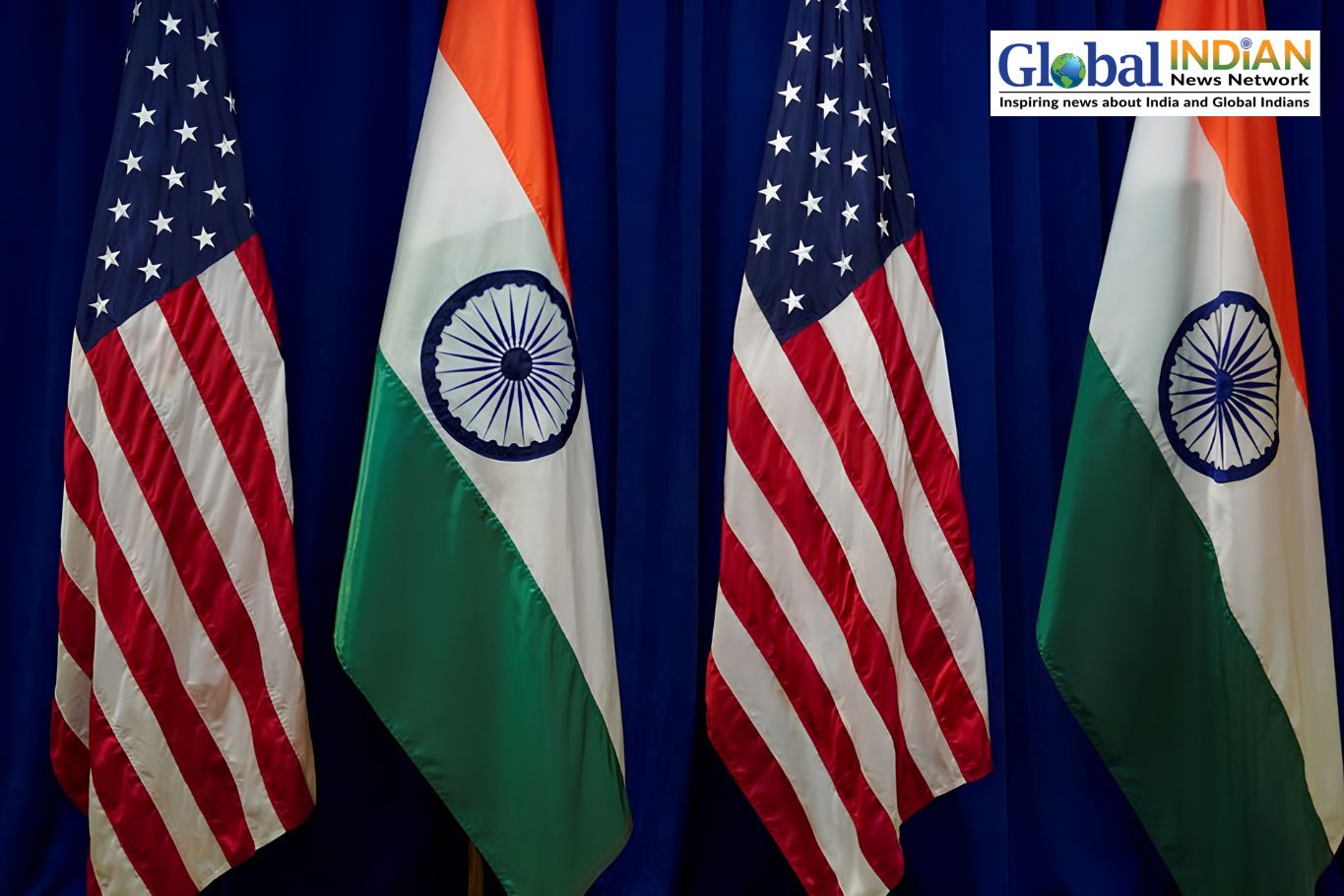
 India has joined the United States and eight other partner countries in signing the San Francisco Declaration on the Secure Foundations of Enduring Prosperity, an agreement aimed at strengthening international cooperation on sensitive technologies, critical infrastructure and supply chain security in the emerging Super Intelligence (SI) era.
The declaration was signed on November 15 during the Pax Silica Founders Retreat in San Francisco. The meeting was convened by US Under Secretary of State for Economic Affairs Jacob Helberg. The ten signatories are the United States, Australia, India, Israel, Japan, the Republic of Korea, Qatar, Singapore, the United Arab Emirates and the United Kingdom.
According to the US Department of State, the declaration establishes a shared understanding that economic security is closely connected to national security. It calls for coordinated international efforts to protect the technologies, infrastructure and supply networks essential to the development and operation of advanced intelligence systems.
The agreement provides a common framework for identifying sensitive technologies and critical infrastructure that require protection. It also establishes principles for cooperation among participating countries to safeguard strategic assets against theft, unauthorised access, hostile influence and supply chain disruptions.
The US Department of State described the declaration as an important step in turning shared principles into a practical partnership. The agreement comes as the Pax Silica initiative enters a new phase, with participating countries seeking to strengthen collaboration on technology security, innovation and economic resilience.
The declaration identifies two major categories of strategic assets requiring protection. The first includes sensitive technologies such as goods, software, materials, technical knowledge, components, manufacturing inputs and production capabilities essential to SI supply chains. These technologies could create significant military, intelligence or economic advantages if acquired or transferred to hostile actors.
The second category covers critical infrastructure supporting the development and operation of advanced technology systems. This includes ports, terminals, transportation networks, communications systems, logistics facilities, information and communications technology infrastructure, energy networks and digital platforms used for coordination and management.
The participating countries recognised that disruption, degradation or hostile control of these systems could affect essential services and economic operations. Unauthorised access to sensitive data moving through such infrastructure could also create serious national and economic security risks.
A major priority outlined in the declaration is reducing excessive dependence on individual suppliers and strengthening diversified, trusted supply chains. The agreement highlights the importance of addressing economic coercion, supply disruptions and non-market policies that can distort competition, discourage investment and weaken innovation.
To translate these commitments into practical action, the declaration proposes establishing five working groups. Their areas of focus include pro-innovation policy frameworks, the adoption of Super Intelligence across important economic sectors, supply chain cooperation across the SI technology stack, safe harbours and supply chain security hubs, and SI security and resilience.
These working groups are expected to provide a platform for participating countries to coordinate policies, develop trusted technology partnerships and improve the protection of strategic supply networks. The declaration also calls for stronger enforcement of national measures designed to prevent undue access, influence or control over sensitive technologies and critical infrastructure.
The signatories emphasised that no single country can independently secure all the foundations of the emerging SI era. They stated that the security of each participating nation would be strengthened through collective vigilance, cooperation and reliable international partnerships.
The agreement also stresses the importance of mutually beneficial access to emerging technologies, protecting private investment and maintaining fair conditions for innovation and economic growth. Its broader objective is to strengthen technological capabilities while supporting the economic independence and security of participating countries.
The declaration uses the term Super Intelligence, although a footnote clarifies that some participating countries use the term artificial intelligence instead. This reflects differences in terminology while maintaining a common focus on securing advanced technology supply chains.
India’s participation places it among a group of countries seeking to strengthen trusted technology partnerships at a time of growing international competition over advanced technologies, infrastructure and strategic resources. The agreement also creates opportunities for closer cooperation with major technology partners on supply chain diversification, infrastructure protection and innovation.
The San Francisco Declaration represents a broader effort by the ten participating countries to connect economic security with technological cooperation and build more resilient foundations for the next generation of artificial intelligence and advanced computing systems.