A renewed legislative effort to recognise Diwali as a federal holiday in the United States has received support from five Indian-American lawmakers, joining a bipartisan group of 19 members of the US House of Representatives backing the proposal.
The proposed legislation, known as the Diwali Day Act, has been reintroduced by Congresswoman Grace Meng. The bill seeks to recognise the Festival of Lights as an official federal holiday, acknowledging its cultural and religious significance for millions of Americans.
The five Indian-American lawmakers supporting the legislation are Raja Krishnamoorthi of Illinois, Suhas Subramanyam of Virginia, Shri Thanedar of Michigan, Ro Khanna of California and Ami Bera of California. All five are Democratic members of the House of Representatives.
Meng, who chairs the Congressional Asian Pacific American Caucus (CAPAC), said the legislation would help increase awareness about Diwali and recognise the cultural traditions that contribute to America’s diverse social fabric.
She said the proposal aims to promote greater cultural understanding and build a more inclusive society by giving the festival official national recognition.
The Diwali Day Act proposes making Diwali an annual federal holiday in the United States. If enacted, it would become the country’s 12th federal holiday.
Diwali, also known as Deepavali, is celebrated by several religious communities, including Hindus, Sikhs, Jains and Buddhists. The festival is also widely observed among South Asian, Southeast Asian and Indo-Caribbean communities.
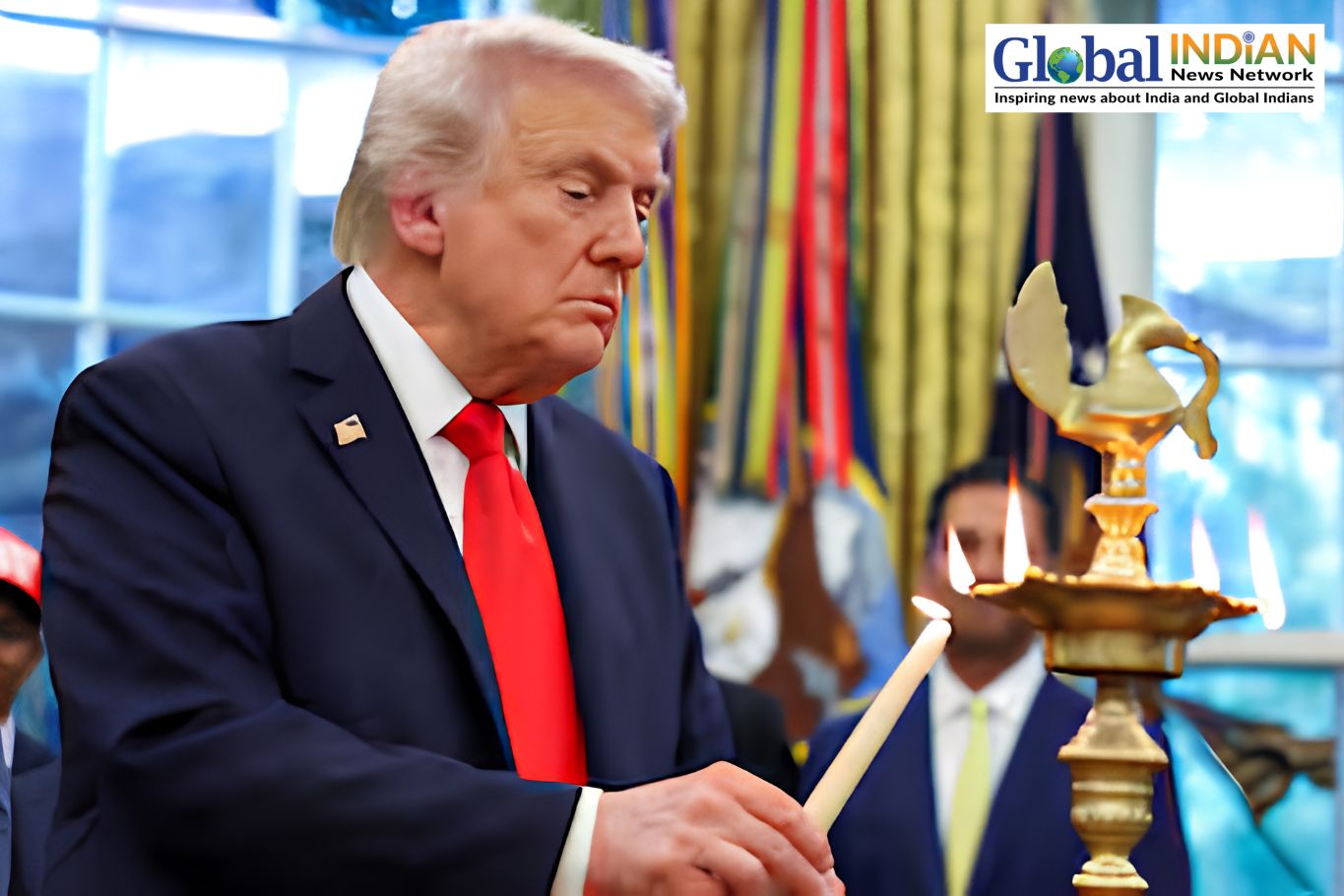
Although the religious significance of Diwali varies across communities, the celebrations commonly involve prayers, lighting lamps, family gatherings and cultural activities. The festival is widely associated with the triumph of good over evil and knowledge over ignorance.
Supporters of the legislation argue that federal recognition would acknowledge the contributions of these communities and give greater visibility to their cultural and religious traditions.
The renewed push for the Diwali Day Act comes amid concerns about rising hostility and discrimination targeting Hindu and South Asian communities in the United States.
CAPAC has highlighted incidents involving vandalism at Hindu places of worship, an attempted mass shooting during Navratri celebrations at a Hindu temple in Illinois and the racist disruption of a Diwali celebration in Washington State.
Meng has argued that recognising Diwali as a federal holiday would send a message of inclusion and demonstrate that Hindu, Sikh, Jain and Buddhist communities are valued members of American society.
She has also referred to the disruption of the Diwali celebration in Washington State, saying that discrimination and religious intolerance stand against the spirit of the festival.
The proposal is therefore being presented by its supporters as both a cultural recognition measure and a statement against religious and ethnic discrimination.
The legislation has received support from several organisations representing Asian-American, Hindu, Sikh and Indian-American communities. Among the organisations identified as supporters are Asian Americans Advancing Justice, Asian American Federation, Coalition of Hindus of North America and Hindus for Human Rights.
Although the Diwali Day Act has been reintroduced and received support from 19 House representatives, the proposal must go through the federal legislative process before it can become law.
The bill will need to advance through the relevant congressional committee process and secure approval in the House of Representatives. It must then pass the Senate before being sent to the US President for approval.
Only after completing these steps and receiving presidential approval can Diwali officially become a federal holiday.
Until then, the proposal remains a legislative initiative rather than an approved national holiday.
If enacted, the legislation would mark a significant milestone for Indian-American and other communities that celebrate Diwali, giving the Festival of Lights formal recognition within the United States’ national holiday calendar.