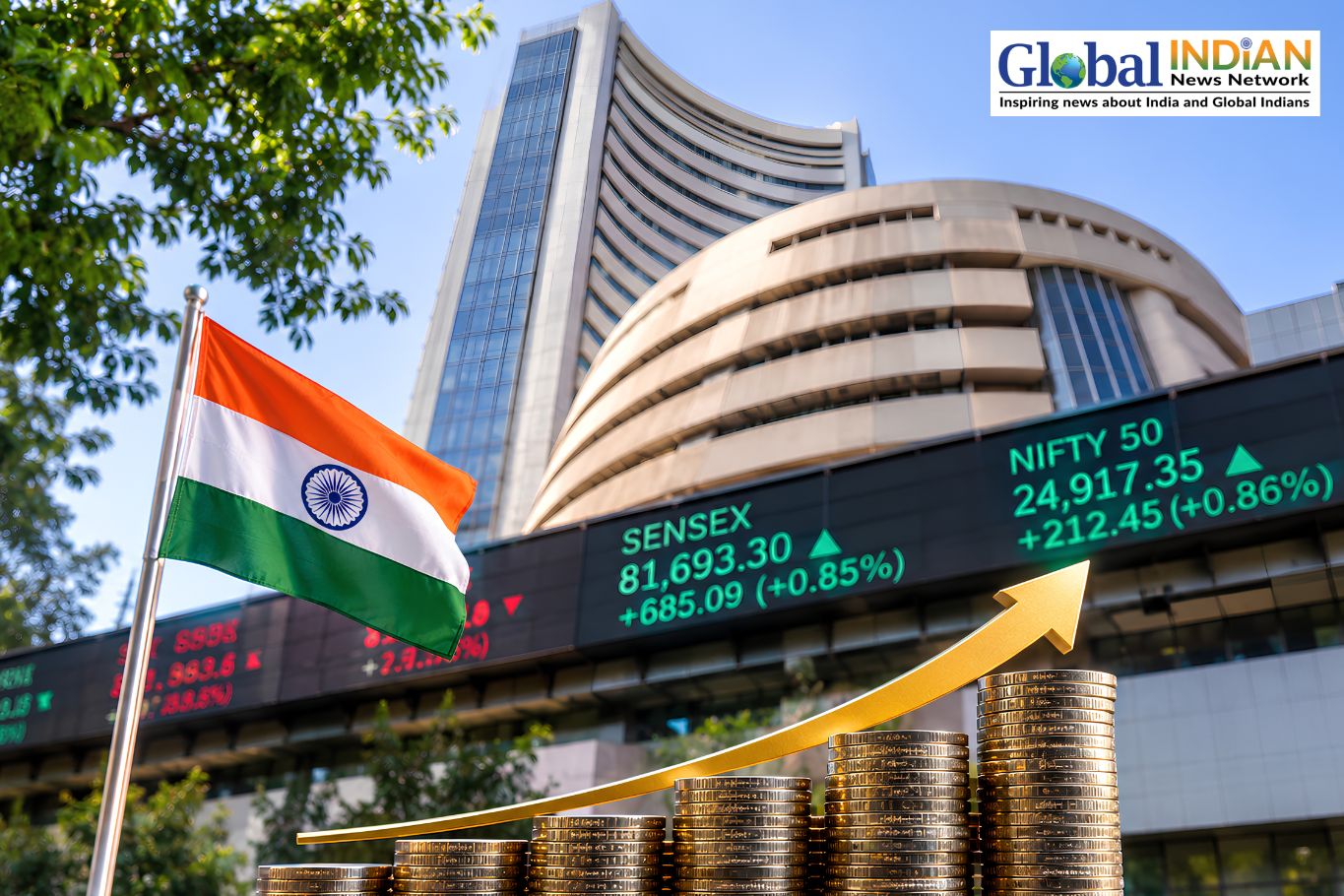
India is emerging as an attractive investment destination for global investors, offering a combination of economic growth, earnings resilience and portfolio diversification amid increasing concentration in artificial intelligence (AI)-related stocks across Asian markets, according to a report by HSBC Global Investment Research.
HSBC has upgraded Indian equities to an overweight rating from neutral, citing strong credit growth, improving corporate earnings and government measures supporting economic expansion and currency stability.
The upgrade follows a prolonged valuation correction and a period of significant underperformance by Indian equities compared with other emerging markets. HSBC believes these developments have made valuations more reasonable, particularly among large-cap companies.
The report noted that India’s economic growth has remained resilient despite several macroeconomic challenges, including elevated interest rates and higher energy prices. Corporate earnings momentum has also improved, with the pace of earnings downgrades becoming considerably more moderate.
Although the coming quarters could bring some earnings pressure if energy prices remain elevated, HSBC does not expect potential downgrades to significantly undermine overall market sentiment.
The investment bank also highlighted the relatively limited positioning of global emerging market investors in Indian equities. Only around 22 per cent of global emerging market funds are overweight India, suggesting there could be further scope for increased foreign investor participation.
Among sectors, HSBC maintains a preference for banking stocks, supported by an improved outlook for credit growth and economic activity. The report also favours industrial companies, particularly those operating in capital goods, cement, ports and electronic manufacturing services.
Within the consumption segment, HSBC prefers consumer discretionary companies over consumer staples, with retailers and automobile manufacturers emerging as preferred investment opportunities.
The report also identified potential opportunities in the insurance and hospital sectors, citing their long-term growth prospects despite recent regulatory uncertainties.
However, HSBC cautioned that persistently high energy prices could create challenges for India’s domestic economy. Elevated crude oil costs could put pressure on the country’s currency, increase inflationary pressures and weaken consumer demand.
Although consumption has remained relatively resilient, rising inflation could affect household purchasing power, particularly in rural areas, potentially weighing on demand for consumer goods and services.
The report also highlighted a shift in HSBC’s outlook towards China, with the investment bank downgrading Chinese equities from overweight to neutral. The decision reflects limited catalysts for a sustained market re-rating despite relatively low valuations following the recent market sell-off.
HSBC acknowledged that attractive total shareholder yields, domestic buying activity and recent policy measures supporting capital markets could provide a degree of downside protection for Chinese equities.
The contrasting assessments of India and China underline the changing investment landscape across emerging markets. For India, resilient economic growth, improving earnings visibility and relatively reasonable valuations are strengthening its appeal among global investors seeking diversification beyond technology-driven market concentrations.