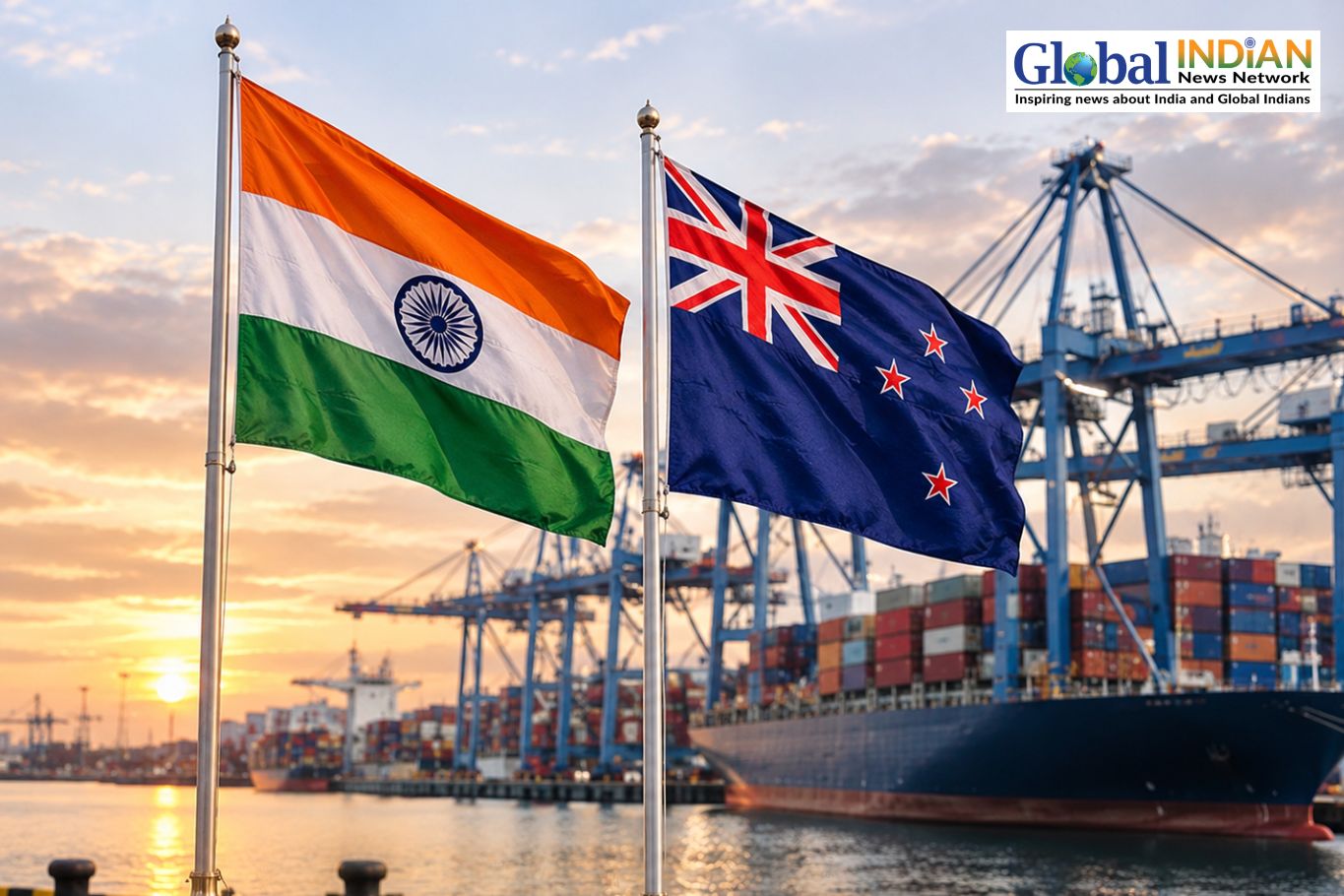
India and New Zealand are entering a new phase of economic cooperation with the India-New Zealand Free Trade Agreement (FTA), which is expected to create fresh opportunities in trade, investment, technology, agriculture and strategic partnerships.
The agreement aims to strengthen commercial ties between the two countries by expanding market access, improving supply chain connectivity, encouraging investments and promoting the exchange of skills and technology. It is also expected to support businesses in accessing new markets and building stronger international partnerships.
One of the key highlights of the agreement is immediate zero-duty access for Indian exports across all 8,284 product lines in the New Zealand market. This provision is expected to improve the price competitiveness of Indian products, help exporters diversify their overseas markets and strengthen India’s presence in a developed economy.
Several labour-intensive and manufacturing-oriented sectors are expected to benefit from the improved market access. These include pharmaceuticals, textiles, engineering goods, machinery, gems and jewellery, sports goods, footwear and leather products.
The agreement is also expected to create opportunities for micro, small and medium enterprises (MSMEs), artisans and women entrepreneurs. Improved access to international markets, reduced trade-related barriers and stronger business-to-business engagement could help smaller businesses expand their operations and reach new customers.
The India-New Zealand FTA forms part of a broader Strategic Partnership supported by the Roadmap to 2030. The framework aims to establish a more diversified and resilient economic relationship between the two countries while strengthening cooperation across multiple sectors.
Under the agreement’s strategic framework, bilateral merchandise trade is targeted to reach approximately Rs. 28,515 crore, equivalent to US$ 3 billion, by 2030.
Beyond merchandise exports, the agreement is expected to support investment opportunities and encourage greater collaboration in technology, agriculture and skill development. Entrepreneurs, farmers and young professionals in both countries could benefit from expanded commercial activities and new avenues for cooperation.
For Indian exporters, the agreement provides an opportunity to explore New Zealand’s market with improved tariff conditions. Manufacturing companies, agricultural businesses and small enterprises could also benefit from stronger trade connections and increased international business engagement.
However, achieving the proposed trade target will depend on effective implementation, greater participation from businesses and sustained growth across key sectors. Exporters will also need to focus on product quality, competitiveness and compliance with market requirements.
The India-New Zealand Free Trade Agreement represents an important step in expanding India’s global trade partnerships. With improved market access and a broader framework for economic cooperation, the agreement aims to strengthen bilateral commercial relations and create new opportunities for businesses, entrepreneurs and professionals in both countries.