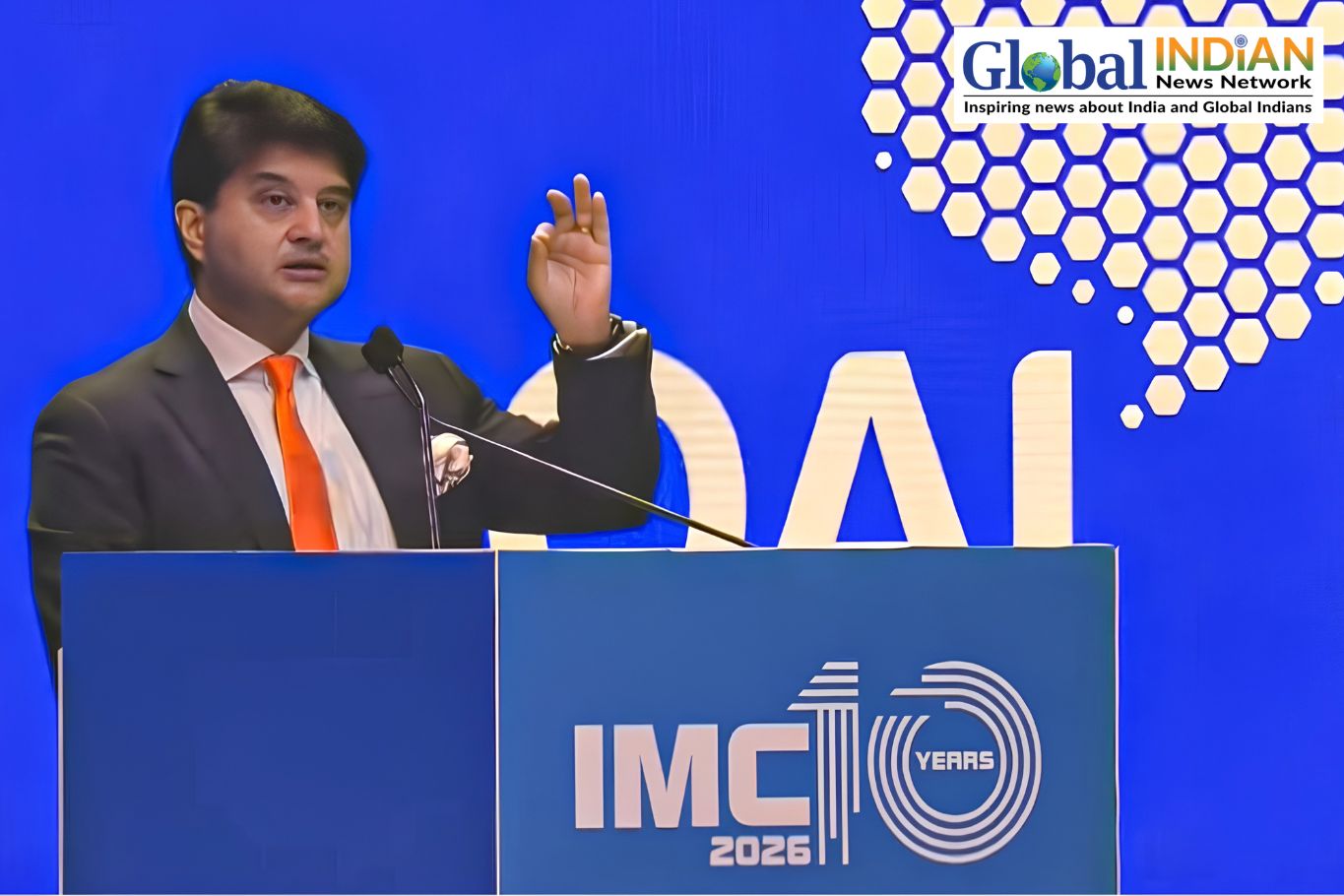
 India aims to expand its 5G user base from approximately 550 million to 1 billion by 2030 while preparing to take a leading role in developing next-generation 6G technology. Communications Minister Jyotiraditya Scindia announced the target while inaugurating the 10th India Mobile Congress (IMC) 2026, according to the India Brand Equity Foundation (IBEF).
Scindia highlighted the country’s progress in telecommunications, noting its transition from lagging in 4G adoption to advancing alongside the global technology ecosystem in 5G and aspiring to lead in 6G. India’s 5G rollout has been described as one of the fastest globally.
The Bharat 6G Alliance has brought together 90 institutions and established a portfolio of 7,700 patents, including 4,400 international patents, according to the report. India has also secured international recognition for its telecommunications initiatives. The International Telecommunication Union (ITU) Council accepted the country’s proposal to host its Plenipotentiary Conference in 2030. In 2024, India hosted the World Telecommunication Standardisation Assembly for the first time, marking the largest gathering of its kind held outside Geneva in the organization’s history.
India’s digital infrastructure has grown considerably since the first India Mobile Congress in 2017. Broadband subscriptions have risen from 60 million to more than 1.1 billion, while the number of mobile subscribers has reached approximately 1.35 billion. Lower data prices have helped support this expansion, with the cost of 1 GB of data falling from Rs. 268 in 2014 to Rs. 8, according to IBEF.
Digital financial services have expanded alongside connectivity. The Unified Payments Interface (UPI) processes transactions valued at approximately $3.4 trillion annually, while the BharatNet program has received government funding of around $15 billion to improve internet access in villages and gram panchayats.
India’s mobile manufacturing sector has also experienced substantial growth. Its value has increased from an estimated $2 billion–$3 billion in 2014 to approximately $63 billion. The country is now the world’s second-largest mobile phone producer, with exports approaching $29 billion.
These developments reflect India’s broader efforts to strengthen digital access, expand domestic electronics production and increase its influence in global telecommunications standards and emerging technologies.