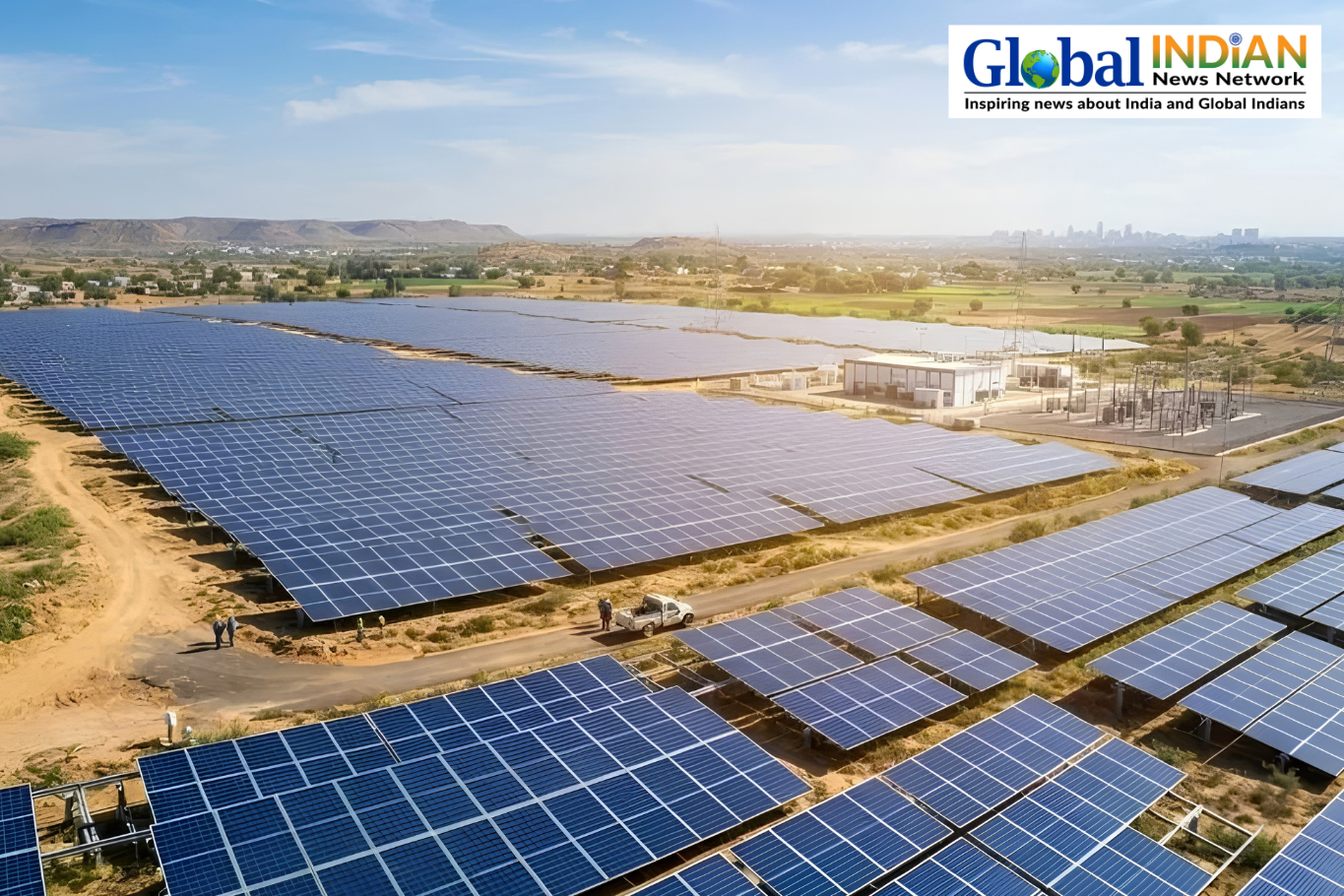
 India’s transition toward renewable energy is gaining momentum, with the country’s installed solar power capacity approaching 165 gigawatts by mid-2026. The rapid expansion reflects the government’s broader push to strengthen energy security, promote sustainable development and advance its long-term vision of a developed India by 2047.
According to a report by the India Brand Equity Foundation (IBEF), India’s solar sector has undergone a remarkable transformation since 2014, when the country’s installed capacity stood at approximately 2.8 GW. Over the past decade, solar power has evolved from a largely state-driven initiative into a nationwide movement supporting economic growth and cleaner electricity generation.
A significant part of this progress has come through the PM Surya Ghar Muft Bijli Yojana, a government initiative designed to encourage households to install rooftop solar systems. The program has benefited more than 5.1 million families and facilitated the commissioning of 14.8 GW of rooftop solar capacity across India.
By enabling households to generate their own electricity, the scheme aims to reduce monthly power expenses while expanding access to renewable energy. The initiative has also contributed to employment opportunities by creating demand for solar installation professionals, technicians and local entrepreneurs.
Prime Minister Narendra Modi recently highlighted the program’s impact on grassroots entrepreneurship and skill development, drawing attention to the experiences of beneficiaries who have benefited from lower electricity costs while participating in the emerging clean-energy economy.
One such beneficiary, Dinesh Bhai Makwana from Surendranagar, Gujarat, shared how rooftop solar adoption under the scheme has helped his family manage electricity expenses. His experience illustrates the program’s intended household-level benefits.
Gujarat, which has played a significant role in India’s solar development, continues to rank among the leading states in rooftop installations under PM Surya Ghar. The state’s progress reflects its longstanding involvement in renewable energy and its contribution to India’s broader clean-power ambitions.
Beyond reducing household electricity bills, the expanding solar industry is creating opportunities across manufacturing, installation, maintenance and technical services. These developments could support local businesses while helping reduce dependence on conventional energy sources.
With solar capacity continuing to grow and household adoption increasing, India’s renewable energy sector is emerging as an important contributor to economic development, energy self-reliance and the country’s clean-energy transition.