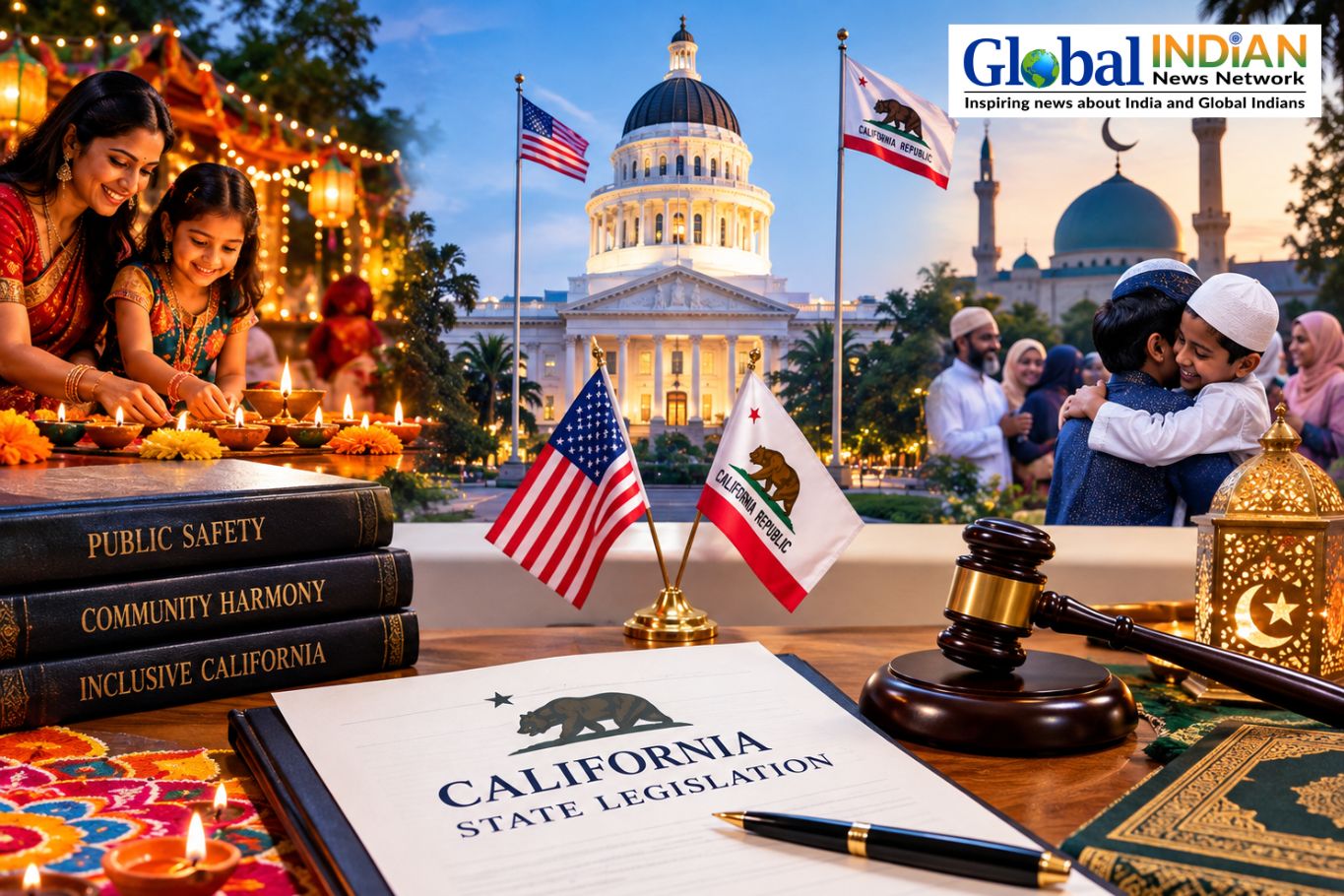
Major religious and cultural celebrations, including Diwali and Eid al-Fitr, could receive greater consideration in California under a newly passed bill aimed at reducing conflicts between important observances and public or academic events. The proposal seeks to ensure that people are not unnecessarily forced to choose between participating in religious traditions and attending significant meetings, ceremonies, or educational activities.
The California State Legislature has approved Assembly Bill 395, which asks state agencies and public higher education institutions to make reasonable efforts when scheduling important events. The legislation received unanimous bipartisan approval in both chambers on August 27 and is now awaiting a decision from Governor Gavin Newsom.
The governor has until September 30 to either sign the measure into law or reject it. If approved, state agencies would be expected to make a good-faith effort to avoid organizing public meetings on major religious, cultural, or ancestral holidays.
Public colleges and universities would also be encouraged to consider these observances while planning significant academic events. The proposed guidelines could apply to occasions such as graduation ceremonies, the first day of classes, and other major dates on the academic calendar.
The legislation also encourages California’s local governments and K-12 school districts to follow a similar approach. While the measure does not require every event to be rescheduled, it aims to promote greater awareness and consideration when conflicts can reasonably be avoided.
Supporters believe the bill addresses a long-standing challenge experienced by members of religious minority communities. Students, employees, and community members may sometimes face a difficult choice when an important religious holiday coincides with a major academic, professional, or civic obligation.
Assemblymember Jesse Gabriel, who introduced the legislation, said the measure is intended to help people from different faiths participate more fully in public life without having to sacrifice important religious observances.
The bill has received support from nearly 80 organizations representing a wide range of communities, including Jewish, Muslim, Christian, Hindu, Armenian, and Zoroastrian groups. Labor organizations representing teachers, school employees, and government workers have also supported the proposal.
Hindu organizations welcomed the legislation, saying it could improve religious accommodation for families who experience conflicts between Diwali celebrations and school or workplace commitments.
Supporters from Jewish and Muslim organizations also described the bill as an important step toward greater inclusion. The legislation would give increased recognition to several significant religious holidays and encourage institutions to create schedules that better reflect California’s diverse population.
If Governor Newsom signs AB 395, the measure could represent a significant change in how public institutions across California approach religious and cultural inclusion when planning major events.