India and the United States are seeking to expand cooperation on critical minerals and strengthen supply chains as both countries work to broaden their economic and financial partnership.
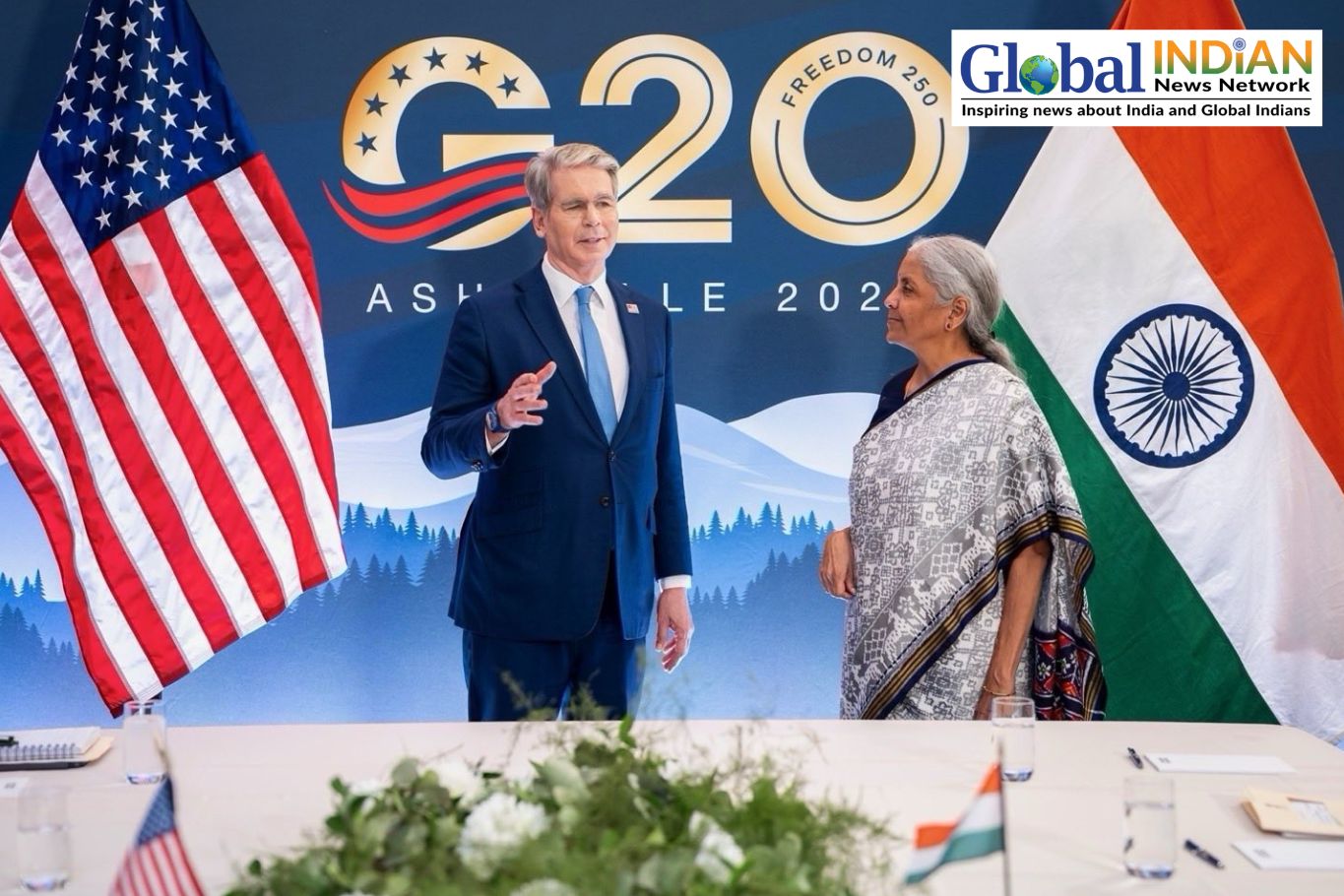
The issue was discussed during a meeting between Indian Finance Minister Nirmala Sitharaman and US Treasury Secretary Scott Bessent on the sidelines of the G20 Finance Ministers and Central Bank Governors Meeting in Asheville, North Carolina. The two officials examined ways to improve cooperation on strategically important minerals while also discussing the wider economic relationship between New Delhi and Washington.
According to India’s Finance Ministry, both sides acknowledged the long-standing partnership between the two countries and agreed that greater collaboration could be developed across several areas. A major focus of the discussions was the need to build more secure and resilient supply chains for critical resources.
Bessent also welcomed India’s role in the G7 Plus framework and appreciated New Delhi’s participation in discussions led by the G7 on critical minerals. These discussions are aimed at improving supply-chain security while encouraging greater cooperation in research, technology and other areas connected to strategically important resources.
Critical minerals have become increasingly important to governments and industries worldwide because of their role in a wide range of advanced and essential sectors. These resources are used in clean energy technologies, electronics, telecommunications, defense manufacturing and other emerging technologies.
As demand for these materials continues to increase, countries are exploring ways to diversify supply sources and reduce their dependence on highly concentrated production networks. Such dependence can create economic and strategic risks if supplies are disrupted by geopolitical tensions, trade restrictions or other unexpected developments.
For India, deeper engagement with the United States and other major economies could strengthen access to international cooperation on supply-chain resilience, technology and research. India’s large and expanding economy also makes it an increasingly important participant in global discussions surrounding the future of critical mineral resources.
The United States, meanwhile, sees India as a significant partner in efforts to develop more diversified and reliable supply networks. Greater cooperation could support the broader goal of reducing vulnerabilities associated with dependence on limited sources for essential materials.
During their meeting, Sitharaman also invited Bessent to visit New Delhi later this year for the India-US Economic and Financial Partnership meeting. The proposed engagement would provide another ministerial-level opportunity for the two governments to review ongoing cooperation and identify new areas for economic and financial collaboration.
The Economic and Financial Partnership serves as an important channel for high-level discussions between India and the United States on economic and financial matters. A future meeting in New Delhi could build on the discussions held in Asheville and further advance cooperation on strategic economic priorities.
The Finance Ministry has not yet announced the date of Bessent’s proposed visit or outlined specific projects related to critical minerals. However, the discussions signal continued efforts by India and the United States to deepen their partnership while addressing supply-chain challenges affecting the global economy.